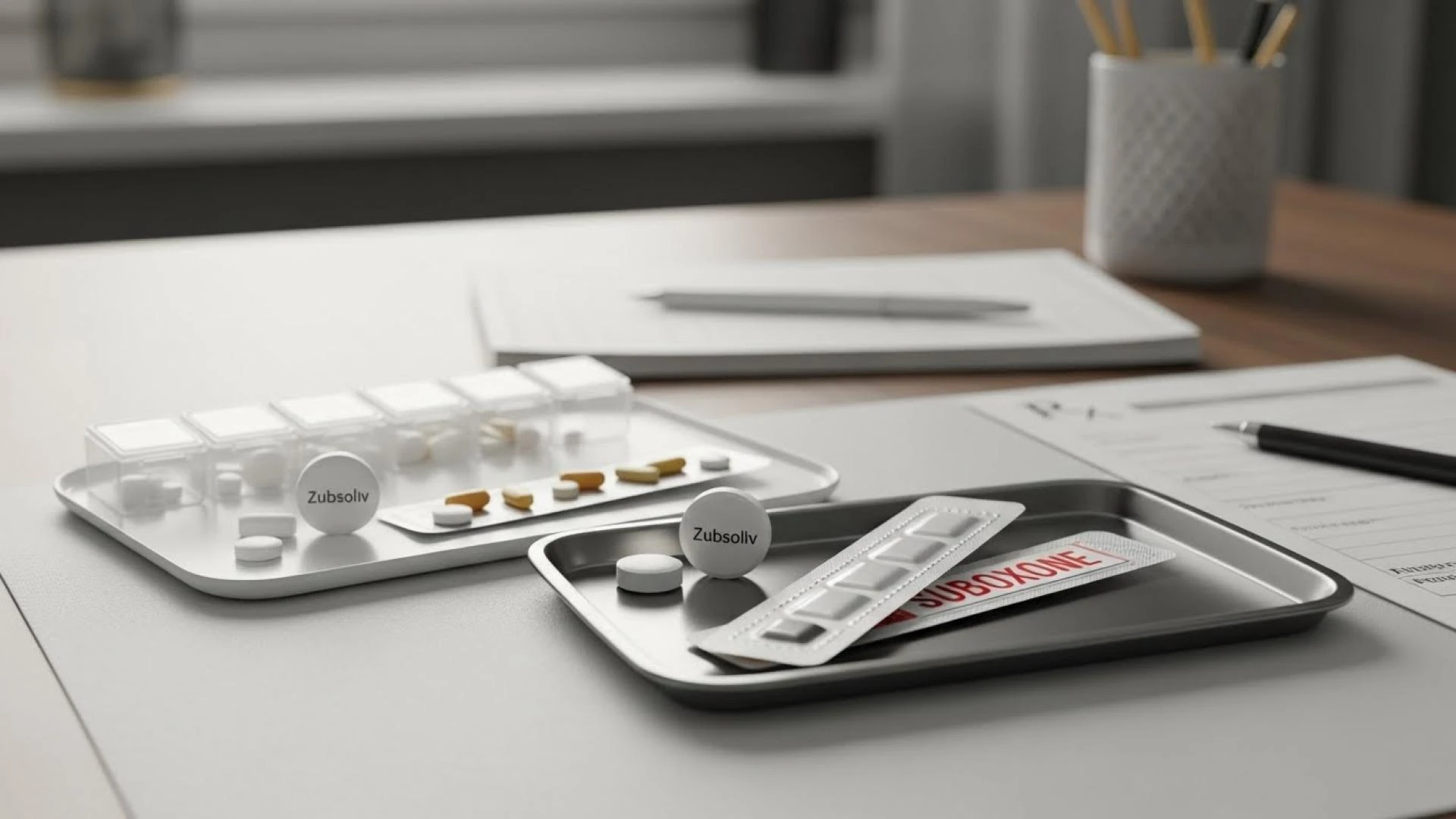

Choosing the right medication for opioid addiction treatment can feel overwhelming, especially when two options seem almost the same on the surface. If you are comparing Zubsolv and Suboxone, you are not alone. I have spoken with many people who ask this exact question because they want to feel confident that their treatment supports both recovery and daily life.
Understanding how both medications work
Zubsolv and Suboxone are both medications used to treat opioid use disorder. They contain the same two active ingredients, buprenorphine and naloxone. Buprenorphine helps reduce cravings and withdrawal symptoms, while naloxone discourages misuse.
Because the ingredients are similar, many people assume the medications are identical. In reality, there are meaningful differences in formulation, dosing, and patient experience that can influence which option feels right for you.
As one addiction physician once explained, “The effectiveness of treatment often depends on how well the medication fits into a person’s routine.” That fit can vary from person to person.
Differences in formulation and absorption
One of the biggest differences between Zubsolv and Suboxone is how they dissolve and absorb in the body. Zubsolv tablets are designed to dissolve more quickly under the tongue and have higher bioavailability.
Why absorption matters
Higher bioavailability means your body absorbs more of the medication at a lower dose. Some people appreciate this because it can lead to fewer side effects while still providing symptom relief. Suboxone films, on the other hand, dissolve more slowly and may feel more familiar to long term users.
Your comfort with how a medication dissolves and tastes may seem minor, but it often affects consistency, which is critical in recovery.
Dosing differences that affect daily use
Zubsolv and Suboxone use different dosing strengths, even though they deliver similar therapeutic effects. This can make switching between them slightly confusing at first.
Adjusting to a new dose
Doctors carefully calculate equivalent doses when transitioning patients. I have seen people feel anxious about dose changes, but with proper medical guidance, these adjustments are usually smooth and well tolerated.
If you are curious about how these medications compare in real world treatment settings, reviewing a clear comparison of Zubsolv versus Suboxone for opioid addiction treatment can help you understand what to expect before starting or switching medications.
Taste, texture, and patient preference
While it may sound simple, taste and texture play a bigger role than many people expect. Zubsolv is often described as having a more pleasant taste and a smaller tablet size. For some, this makes daily adherence easier.
Suboxone films are thin and discreet, which others prefer. I have learned that when patients dislike the experience of taking medication, they are more likely to skip doses. Preference matters because consistency supports stability.
Insurance coverage and availability
Another practical difference involves insurance coverage. Some insurance plans prefer one medication over the other, which can affect out of pocket costs.
Your provider may recommend Zubsolv or Suboxone based not only on clinical needs but also on what is accessible and affordable. Talking openly about cost concerns helps ensure treatment remains sustainable over time.
Safety, effectiveness, and research insights
Both medications are considered safe and effective when taken as prescribed. Research continues to show strong outcomes for buprenorphine based treatments.
According to data shared by the National Institute on Drug Abuse, medications containing buprenorphine significantly reduce opioid use and improve treatment retention. These findings reinforce that choosing between Zubsolv and Suboxone is less about effectiveness and more about individual fit.
Final thoughts
Zubsolv and Suboxone both offer powerful support for recovery, but small differences can make one feel more manageable than the other. The best choice is the one that aligns with your body, lifestyle, and treatment goals.
If you are unsure which option is right for you, speaking honestly with your provider can bring clarity. Recovery is not about picking the perfect medication, it is about finding the one you can commit to consistently while building a healthier future.































Sign in to leave a comment.