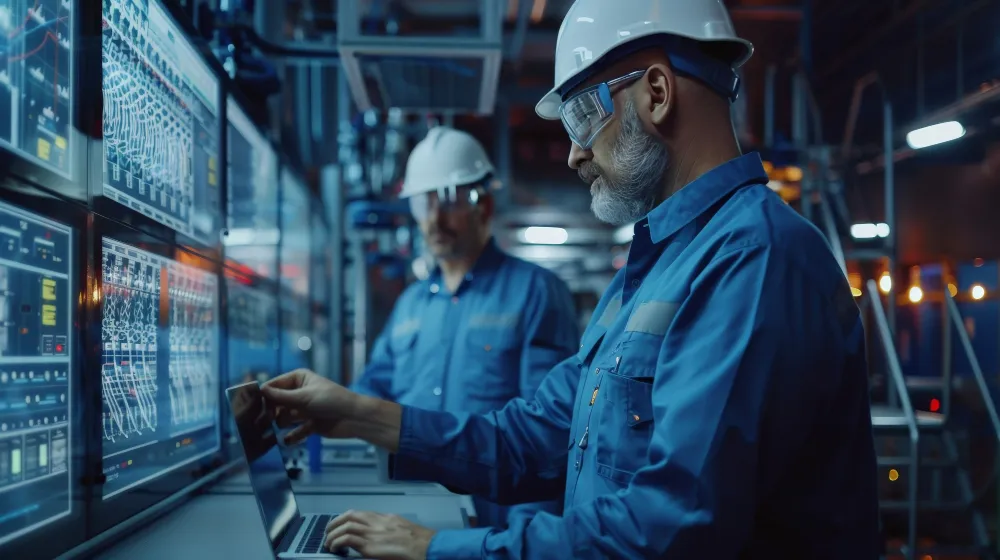

Maintenance teams today face responsibilities that extend far beyond equipment repairs and inspections. In many industries, including manufacturing, pharmaceuticals, food processing, automotive, and energy, organizations must maintain accurate records of asset performance, maintenance activities, safety procedures, and regulatory compliance. As operational complexity grows, managing this information manually becomes increasingly difficult.
To address these challenges, organizations are adopting Predictive Maintenance Solutions that combine Industrial IoT technologies, artificial intelligence, and advanced analytics. While these platforms are widely recognized for reducing downtime and improving reliability, many also provide comprehensive reporting and compliance capabilities that help organizations maintain visibility, accountability, and audit readiness.
As maintenance programs become more data-driven, reporting is evolving from a record-keeping function into a strategic tool that supports decision-making, operational excellence, and continuous improvement.
Why Reporting and Compliance Matter in Modern Maintenance
Reliable reporting provides organizations with a clear understanding of asset health, maintenance effectiveness, and operational performance. It enables maintenance leaders to measure key performance indicators, identify recurring equipment issues, and evaluate the impact of maintenance activities.
Compliance is equally important. Many industrial sectors operate under strict safety, environmental, and quality standards that require detailed documentation of maintenance procedures and equipment inspections. Failure to maintain accurate records can increase operational risk and complicate regulatory audits.
A centralized reporting framework helps organizations maintain consistency while reducing administrative burdens.
Key Features of Predictive Maintenance Solutions
Automated Asset Performance Reporting
Modern maintenance platforms automatically generate reports that summarize equipment health, fault history, maintenance activities, and reliability trends. This reduces manual reporting efforts while improving data accuracy and accessibility.
Real-Time Analytics and Dashboards
Real-time dashboards provide maintenance and operations teams with immediate visibility into equipment conditions and performance metrics. This allows organizations to identify emerging issues and make informed decisions more quickly.
Compliance Tracking and Documentation
Many predictive maintenance platforms maintain detailed records of inspections, maintenance actions, alarms, and operational events. These capabilities support audit preparation and help organizations demonstrate adherence to internal and regulatory requirements.
Historical Data Analysis
Access to historical equipment data allows maintenance teams to evaluate long-term performance trends, identify recurring failure patterns, and refine maintenance strategies over time.
Leading Platforms with Reporting and Compliance Capabilities
Several predictive maintenance providers have expanded their platforms to include advanced reporting and compliance functionality.
1. Infinite Uptime
Infinite Uptime combines Industrial AI, condition monitoring, predictive analytics, and prescriptive maintenance to support asset reliability improvement. Its platform provides maintenance teams with access to equipment health insights, fault trends, and performance reports that help improve decision-making and maintenance planning across industrial operations.
2. C3 AI
C3 AI delivers enterprise-scale predictive maintenance applications with advanced reporting capabilities that support operational visibility, performance tracking, and data-driven maintenance management.
3. GE Vernova SmartSignal
GE Vernova SmartSignal combines predictive analytics with equipment performance reporting, enabling maintenance teams to monitor reliability trends and identify potential risks before failures occur.
4. ABB Ability Genix
ABB Ability Genix integrates industrial data, analytics, and AI into a unified environment that supports reporting, asset performance management, and operational improvement initiatives.
Real-World Value of Reporting-Driven Maintenance
Consider a manufacturing facility operating hundreds of critical rotating assets. Without centralized reporting, maintenance teams may struggle to track asset histories, identify recurring equipment issues, or demonstrate compliance during audits.
By implementing a predictive maintenance platform with automated reporting capabilities, maintenance leaders can access comprehensive asset records, monitor reliability performance, and generate actionable reports that support both operational improvements and compliance requirements. This creates greater transparency and strengthens maintenance decision-making across the organization.
Beyond Technology: The Importance of Reliability Expertise
Reporting tools are most effective when supported by a strong understanding of industrial operations and equipment behavior. Successful maintenance programs rely on both advanced technology and practical reliability expertise.
The growing adoption of predictive maintenance platforms reflects the industry's broader shift toward data-driven reliability strategies. Providers such as Infinite Uptime continue to support this evolution through their focus on condition monitoring, maintenance intelligence, and asset performance improvement across industrial environments.
Conclusion
As industrial maintenance programs become increasingly sophisticated, reporting and compliance capabilities are emerging as essential features of predictive maintenance platforms. Organizations require more than equipment alerts and failure predictions. They need accurate documentation, operational visibility, and actionable insights that support reliability, accountability, and continuous improvement.
Platforms that combine predictive analytics, automated reporting, and compliance support can help maintenance teams make better decisions while strengthening operational performance. The growing adoption of these technologies reflects a broader industry focus on data-driven reliability and asset performance management.
Industry providers such as Infinite Uptime have contributed to this evolution through their work in condition monitoring, predictive analytics, and prescriptive maintenance. Their experience supporting industrial organizations highlights the importance of combining advanced technology with practical reliability expertise to improve maintenance effectiveness and long-term operational performance.
For organizations evaluating maintenance technologies, selecting a solution that balances reporting capabilities, compliance support, and reliability expertise can help create a stronger foundation for sustainable operational excellence.


























Sign in to leave a comment.