

Walk any assembly line during a rework audit and you learn more about the plant's tooling than a spec sheet will ever tell you. Cross-threaded fasteners on one station. A torque check that passes in the morning and drifts by the second shift. An operator on the sub-assembly bench quietly swapping tools because the one assigned to him bruises his wrist by lunch.
None of that shows up in the purchase order. All of it shows up in cost per unit.
I have spent a long time around plants that buy air tools the way they buy consumables: by price per piece, by whatever the last supplier quoted, by whichever model the maintenance store already stocks spares for. Sometimes that works. More often it produces a slow, invisible tax on quality and labour that nobody traces back to the tool crib.
Here is how to think about the decision properly.
Start with the joint, not the tool
Every fastening problem begins at the joint, and joints fall roughly into two camps.
A hard joint reaches final torque almost instantly. Think steel on steel with a machined face, very little compressible material, maybe fifteen to thirty degrees of nut rotation between snug and full torque. The tool has almost no time to react, so it tends to overshoot.
A soft joint compresses. Gaskets, sheet metal, plastic housings, anything with give. The fastener may turn several full rotations after it snugs. The tool has plenty of time to sense torque, but the operator absorbs a long, sustained reaction load.
Most torque disputes on a shop floor come from applying a tool suited to one joint type against the other. A clutch tool tuned for soft joints will overshoot badly on a hard joint. An impact wrench that handles hard joints roughly will scatter results across a soft joint because impact energy dissipates into the compressing material rather than into fastener tension.
Before you compare brands, classify your joints. It takes an afternoon with a torque analyser and it changes the entire shortlist.
Where reaction force becomes a real cost
Torque is not just a quality parameter. It is an ergonomics parameter.
Every Nm applied to a fastener has to be resisted by something. On a hand-held tool, that something is usually a forearm. As torque targets climb past roughly 15 to 20 Nm on a straight or pistol tool, reaction load stops being an inconvenience and becomes a genuine injury risk, which is why higher torque stations end up with torque arms, reaction bars, or overhead balancers.
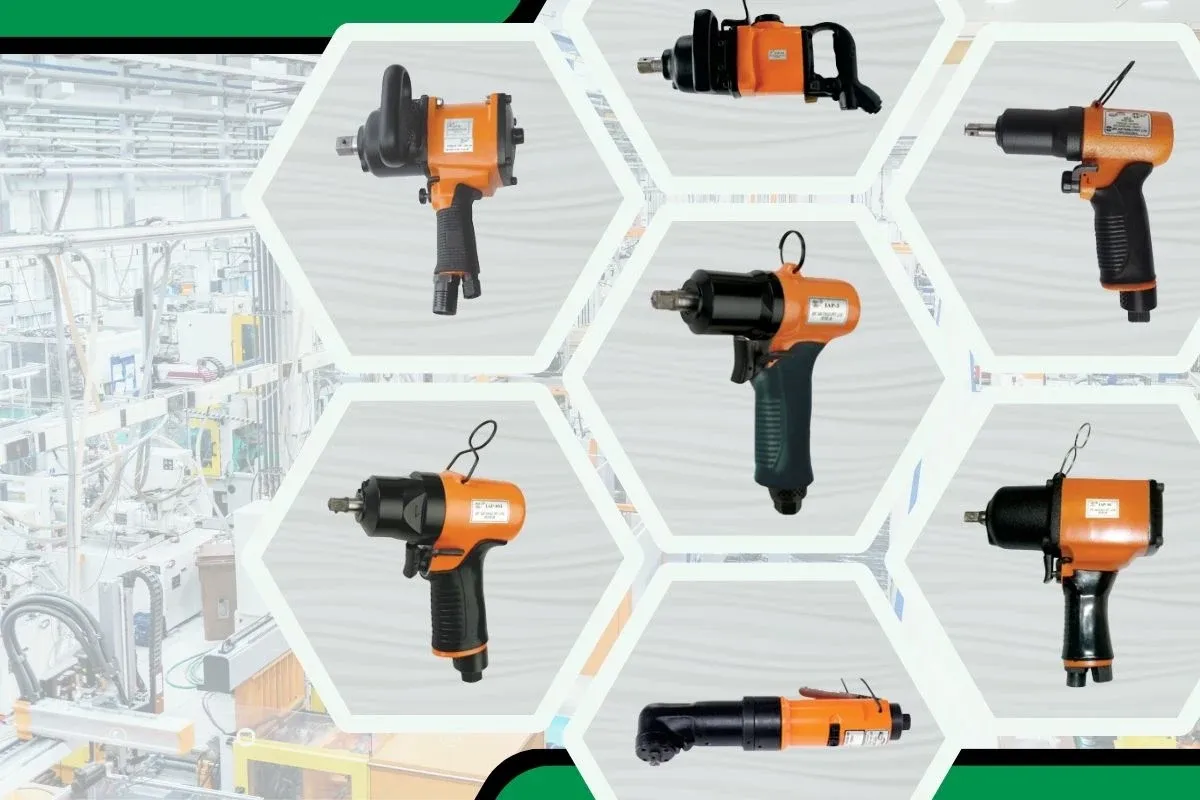
That is the problem an oil pulse tool is built to solve. Instead of transmitting continuous rotation, it delivers torque through short hydraulic pulses in a sealed oil chamber. The fastener sees the energy. The operator's wrist largely does not. You also get a quieter station, because pulse units avoid the metal-on-metal hammering that makes impact wrenches so unpleasant to stand next to for eight hours.
Two things worth knowing before you commit:
- Pulse units are happiest on hard to medium joints. On very soft joints, pulse energy tends to be absorbed rather than converted into clamp load, and cycle times stretch.
- They need scheduled oil service. Skip it and torque output drifts downward slowly enough that nobody notices until a batch fails the audit. Put it in the preventive maintenance calendar, not in someone's memory.
If your plant is subject to hand-arm vibration limits, this is also where the compliance argument sits. The EU Physical Agents Directive sets a daily exposure action value of 2.5 m/s² A(8) and a limit value of 5 m/s², measured per ISO 5349. Many operations discover they are closer to those thresholds than expected once they actually measure rather than estimate.
The tool that quietly saves the most time
Ask maintenance teams which tool they would refuse to give up and a surprising number name the ratchet.
Not because it is powerful. Because it reaches. Alternators, brake lines, valve covers, panel fixings behind a bracket: these are jobs where the constraint is not torque at all, it is the swing arc available to the operator's hand. A well-made air ratchet turns a fastener that would otherwise take twenty ratcheting strokes into a two second job, and it does it in a head profile narrow enough to slip past obstructions.
When comparing models, look past the headline torque figure at three things: head height, free speed, and whether the reverse lever can be operated one-handed without repositioning your grip. Operators will tell you within a week which tools fail that last test.
Air supply is half the tool
This is the part buyers skip, and it undermines everything else.
Pneumatic tools are rated at a specific inlet pressure, usually around 6.2 bar (90 psi) measured at the tool while running, not at the compressor gauge. That distinction matters, because air motor output falls faster than pressure does. A rough working rule on the floor is that a ten percent pressure loss can cost you something closer to twenty percent of available power.
The usual culprits:
- Undersized hose. A 6 mm whip line feeding a tool that wants 8 or 10 mm will strangle it. Long coiled hoses are worse than they look.
- Restrictive quick couplers. Cheap couplers are often the single narrowest point in the whole circuit.
- Sizing for average consumption. Air tools are rated on average CFM but draw far more during peaks. Size the header and receiver for the peak load of concurrent stations, not the sum of the averages.
- Moisture and no lubrication. Wet air corrodes vanes and rotors. A proper filter, regulator, and lubricator set close to the point of use will extend tool life more cheaply than any warranty extension.
Fix the air first. I have seen plants approve capital for new tools when the actual problem was a 15 metre run of the wrong diameter hose.
How to evaluate a supplier, not just a catalogue
Once the technical shortlist is set, the differences between manufacturers show up in the boring things.
Ask for performance data tested to ISO 5393, the standard method for rotary tools on threaded fasteners. It reports scattering across a defined number of cycles on both hard and soft joints, which is far more useful than a single maximum torque number. If your quality system requires capability studies, you will be running Cm and Cmk against those results anyway, typically looking for 1.33 or better.
Then ask the questions that decide total cost:
- What is the realistic turnaround for a service or rebuild, in days?
- Which wear parts are stocked locally, and which come from overseas?
- Is there calibration support, or are you shipping tools out for it?
- Can they document torque repeatability, or only quote maximum torque?
Suppliers who build and service their own range tend to answer these quickly. Trading houses tend not to. When shortlisting pneumatic tools manufacturers, weight the answers to those four questions at least as heavily as the unit price, because a tool waiting six weeks for a rotor costs more than the tool did.
A short audit you can run this week
You do not need a consultant for the first pass:
- Measure inlet pressure at three tools while running, not idle. Compare against the rated figure.
- Classify the ten highest-volume joints as hard or soft.
- Pull the last quarter's rework and warranty data and tag anything fastener-related.
- Ask operators which two tools they dislike most, and why. The answers are usually specific and correct.
- Check when the pulse units and clutch tools were last calibrated. If nobody knows, that is your finding.
Most plants come out of that exercise with two or three fixes that cost very little, and a much clearer brief for the next purchase. That is a better starting point than any brochure.
The tools on your line are not a line item. They are the last thing that touches the product before it ships.





























Sign in to leave a comment.