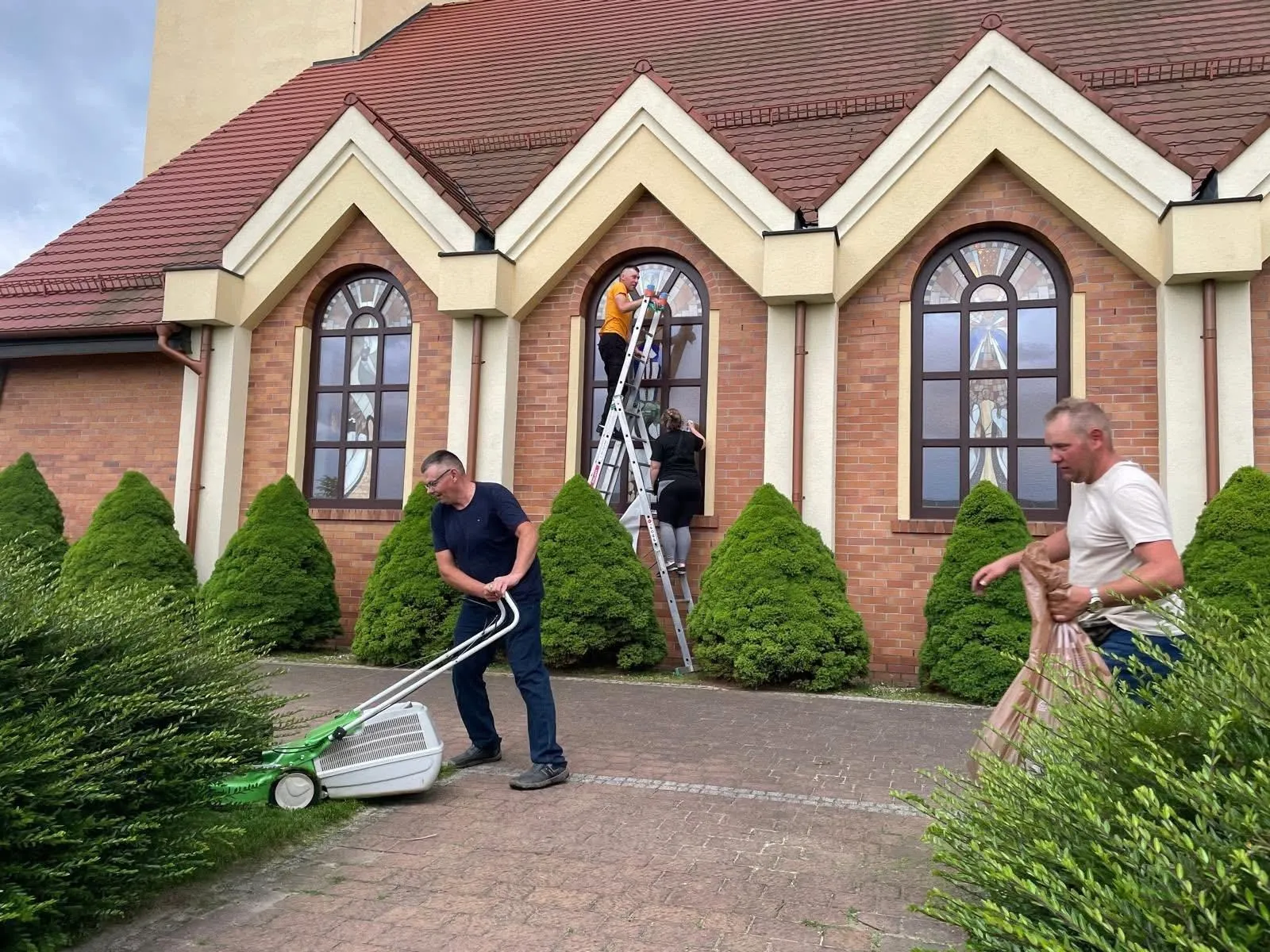

If your church relies on staff, trustees, or volunteers to keep the building running, maintenance can quickly become difficult to organize.
A leaking faucet may be mentioned after a Sunday service. An HVAC inspection may be written on a paper checklist. Someone may know that the sound system was repaired last year, but that information may only exist in their memory.
The challenge is not simply fixing things when they break.
Churches also need to know what equipment they have, which tasks are due, who is responsible for each job, and what work has already been completed.
Before improving your church maintenance process, it helps to understand:
- Which maintenance problems are happening repeatedly
- Which assets need regular attention
- How staff and volunteers will report problems
- Which tasks should be scheduled in advance
- How maintenance history will be preserved
- How the process will work when responsibilities change
So, what should churches know before improving facility maintenance?
The best place to start is with the way maintenance is handled today.
1. Understand Why Church Maintenance Can Be Different
Church maintenance is not always managed like maintenance in a commercial facility.
Many churches depend on rotating volunteers, part-time staff, trustees, and outside contractors. The person who knows how a particular HVAC unit works may not be available every week.
That creates a simple but important problem:
Maintenance knowledge can become attached to people instead of the building.
A useful maintenance process should make that knowledge available to the next person who needs it.
For example, if a volunteer who has maintained the church boiler for several years stops volunteering, the next person should not have to start from zero.
The equipment history, previous repairs, maintenance schedule, and relevant notes should still be available.
2. Find the Maintenance Problems That Matter Most
Before introducing a new system, spend some time looking at what is actually going wrong.
Ask:
- Are requests being lost in group chats?
- Are volunteers unsure who is handling a repair?
- Are recurring inspections being missed?
- Are staff discovering problems shortly before Sunday services?
- Is equipment history difficult to find?
- Are several people keeping separate maintenance lists?
These questions help identify where the current process is breaking down.
A simple example
| Current situation | Better approach |
| A broken light is mentioned after service | Record a maintenance request |
| Nobody knows who is fixing it | Assign an owner |
| A recurring HVAC check is forgotten | Schedule the task |
| Repair information is stored in email | Attach it to the asset |
| A new volunteer does not know the equipment history | Keep a shared record |
The goal is not to digitize every activity immediately.
The goal is to fix the parts of maintenance that cause the most problems.
3. Know Which Church Assets Need to Be Tracked
Not every chair or piece of equipment needs a maintenance record.
Start with assets that are important to church operations, expensive to replace, safety-related, or regularly serviced.
These may include:
- HVAC units
- Sound and AV equipment
- Kitchen appliances
- Fire alarms and extinguishers
- Plumbing systems
- Lighting
- Church vehicles
- Playground equipment
- Roofs
- Elevators
- Grounds equipment
A church with several buildings can organize these assets by campus, building, room, or system.
For example:
Main Campus → Sanctuary → Audio System
or
Main Campus → Fellowship Hall → HVAC Unit
Maintainly's Church CMMS page uses a similar asset hierarchy, such as Sanctuary → Choir Loft → Organ, and supports QR codes for accessing asset information during facility rounds.
4. Create One Clear Way to Report Maintenance Problems
A maintenance request should not depend on who happens to hear about a problem.
Imagine someone notices a leaking faucet during the week.
They tell a volunteer.
The volunteer plans to look at it later.
Then Sunday arrives.
The problem is still there.
A simple reporting process can prevent this:
Problem noticed → Request submitted → Task reviewed → Work assigned → Repair completed → Record updated
The process does not need to be complicated.
The important thing is that the request has a clear owner and a visible status.
Maintainly supports maintenance requests that can be submitted by staff and volunteers from a mobile device and converted into trackable work.
5. Decide Which Tasks Should Be Preventive
Not every maintenance task needs to wait until something breaks.
Churches can schedule recurring inspections and maintenance for important systems.
For example:
Weekly
- Facility walkthrough
- Restroom checks
- Children's-area inspection
- Sunday readiness review
Monthly
- HVAC checks
- Lighting inspection
- Plumbing inspection
- Equipment review
Seasonally
- Heating and cooling preparation
- Roof inspection
- Grounds maintenance
- Winterization
Annually
- Fire safety inspection
- Major equipment servicing
- Building condition review
- Vehicle servicing
The exact schedule will depend on the church, building, equipment, and manufacturer requirements.
The important change is moving from:
“We'll fix it when it breaks.”
to:
“We'll check it before it becomes a problem.”
Maintainly supports recurring maintenance and scheduled tasks, including workflows designed around church facilities.
6. Make Sunday Readiness Part of the Maintenance Process
For many churches, Sunday is the point when every part of the facility needs to work.
That makes pre-service checks especially valuable.
A volunteer or facilities coordinator could use a simple checklist covering:
- HVAC temperature
- Sanctuary lighting
- Microphones and AV equipment
- Restrooms
- Children's areas
- Parking lot lighting
- Kitchen equipment
- Safety equipment
If an issue is found, it should not remain on the checklist as a note that someone might remember later.
It should become a maintenance request.
This creates a simple connection:
Inspection → Problem found → Work request → Repair → Completion
Maintainly specifically describes recurring Saturday checks for areas such as HVAC, sound systems, parking, and children's areas to help prevent Sunday disruptions.
7. Make the Process Easy for Volunteers
A church maintenance system has to work for people who may not be maintenance professionals.
A volunteer might only help once or twice a month.
They should still be able to understand:
- What needs to be done
- Where it needs to be done
- What equipment is involved
- What supplies are needed
- How to report completion
Mobile access can help because the volunteer can record information while standing next to the equipment.
QR codes can make this even easier.
A QR label on an HVAC unit, for example, can connect the volunteer directly to the equipment record instead of requiring them to search through a spreadsheet.
Maintainly's church-focused system supports QR asset labels, mobile work orders, checklists, and volunteer maintenance requests.
8. Protect the Knowledge Your Volunteers Build
One of the most valuable things a maintenance team creates is not just completed work.
It is knowledge about the building.
A long-time volunteer may know:
- Which HVAC unit frequently has problems
- Where the water shutoff is located
- Which contractor repaired the roof
- Which filter size a particular unit needs
- Which equipment needs extra attention
- What was repaired last year
That knowledge should not disappear when the volunteer leaves.
A useful asset record can preserve:
Equipment → Maintenance requests → Work orders → Repairs → Parts → Photos → History
This is particularly important for older church buildings where maintenance history can help staff understand recurring problems and plan future work. Maintainly specifically positions asset history and structured asset hierarchies as useful for aging church properties.
9. Keep Maintenance and Supplies Connected
Sometimes a maintenance problem cannot be completed because the required part is not available.
Churches may need to keep basic supplies such as:
- HVAC filters
- Light bulbs
- Batteries
- Plumbing parts
- Safety supplies
- Kitchen replacement parts
- Grounds equipment supplies
Connecting inventory information with maintenance work can make it easier to understand what is being used and what needs to be reordered.
For churches managing maintenance with limited resources, this can help make purchasing more predictable.
10. Think About Multiple Buildings and Campuses Early
A maintenance process that works for one building may become difficult when the church grows.
A multi-campus church may have:
- Different volunteers
- Different buildings
- Different equipment
- Different contractors
- Different maintenance schedules
Without a shared system, leadership may rely on separate spreadsheets, emails, or phone calls.
A centralized maintenance system can provide a broader view of:
- Open work
- Overdue tasks
- Preventive maintenance
- Asset history
- Recurring problems
- Maintenance activity by location
At the same time, each campus can focus on its own facilities.
Maintainly specifically describes support for both small churches and large multi-campus congregations.
When Does a Church Actually Need a CMMS?

Not every church needs a complex maintenance system.
A small church with a few assets and a simple maintenance routine may be able to manage with a well-organized checklist.
A CMMS becomes more useful when:
- Maintenance requests are frequently missed
- The church has many assets
- Several volunteers share maintenance duties
- Preventive tasks are being forgotten
- Equipment history is difficult to find
- There are multiple buildings
- The church operates multiple campuses
- Staff spend too much time coordinating maintenance
The question should not be:
“Do we need software?”
Instead, ask:
“Can our current process reliably tell us what needs attention, who is responsible, when it is due, and what happened previously?”
If the answer is no, it may be time to consider a more structured system.
What Should a Church Look for in Maintenance Software?
If a church decides that a CMMS makes sense, the software should be practical for the people who will use it.
Important capabilities may include:
- Maintenance requests
- Work orders
- Preventive maintenance
- Asset tracking
- Asset history
- Mobile access
- Checklists
- QR codes
- Multiple locations
- Inventory
- Reporting
But the feature list is only part of the decision.
For a church that relies on volunteers, ease of use is just as important as functionality.
Maintainly's current Church CMMS offering includes mobile work orders, repeating work orders, checklists, QR asset labels, maintenance requests, asset history, and options for scaling to larger operations.
What Does a Good Church Maintenance Process Look Like?
A practical process does not need to be complicated.
It can follow this path:
Identify important assets
↓
Create a simple request process
↓
Assign responsibility
↓
Schedule recurring maintenance
↓
Complete the work
↓
Record what happened
↓
Review recurring problems
↓
Improve the process
The result is a maintenance process that is easier for staff, volunteers, and leadership to understand.
Frequently Asked Questions
What should a church track for facility maintenance?
Start with important assets such as HVAC systems, AV equipment, kitchen appliances, safety equipment, vehicles, playground equipment, lighting, plumbing, roofs, and other systems that require regular maintenance.
How can churches make maintenance easier for volunteers?
Give volunteers a simple way to report issues, see assigned tasks, complete checklists, and record completed work. Mobile access and QR asset labels can reduce the amount of searching and manual data entry required.
How can a church prepare for Sunday services?
Use a recurring pre-service checklist for areas such as HVAC, AV equipment, lighting, restrooms, children's areas, parking, and safety equipment. Problems found during the inspection can then be submitted as maintenance requests.
Why is maintenance history important for churches?
Maintenance history preserves knowledge about repairs, inspections, parts, and recurring problems. This becomes especially valuable when staff or volunteers change.
Can a small church use a CMMS?
Yes. A small church can start with its most important assets and recurring maintenance tasks rather than trying to manage everything at once. The system can grow as the church's maintenance needs increase.
How can a multi-campus church manage maintenance?
A centralized maintenance system can give church leadership visibility across locations while allowing each campus to manage its own assets, requests, and maintenance tasks. This can reduce reliance on separate spreadsheets, emails, and informal conversations.
Final Thoughts
Good church facility maintenance is not about adding more work. It is about making it easier for staff and volunteers to know what needs attention, who is responsible, when it is due, and what has already been done.
This becomes especially important for churches that rely on volunteers, maintain older buildings, or operate across multiple campuses. A CMMS can bring maintenance requests, work orders, preventive maintenance, asset records, and repair history into one place while keeping the process simple for the people who use it.
The goal is straightforward: keep the building safe, keep equipment working, be ready for Sunday, and preserve maintenance knowledge for the people who come next.
If your church is looking for a simpler way to organize facility maintenance, Maintainly can help you manage work orders, preventive maintenance, assets, and maintenance requests in one place.


















Sign in to leave a comment.