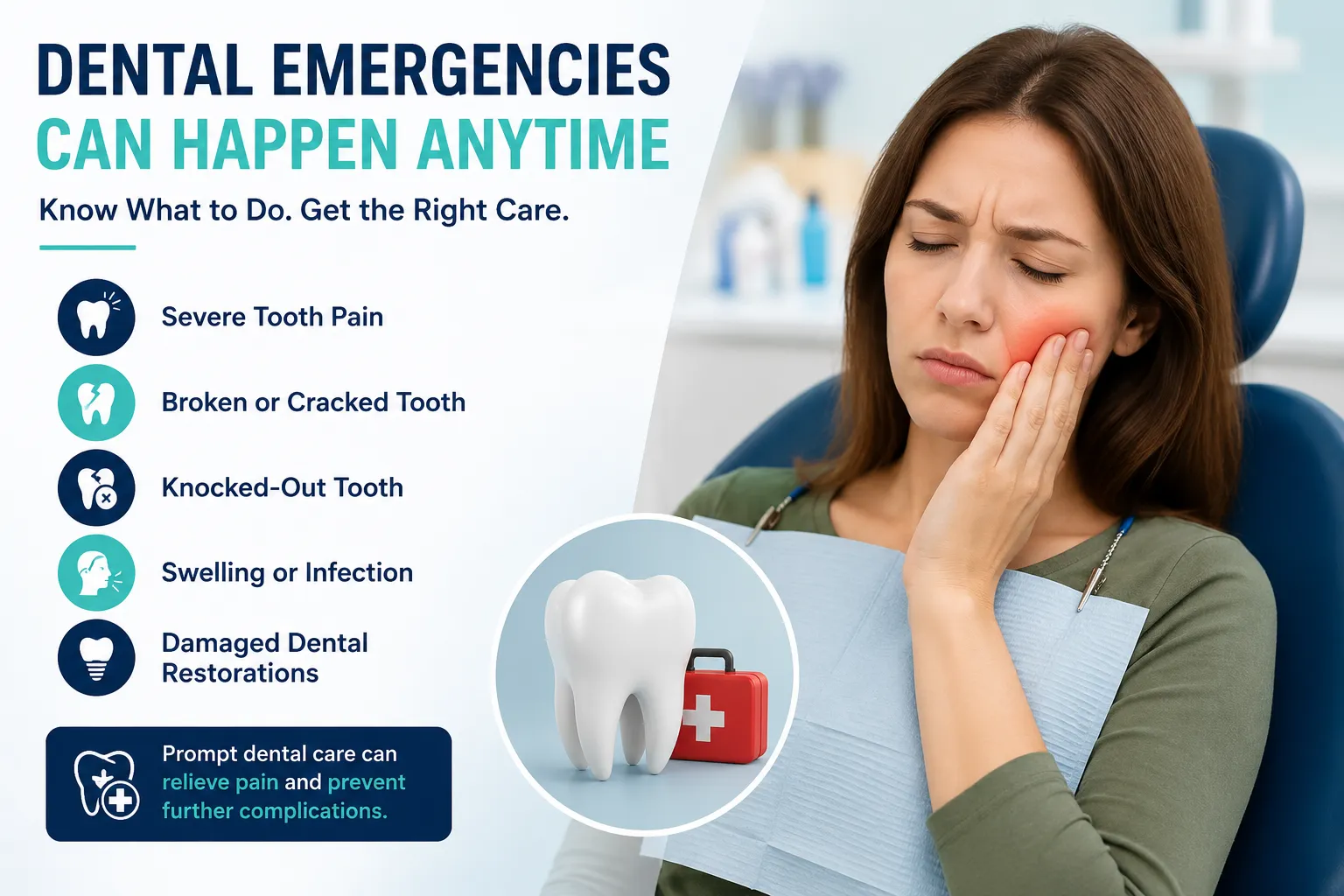

Dental problems do not always happen at convenient times. A sudden toothache, broken tooth, knocked-out tooth, or dental injury can occur unexpectedly and may require prompt attention. Knowing how to respond when a dental emergency occurs can help minimize discomfort and potentially prevent further damage.
While some dental issues can wait for a regularly scheduled appointment, others require timely evaluation by a dental professional. Understanding the difference and knowing what steps to take can make an unexpected situation easier to manage.
What Is Considered a Dental Emergency?
A dental emergency generally involves significant pain, bleeding, trauma, swelling, or damage that requires prompt professional attention. Some common examples include:
- A knocked-out permanent tooth
- A severely cracked or broken tooth
- Significant tooth pain
- Facial or oral swelling
- A dental abscess
- Uncontrolled bleeding after an injury
- A loose or displaced permanent tooth
- Damage to a dental crown, bridge, or other restoration
- Injuries to the lips, gums, tongue, or other areas of the mouth
If you are uncertain whether a dental problem requires urgent treatment, contacting a dental office for professional guidance can help determine the appropriate next step.
What Should You Do for a Severe Toothache?
A sudden or severe toothache can have several possible causes, including decay, infection, trauma, or damage to the tooth. Rather than ignoring persistent pain, it is important to have the problem evaluated.
Until you can see a dental professional, keep the area clean and gently rinse your mouth with warm water. Avoid placing aspirin or other medications directly against the tooth or gums, as this can irritate the surrounding tissue.
Professional evaluation is important because treating the underlying cause is generally more effective than simply attempting to manage the discomfort.
What If a Tooth Is Knocked Out?
A knocked-out permanent tooth is an urgent dental situation. If this happens, carefully handle the tooth by its crown rather than the root. If the tooth is dirty, gently rinse it without scrubbing or removing attached tissue.
If possible, place the tooth back into its socket without forcing it. If that is not possible, keep it moist and seek emergency dental care as quickly as possible.
Prompt professional attention may improve the chances of successfully managing the injury.
Handling a Broken or Cracked Tooth
Teeth can become cracked or broken because of accidents, sports injuries, biting hard foods, or other trauma. The appropriate treatment depends on the extent and location of the damage.
If a piece of the tooth breaks off, save the fragment if possible and bring it to your dental appointment. Rinse your mouth gently and avoid chewing on the affected side until you have been evaluated.
A dental professional can determine whether the tooth can be repaired or whether another treatment is necessary.
Dental Swelling Should Not Be Ignored
Swelling around the gums, face, or jaw can sometimes indicate an infection. Other symptoms may include persistent tooth pain, sensitivity, a bad taste in the mouth, fever, or difficulty opening the mouth.
Dental infections can become more serious if left untreated. Anyone experiencing significant facial swelling, difficulty breathing or swallowing, or rapidly worsening symptoms should seek urgent medical attention.
How to Reduce the Risk of Dental Emergencies
Not every dental emergency can be prevented, but several habits can reduce the likelihood of serious dental injuries.
Consider these practical steps:
- Wear a properly fitted mouthguard during contact sports.
- Avoid chewing on extremely hard objects.
- Do not use your teeth to open packages or containers.
- Follow good daily oral hygiene practices.
- Replace damaged dental restorations when recommended.
- Attend regular dental appointments.
- Address persistent dental discomfort instead of ignoring it.
Taking these precautions can help protect your teeth and reduce the risk of preventable injuries.
Finding Prompt Dental Care
When an unexpected dental problem occurs, knowing where to turn can provide valuable peace of mind. Patients searching for a dentist in Miramar, FL can consider a dental practice that provides comprehensive care and can evaluate a wide range of dental concerns.
Having a trusted dental office in mind before an emergency occurs can also make it easier to act quickly when urgent treatment is needed.
Take Dental Problems Seriously
A dental emergency can be stressful, but taking appropriate action can make a significant difference. Whether you are dealing with an injury, severe tooth pain, swelling, or damage to a tooth, professional evaluation is the best way to understand the problem and determine the appropriate treatment.
Rather than waiting for an emergency to become worse, make dental care part of your overall approach to maintaining your oral health. With timely professional attention and appropriate care, many dental problems can be treated effectively and your smile can remain healthy for years to come.


























Sign in to leave a comment.