
When Your Pool Turns Green: What Every Pool Owner Should Know
There’s nothing more disappointing for a pool owner than seeing beautiful blue water turn into a murky green mess. This usually happens when algae take over the water, feeding on imbalances in chemicals, poor circulation, and accumulated debris in the pool. A green pool does more than look unpleasant. It can be unsafe to swim in and, if left untreated, can damage pool surfaces and equipment over time.
Why Pools Turn Green
A pool typically turns green because of excessive algae growth. Algae thrive in water where chlorine levels are too low, pH and alkalinity are unbalanced, or the filtration system isn’t doing its job. Warm temperatures, sunlight, and debris like leaves and grass clippings also encourage algae to flourish. When chlorine drops too low for too long, algae spores multiply quickly and turn the water green.
Essential Steps to Fix a Green Pool
The good news is that a green pool can be restored with the right approach. The goal of any green pool cleanup is to kill the algae and remove it from the water while restoring healthy water chemistry.
1. Test and Adjust Water Chemistry
Before treating the pool, measure your pH, chlorine, alkalinity, and stabilizer levels. If the pH is above 7.6, algae become harder to kill because chlorine becomes less effective. Adjust the pH to the ideal range by adding the appropriate chemicals.
2. Shock the Pool
Shocking involves adding a concentrated dose of chlorine or other sanitizer to raise the chlorine level high enough to kill algae. For heavy algae blooms, professionals often shock the pool at much higher doses than standard weekly maintenance. This step starts the process of clearing the water.
3. Brush Every Surface
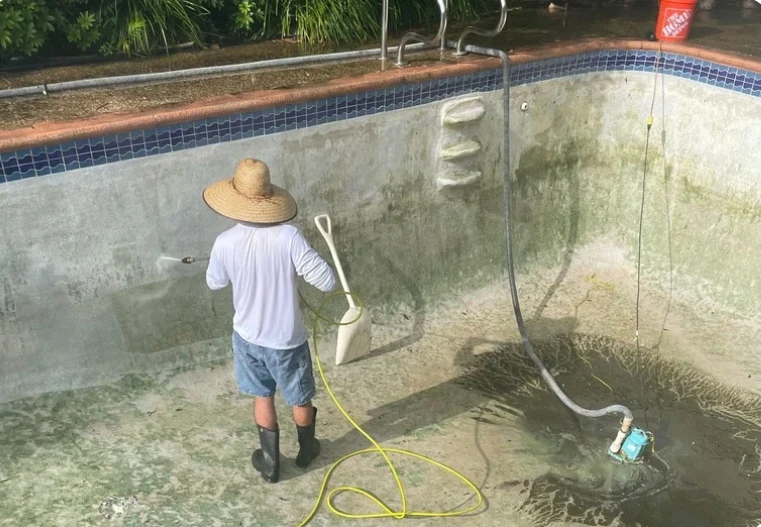
After shocking, thoroughly brush the walls, floor, steps, and corners to dislodge algae clinging to surfaces. This helps the sanitizer reach all areas and makes filtration more effective.
4. Run the Filtration System Continuously
Keep your pool pump and filter running around the clock until the water clears. As the dead algae floats and spreads, it passes through the filter and is removed from circulation. Backwash or clean your filter as needed during this time.
5. Vacuum and Clarify
Once algae are killed, dead particles will settle on the bottom. Vacuum these particles out to waste so they do not return to the pool. Some pool owners also use a clarifier to help fine particles clump together for easier removal.
Why Professional Cleanup Services Matter
While some pool owners prefer DIY solutions, a professional green pool cleanup saves time and ensures the job is done efficiently. Experts have the experience to diagnose the root cause, apply the right chemical doses safely, and monitor progress until your pool is swim-ready again. They also handle heavy algae infestations that would be difficult for most pool owners to treat on their own.
Keeping Your Pool Blue and Healthy
Once your pool is clear, maintaining proper water chemistry and regular cleaning is key to preventing future green water issues. Weekly testing, balanced chlorine levels, proper filtration, and brushing help keep algae from gaining a foothold in your pool.
A professional green pool cleanup, like the one offered by Pool Wizards, doesn’t just fix the immediate problem. It restores your pool to a clean, safe place for family and friends to enjoy while helping prevent the problem from coming back.
Sign in to leave a comment.