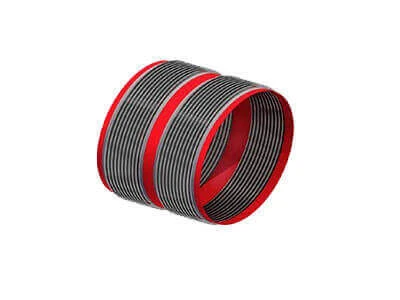

Piping Expansion joints are the heart and soul of the piping system. Still, choosing the expansion joint type that is best for your application might be challenging because so many varieties are available.
Your machine could behave inefficiently and unsafely if the correct piping expansion joint is not installed. We have compiled a list of crucial considerations with different types of joint expansions to consider before making a final selection to assist you in choosing the best expansion joint for you.
Types of Expansion Joints
Before moving ahead, we should know the types of piping expansion joints. Without aware types of expansion joints, choosing which is best for your application is futile:
Axial Expansion Joints
Axial Expansion Joints are made for handling axial motions, including longitudinal expansion and compression. Axial Expansion Joints with a relatively short build-in length can accommodate the thermal expansion of a straight pipeline segment between two fixed locations. Regarding movement compensation, this provides a simple and affordable solution.
Metal bellows expansion joint
Metal bellows expansion joints serve as pressure chambers or pipe parts. Any piece of equipment with one or more metal bellows used to absorb vibrations from engines, pumps, motors, etc., as well as dimensional changes brought on by thermal contraction or expansion of a pipeline, duct, or container, is known as an expansion joint.
Universal Expansion Joints
Installing a universal expansion joint accommodates lateral motions too large for a single expansion joint to manage. Compared to the double joint, this one consists of two bellows connected by a single connection that is not fixed to the structure. As a result, the universal expansion joint can all absorb the axial, lateral, and angular motions of the three basic movements.
Gimbal Expansion Joints
Gimbal expansion joints are manufactured to allow angular movement in any plane by using two pairs of hinges attached to a familiar floating gimbal ring. The gimbal ring, pins, and hinge limit the pressure thrust caused by internal pressure and shear forces.
In-line pressure balanced expansion joints
In-line pressure-balanced expansion joints are made to soak up axial movement that is applied externally without applying pressure loading to the system. Two bellows working in opposite directions and at line pressure are connected and used to do this. It is used when pressure stress on pipes or other equipment is unsuitable.
Elbow pressure balanced expansion joint
An Elbow pressure balanced expansion joint is a flexible pipe comprising one or two corrugated bellows in a line, a bend, a balancing corrugated bellows, and coordinating end connectors.
Hinged Expansion Joints
They contain hinges secured to the ends of the expansion joint with two pins and provide angular movement in a single plane while limiting pressure thrust and preventing axial deflection of the piping expansion joint in either extension or compression. The hinges should be used in groups of two or three, as advised. The hinges of the expansion joint allow for angular movement and can withstand pressure and thrust stresses.
Rectangular Bellows Expansion Joints
Rectangular metal expansion joints carry steam from the turbine to the condenser or gasses from the boiler to the chimney. One or more convolutions are in rectangular metal expansion joints for low, medium, and full vacuum services.
Factors to consider before choosing the ideal joint expansion
Piping Expansion joints can vary significantly in size, pressure loads, and materials used for construction from one unit to another. The following elements need to be taken into account when selecting an expansion joint for your system:
Material
It is critical to consider the materials that will be passed via the piping expansion joint while selecting one. This is significant because the materials transporting and holding particular gasses and liquids must satisfy defined specifications.
Pressure and Temperature
Every piping expansion joint is made to withstand various pressure and temperature levels. While some expansion joints are made to be more flexible and manage pressure changes in the system, others are stiffer and move with system vibrations or changes in piping and ventilation. To ensure you choose the best option, knowing what your expansion joint will be utilized for and where it will be positioned is essential.
It is possible for the joints to malfunction or the seals to fail, leaving your system hazardous and unusable if you pick an expansion joint that is inappropriate for the degree of pressure in your machine or the temperature of the materials that flow through it.
Customization
While pre-engineered expansion joints may be used successfully in most regular applications, some situations could require a unique solution. A customized solution will guarantee that the piping expansion joint you receive is ideally suited to your system, maximizing performance, security, and life expectancy. It is highly advised to speak with a specialist before reviewing the equipment's specifics to decide whether your application could profit from a unique solution.
Conclusion
This is all in this post. We have thoroughly explained the types of piping expansion joints and the factors to consider before choosing the ideal joint expansion for your application.
If you are reading this post to buy the ideal expansion joint for your application, it is recommended to use joint expansion manufactured by Flexpert Bellows. They are the leading expansion joint manufacturer in India. They have clients in India and export their products to foreign clients.



























Sign in to leave a comment.