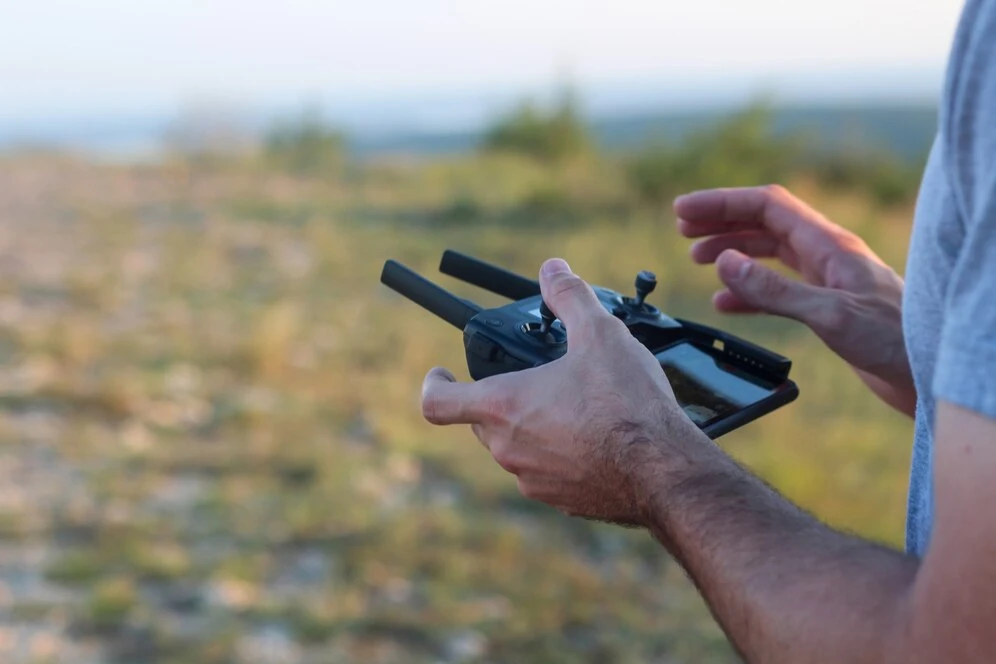

Drone technology has been advancing rapidly over the past decade, and with it, a host of new terminologies has emerged. For the uninitiated, terms like drone, UAV, and quadcopter may seem interchangeable, but there are fundamental differences between them. Drone pilots in India, in particular, need to be aware of these differences to stay on the right side of the law.
So, what is a drone? In its most basic sense, a drone is an unmanned aerial vehicle (UAV) that is remotely operated. Drones can come in many forms, from the small toy-like quadcopters that you might see flying around in the park to the much larger fixed-wing aircraft that are used for military and commercial applications.
UAV is the term that is most commonly used in the aviation industry to describe a drone. This term refers to any type of unmanned aircraft that can be flown remotely. UAVs can be further classified into two main categories - fixed-wing and rotary-wing. Fixed-wing UAVs are similar to traditional airplanes and can cover longer distances and stay in the air for extended periods. Rotary-wing UAVs, on the other hand, use rotating blades to stay airborne and are better suited for short-range flights and hovering.
Quadcopters are a specific type of rotary-wing UAV that uses four rotors for lift and propulsion. These types of drones are popular among hobbyists and enthusiasts due to their agility, stability, and ease of operation. Quadcopters are often used for aerial photography, videography, and surveillance applications.
Drone pilots in India need to be aware of the regulations surrounding drone operation in the country. In December 2018, the Indian government released guidelines for the operation of remotely piloted aircraft systems (RPAS), or drones, in the country. These guidelines classify drones based on their weight and usage and outline the procedures for obtaining a license to operate them.
According to the guidelines, drones that weigh less than 250 grams do not require any registration or license for operation. Drones that weigh between 250 grams and 2 kilograms require a permit from the local police department, while drones that weigh over 2 kilograms require a license from the Directorate General of Civil Aviation (DGCA).
In conclusion, while drone, UAV, and quadcopter may seem like interchangeable terms, they each have specific meanings and applications. Drone pilots in India must be aware of the regulations surrounding drone operation in the country and ensure that they are operating their drones within the legal framework. As drone technology continues to advance, it is essential for pilots to stay up-to-date with the latest regulations and best practices to ensure safe and responsible drone operation.
Business Name- Drone Pilots NetworkBusiness Address- B-8, Gokul Vatika, Near Patrika Gate, Jaipur 302017
Business Number- 9828870101










Sign in to leave a comment.