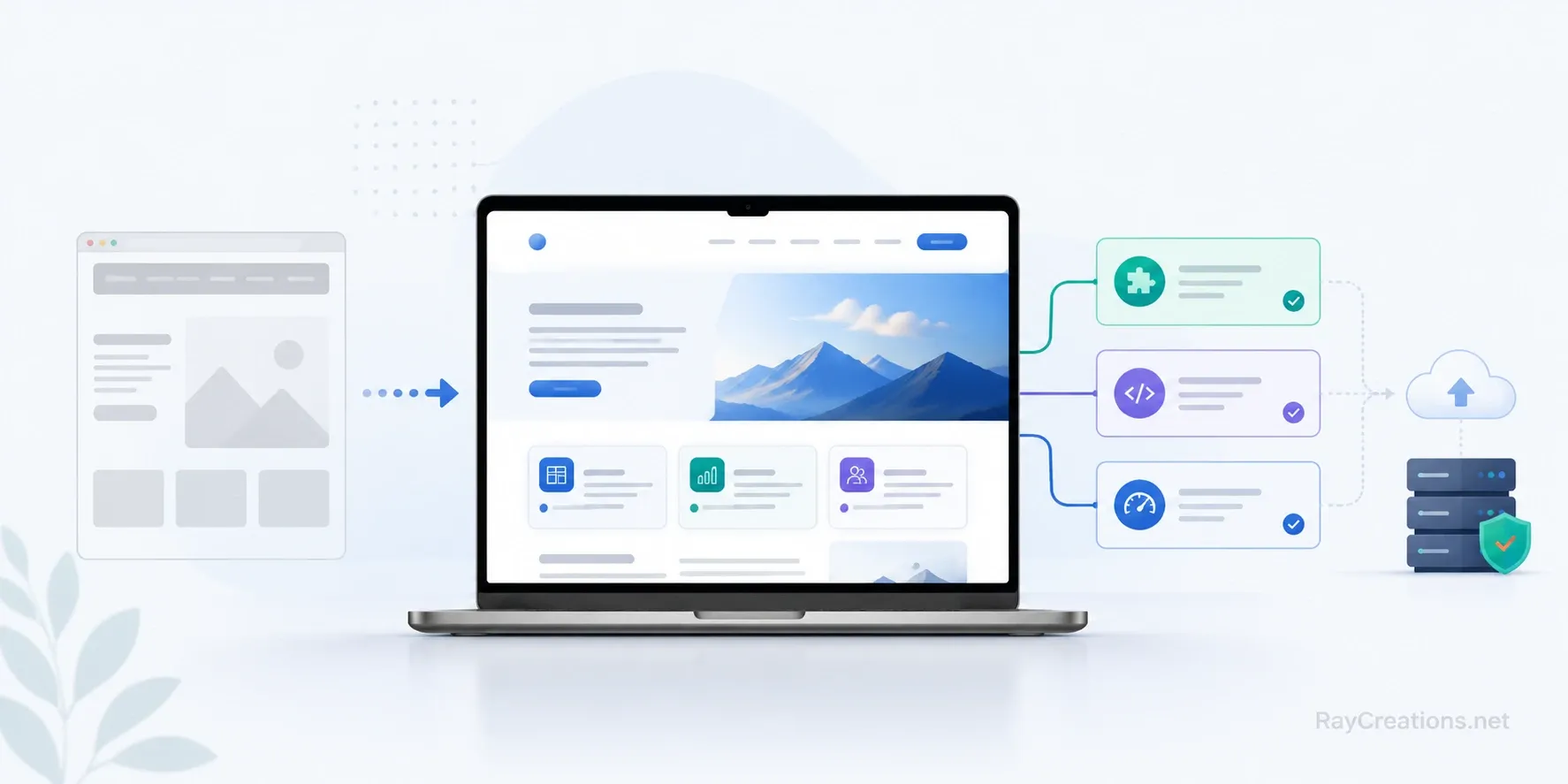

A website redesign often starts with a simple feeling: the current site looks outdated.
Maybe the colors no longer match the brand. Maybe the layout feels old. Maybe the homepage does not create the right first impression anymore. These are valid reasons to redesign a website, but in many cases, the problem goes deeper than appearance.
A good redesign should not only make a website look newer. It should make the website clearer, faster, easier to use, and better aligned with the way the business works today.
Many businesses change over time. Services expand, audiences shift, pricing changes, and customer expectations become more demanding. A website that worked well five years ago may no longer explain the business properly. It may still be online, but it may not be helping visitors understand what the company offers or why they should make contact.
This is where a thoughtful website redesign becomes important. A proper redesign looks at structure, navigation, mobile experience, content flow, calls to action, performance, and trust signals. The goal is not just to refresh the visuals, but to improve how the website supports the business.
Sometimes, during a redesign, it also becomes clear that the business needs more than standard pages.
For example, a company may need a booking system, client dashboard, custom enquiry flow, product filtering, member area, internal workflow, or integration with another business tool. These requirements cannot always be handled well with a basic theme or simple page layout.
In such cases, custom web solutions may be a better fit. Custom development allows the website to support specific business processes instead of forcing the business to work around the limitations of a ready-made setup. This is especially useful when the website needs to do more than display information.
A redesign is also a good time to review the technical foundation of the website.
If the existing WordPress site is slow, unreliable, difficult to update, or hosted in a weak environment, changing the design alone may not solve the real problem. The site may look better after redesign, but still load slowly or remain hard to manage.
That is why some website upgrades also involve a careful WordPress site migration. Moving a WordPress website to better hosting, when done properly, can improve speed, stability, security, and long-term maintainability. It also gives the business a cleaner foundation for future growth.
The key is to avoid treating redesign as a surface-level project.
Before changing the look of a website, it is worth asking a few practical questions. Is the current structure still useful? Are visitors finding the right information quickly? Does the website work well on mobile? Are important forms and calls to action easy to use? Does the site need any custom functionality? Is the hosting environment strong enough?
A redesign that answers these questions will usually deliver more value than one focused only on colors and layout.
In the end, a business website should not simply look modern. It should support trust, enquiries, usability, performance, and growth.
When a redesign is planned properly, it becomes more than a visual update. It becomes an opportunity to rebuild the website into a stronger, more useful business asset.




















Sign in to leave a comment.