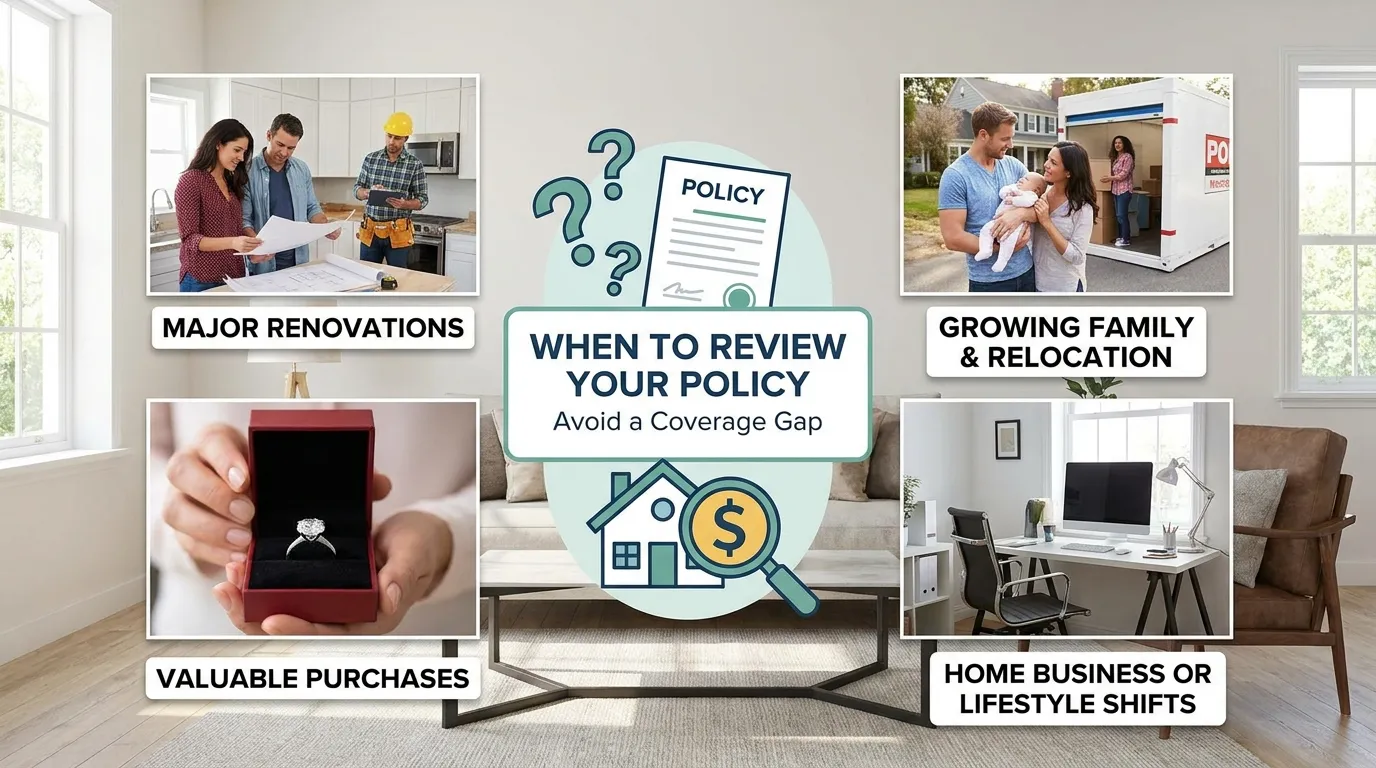

Homeowners insurance is often treated as a set-it-and-forget-it purchase, renewed automatically year after year without much thought. This approach works fine until it doesn't, typically at the worst possible moment, when a claim reveals that coverage no longer matches the actual value or risk of the home. Knowing when to proactively update a homeowners insurance policy can prevent this kind of costly surprise and ensure coverage keeps pace with real-life changes.
After Completing a Home Renovation
One of the clearest triggers for updating homeowners insurance is completing a significant renovation. Adding a room, finishing a basement, remodeling a kitchen, or upgrading major systems like plumbing or electrical work all increase the value of a home and, by extension, the cost to rebuild it after a covered loss.
Homeowners insurance policies are typically based on the value of the home at the time the policy was written or last updated. If a homeowner completes a major renovation without notifying their insurance provider, the resulting coverage gap may not become apparent until after a loss occurs, at which point it is far too late to address.
Renovations that typically warrant a policy update include:
- Kitchen or bathroom remodels involving high-end materials or appliances
- Finished basements or attics that add usable living space
- Room additions or structural expansions
- Major system upgrades, such as new HVAC, electrical, or plumbing systems
When You Acquire High-Value Personal Property
Standard homeowners insurance policies include personal property coverage, but this coverage often comes with sub-limits for specific categories of valuable items, such as jewelry, art, or collectibles. If a homeowner acquires something falling into one of these categories, whether through purchase, inheritance, or gift, it is worth reviewing whether the existing homeowners insurance policy provides adequate protection.
Common situations that call for a policy update include:
- Purchasing an engagement ring or other fine jewelry
- Inheriting artwork, antiques, or family heirlooms
- Building a collection of significant value, such as wine, coins, or memorabilia
- Acquiring expensive electronics or home office equipment
In many cases, these items require a scheduled endorsement added to the homeowners insurance policy, since standard personal property limits are often insufficient for high-value individual items.
Following Major Life Changes
Life changes that affect who lives in the home or how the home is used often have direct implications for homeowners insurance coverage. These changes are easy to overlook since they don't always feel directly related to insurance, but they can meaningfully affect a policy's adequacy.
Examples include:
- Starting a home-based business, which may require additional liability or business property coverage
- Welcoming a new pet, particularly certain dog breeds that insurers may flag for liability considerations
- Renting out a portion of the home, which may require a different policy structure entirely
- A significant increase in household income or assets, which may warrant additional liability protection through an umbrella policy
When Local Construction Costs Rise
Homeowners insurance dwelling coverage is meant to reflect the cost to rebuild a home, and this figure is directly tied to local labor and material costs. When these costs rise, which has happened significantly in many regions in recent years, a policy that was adequate when written can quietly become underinsured over time.
While many policies include automatic inflation adjustments, these built-in increases do not always keep pace with actual local cost increases, particularly during periods of rapid inflation in construction materials or skilled labor shortages. Homeowners should periodically compare their dwelling coverage limit against current estimated rebuild costs for their specific home and region, rather than assuming automatic adjustments are sufficient.
After Moving to a New Area With Different Risk Factors
Relocating to a new home, even within the same state, can introduce new risk factors that warrant a homeowners insurance policy update. Different regions carry different exposure to natural disasters, crime rates, and even proximity to fire response resources, all of which can affect appropriate coverage levels.
Homeowners moving to a new property should evaluate:
- Whether the new location falls within a flood zone requiring separate flood insurance
- Regional risks such as wildfire, hail, or severe storm exposure
- Distance from fire stations or hydrants, which can affect both risk and premium calculations
- Local building codes, which may affect rebuilding costs after a loss
When Filing a Claim Reveals a Coverage Gap
Sometimes the clearest signal that a homeowners insurance policy needs updating comes after filing a claim and discovering that coverage limits or specific provisions were inadequate. While this is not an ideal way to discover a gap, it presents an important opportunity to review and adjust coverage going forward.
After any claim, homeowners should ask their insurance provider:
- Whether the payout adequately covered the actual cost of repairs or replacement
- If any specific exclusions affected the claim outcome unexpectedly
- Whether similar future incidents would be handled differently under updated coverage
Establishing a Regular Review Schedule
Beyond these specific triggers, it is generally wise to review a homeowners insurance policy on an annual basis, ideally around the renewal date. This regular check-in creates a natural opportunity to reassess coverage even in the absence of an obvious triggering event, since gradual changes in home value or personal circumstances can accumulate unnoticed over several years.
An annual review should include a look at:
- Current dwelling coverage compared to updated rebuild cost estimates
- Personal property limits relative to current household belongings
- Liability coverage adequacy given any changes in household activities or assets
- Whether any life changes over the past year might warrant policy adjustments
Working With an Insurance Professional for Ongoing Guidance
Because so many of these triggers are easy to overlook amid the busyness of everyday life, working with an experienced insurance provider offers real value beyond the initial policy purchase. A knowledgeable agent can proactively flag when life changes or market conditions suggest a policy update is warranted, rather than leaving homeowners to catch these signals on their own.
Pro Insurance Group works with homeowners on an ongoing basis to help identify when a homeowners insurance policy update makes sense, ensuring coverage evolves alongside the home and household it protects.
Conclusion
Homeowners insurance should never be treated as a one-time decision made at closing and left unchanged indefinitely. Renovations, high-value acquisitions, life changes, rising construction costs, and even the aftermath of a claim all represent legitimate triggers for reviewing and updating coverage. Establishing a habit of regular policy reviews, supported by guidance from an experienced insurance professional, helps ensure that homeowners insurance keeps pace with real life rather than lagging behind it until a costly gap is discovered the hard way.

























Sign in to leave a comment.