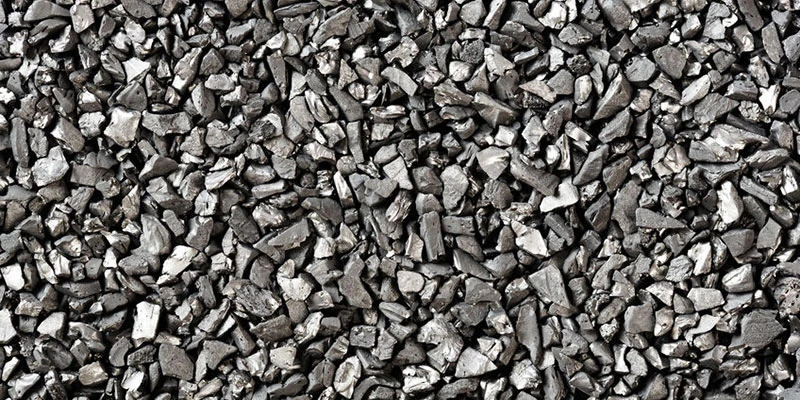

When it comes to filter media, activated carbon (AC) is by far the most widely used in home filtration units. It’s natural (usually comes from coconut shell), sustainable, affordable and efficient.
It’s the best filter media for removing chlorine from water and it’s compatible with every other water filtration technology, which explains why it’s used in nearly every single type of filter system.
Carbon filters are either activated carbon plant, which are blocks of compressed carbon, or granular activated carbon (GAC), which are loose carbon spheres or granules.
There are differences between GAC and carbon block filters, which makes one type better suited for certain applications compared to the other type.
Read this guide to find out when to use carbon block and when to use granular activated carbon instead.
In comparing the two types of activated carbon, we’re examining contaminant removal efficiency, pressure drop, and application.
When it comes to removing contaminants, both types of activated carbon are used to treat tap water in order to remove chlorine, chlorine by-products, volatile organic compounds, and basically any contaminant that can be absorbed by carbon.
The difference between the two forms of filter media appear when we examine removal efficiency - carbon block filters are the undisputed winners in this category.
The reason is contact time. Because of the uniformity that characterises carbon block, water has a longer contact time with carbon, which translates into a longer contact time of contaminants with carbon.
Since GAC is not as compact and uniform as carbon block, water passes through more quickly, allowing less time for carbon to adsorb contaminants.
Therefore, if you want chlorine removed from your tap water more efficiently, carbon block filters are the way to go.
Another difference that’s worth noting is pressure drop. Any filter media that’s put in the way of water creates a drop in pressure.
Some filters cause pressure to drop and carbon filters are one of those filters. Since they’re so compact and water takes a longer time to pass through, the loss of pressure is higher in the case of carbon block filters.
This is not the case with GAC filters. The loose granules allow water to pass through more quickly, which results in a lower pressure drop compared to carbon block filters.
In systems, where avoiding pressure drop is important, GAC filters are the better option (e.g. filters used in showers, baths, or even fridge filters).While the larger surface area of carbon block makes it better at absorbing more contaminants, most carbon filters shouldn’t be used more than 3 to 6 months.
In terms of durability, there isn’t any stark difference between the two filters, unless one is infused with silver or other bacteria inhibiting agent, and the other isn’t.
Carbon filters treated with a bacteriostatic agent are known as antibacterial filters, which boast a longer service life and better protection against bacterial grow-through.
Because of the sediments and organic materials that may accumulate in carbon filters, these filters are prone to harbouring bacteria, which isn’t an issue when it comes to filters that are replaced every 3 months or so, but it does become an issue in filters that are designed for longer use.
To prevent such issues, carbon filters are often treated with silver or zinc nanoparticles that prevent the proliferation of bacteria and viruses.
An example of a antibacterial filter is the Pentek 20-Micron Silver Impregnated GAC Filter, which filters solids and organics down to 20 microns, removes chlorine and strange tastes, and prevents the growth of bacteria.
The filter uses acid washed bituminous carbon and it’s compatible with 2.5 x 10 inch filter housings.










Sign in to leave a comment.