
In today’s digital world, content is everywhere– but connection is rare. Audiences are overwhelmed by polished visuals, scripted messages, and surface-level inspiration that fades as quickly as it appears. That’s where Move Movement stands apart. Instead of telling people how to move, what to buy, or who to become, it focuses on something far more powerful: real people and their lived experiences with movement.
These stories aren’t staged. They aren’t filtered to perfection. They reflect everyday humans navigating life through movement– whether that movement represents joy, healing, identity, freedom, or resilience. This intentional storytelling approach is not accidental; it’s the foundation of what makes The Move Movement resonate globally.
Authenticity Over Performance: A Different Philosophy of Movement
Traditional movement and wellness platforms often spotlight peak performance– elite athletes, extreme transformations, or idealized routines. While inspiring for some, this approach can alienate many.
The Move Movement flips that narrative.
Here, movement is not about achievement– it’s about experience. Stories highlight people moving through life, not toward unrealistic benchmarks. This authenticity creates emotional trust, which research shows is critical: according to Edelman’s Trust Barometer, 81% of people say trust is a deciding factor in how they engage with content and brands.
By focusing on lived moments rather than outcomes, these stories feel relatable rather than aspirational.
Real People Create Emotional Connection, Not Just Attention
Attention is easy to capture. Connection is not.
The Move Movement understands that audiences don’t just want content– they want to see themselves reflected. Real people bring:
- Imperfect journeys instead of polished narratives
- Vulnerability instead of performance
- Meaning instead of metrics
This human-first approach explains why users often describe the stories as “grounding,” “refreshing,” and “honest” rather than motivational in the traditional sense.
When people recognize their own struggles, joys, or questions in a story, the content stops being something they scroll past– and becomes something they feel.
Movement as Identity, Culture, and Daily Life
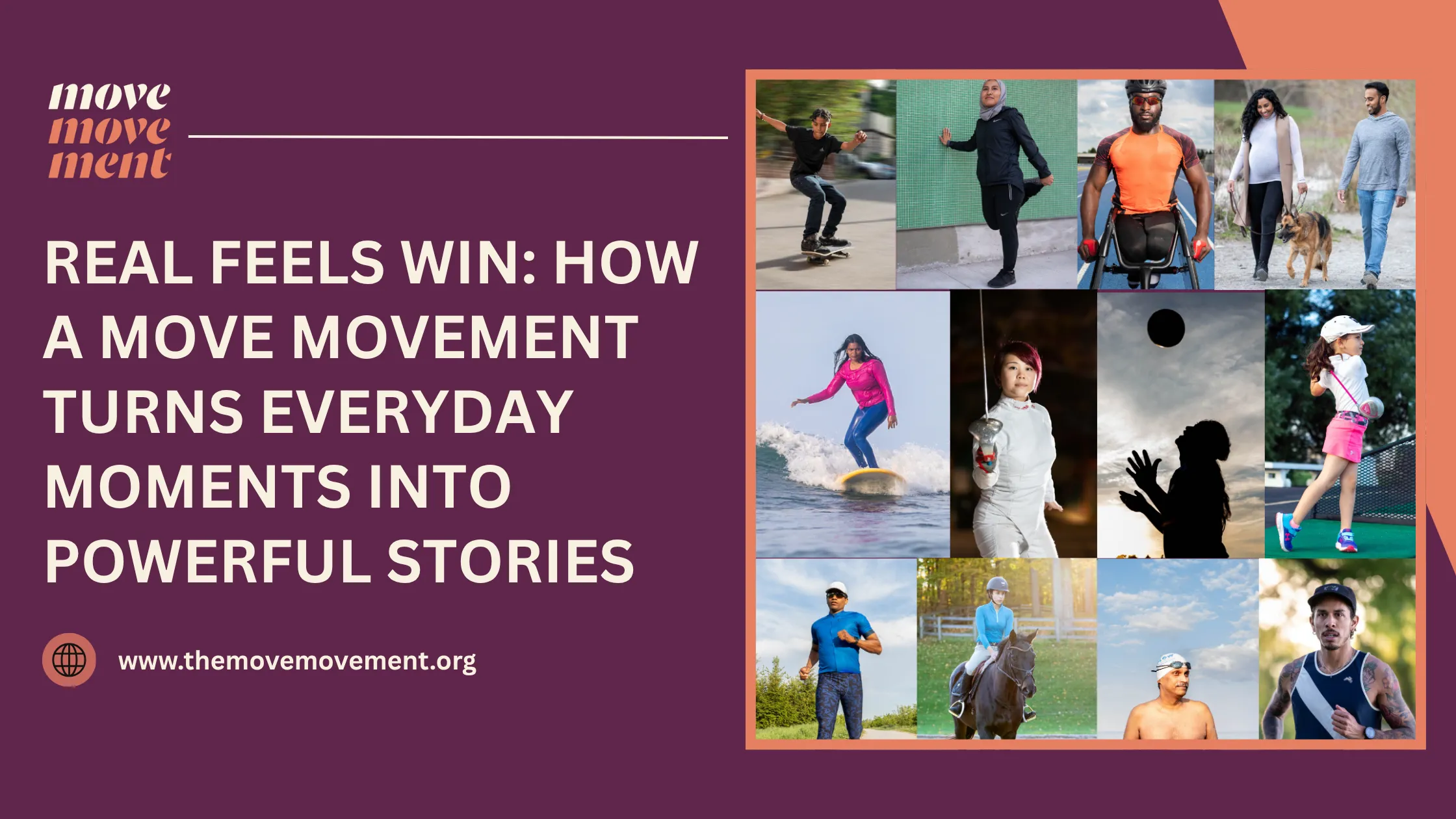
One defining feature of The Move Movement storytelling style is how broadly movement is defined. It’s not confined to gyms, sports, or fitness trends.
Movement shows up as:
- A form of self-expression
- A way to reconnect with the body
- A cultural or generational practice
- A response to life changes or challenges
This inclusive definition reflects how people actually live. Movement becomes personal, contextual, and meaningful– not prescriptive.
In one paragraph of many stories, Move Movement appears naturally as part of this wider philosophy– representing movement as something woven into identity rather than something imposed from the outside.
Why Audiences Trust These Stories
Trust isn’t built through authority alone– it’s built through honesty.
A Nielsen study found that 92% of people trust recommendations and stories from real individuals more than branded messaging. That insight directly aligns with why The Move Movement prioritizes real voices over manufactured narratives.
Readers aren’t being told what movement should look like. They’re invited to witness what movement does look like for someone else– and decide what it means for them.
This approach avoids preaching and instead creates space for reflection.
Expert Insight: Why Storytelling Works Better Than Instruction
From a content strategy perspective, storytelling activates different parts of the brain than instructional content. Neuroscience research from Princeton University shows that stories synchronize brain activity between the storyteller and the listener, increasing empathy and memory retention.
That’s why people remember stories long after they forget tips or statistics.
The Move Movement leverages this naturally:
- No rigid frameworks
- No forced calls to action
- No “before and after” pressure
Just human stories that stay with you.
User Impressions and Community Response
While The Move Movement doesn’t rely on testimonials in a traditional marketing sense, audience reactions consistently reflect a sense of recognition and belonging.
Common user impressions include:
- “This feels real, not performative.”
- “I finally see movement represented in a way that includes me.”
- “These stories make me think differently about my own relationship with movement.”
That emotional response is the result of intentional editorial choices– not accidental success.
Why This Approach Matters More Than Ever
In an era of AI-generated content, influencer saturation, and algorithm-driven messaging, authenticity is no longer optional– it’s essential.
Audiences are increasingly skeptical of perfection. They crave honesty, nuance, and humanity. By centering real people, The Move Movement positions itself not just as a content platform, but as a cultural archive of how humans experience movement across different lives, bodies, and contexts.
This is why the stories feel timeless rather than trend-driven.
FAQs: Understanding The Move Movement Storytelling Approach
What makes The Move Movement stories different from fitness blogs?
Unlike fitness blogs that focus on workouts or results, The Move Movement shares personal, human stories where movement is part of life– not a performance goal.
Are the stories scripted or staged?
No. The focus is on real people and authentic experiences, which allows stories to remain honest, emotional, and relatable.
Is The Move Movement only for athletes?
Not at all. The stories intentionally represent people from all backgrounds, abilities, and relationships with movement.
Why is authenticity so important in movement storytelling?
Authenticity builds trust, emotional connection, and long-term engagement– something instructional or promotional content often fails to achieve.
How does The Move Movement choose which stories to share?
Stories are selected based on their human depth, lived experience, and the meaning movement holds in that person’s life– not popularity or performance metrics.
Final Thoughts: Why Real Stories Will Always Matter
The power of Move Movement lies in its refusal to oversimplify movement. By focusing on real people and authentic experiences, it creates space for honesty, diversity, and emotional connection– things modern audiences are actively searching for but rarely find.
These stories don’t tell you how to move. They remind you why movement matters in the first place.
And in doing so, The Move Movement continues to redefine what meaningful movement storytelling looks like– one real human story at a time.





























Sign in to leave a comment.