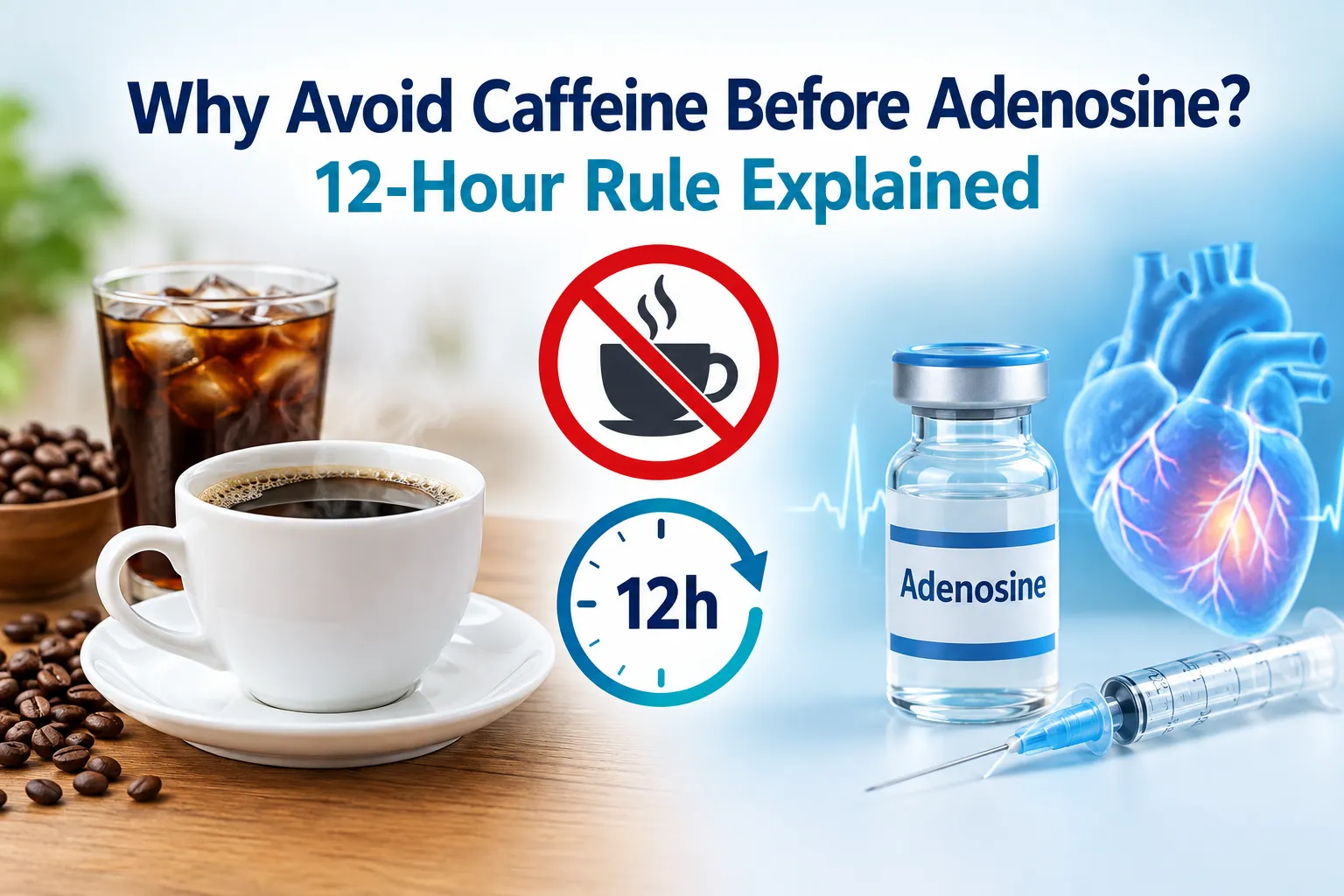

If your doctor has scheduled an adenosine stress test, you may be told to skip coffee, tea, chocolate, energy drinks, and even some medicines beforehand. It can seem excessive. After all, one cup of coffee does not feel like a big deal.
But there is a reason behind the rule. Caffeine can interfere with how adenosine works during a heart stress test. This is why patients preparing for an adenoz injection may be asked to avoid caffeine for at least 12 hours.
The goal is simple: give the test the best chance of producing an accurate result.
What Does Adenosine Do During a Stress Test
Adenosine is a naturally occurring chemical in the body. In cardiac stress testing, doctors can administer it as a medicine to temporarily increase blood flow through the coronary arteries.
This creates a controlled “stress” state. Imaging can then show how well blood reaches different areas of the heart.
Adenosine works by activating specific receptors, especially the A2A receptors found in blood vessels. Their activation causes the coronary arteries to widen. This increased blood flow helps doctors identify areas where circulation may be reduced.
The drug acts very quickly and is also cleared quickly. That short action is useful in a monitored medical setting.
Why Is Caffeine the Problem?
Here is the key point: caffeine works against adenosine at the receptor level.
Caffeine is an adenosine receptor antagonist. In simple terms, it can occupy the same receptors that adenosine needs to activate. This may reduce the blood-vessel response that the test is designed to create.
Think of the receptor as a parking space.
Adenosine needs that space to produce its effect. Caffeine can take the space first. When that happens, adenosine may not produce the expected response.
Research has shown that caffeine can reduce adenosine-induced coronary blood-flow changes and potentially make a perfusion abnormality less obvious.
That matters because the purpose of the test is to give your doctor a clear picture of how your heart responds to increased blood flow.
Why Is the Rule 12 Hours?
The 12-hour rule is mainly about reducing the chance that caffeine will still interfere with the test.
Current cardiac imaging guidance commonly recommends avoiding caffeine and other methylxanthines for at least 12 hours before vasodilator stress testing. The American Heart Association's chest-pain guidance also lists caffeine or other methylxanthine use within 12 hours as a concern for vasodilator testing.
Caffeine also stays in the body for several hours. Its typical half-life in healthy adults is around four to five hours, although it can vary between people.
So, the 12-hour window provides a practical safety margin rather than being a magic cutoff that applies identically to every person.
Some newer imaging recommendations use an even wider 12–24-hour caffeine-free window. Always follow the specific instructions given by your testing center.
What Counts as Caffeine?
Many people think avoiding coffee is enough. It is not always that simple.
Before an adenosine-based stress test, ask your medical team about:
Coffee and Tea
Regular coffee and caffeinated tea are obvious sources. This includes espresso, iced coffee, black tea, green tea, and many specialty drinks.
Energy and Soft Drinks
Energy drinks can contain substantial amounts of caffeine. Some colas and other soft drinks contain caffeine too.
Chocolate
Chocolate and cocoa products can contain caffeine and related methylxanthines. Cardiac imaging guidance specifically recommends avoiding caffeine-containing foods such as chocolate before vasodilator stress testing.
Medicines and Supplements
Some medicines contain caffeine. Other products may contain methylxanthines such as theophylline or aminophylline, which can also interfere with vasodilator testing.
Do not stop a prescribed medicine on your own. Ask your doctor or imaging center which medicines should be held and for how long.
What About Decaf Coffee?
“Decaf” does not always mean caffeine-free.
Decaffeinated drinks can still contain small amounts of caffeine. Some professional imaging guidance therefore advises patients to avoid them during the preparation period as well.
If your test center says “no caffeine,” the safest approach is to follow that instruction literally.
Water is usually the simplest choice unless your medical team gives you different fasting instructions.
What Happens If You Accidentally Have Coffee?
Do not panic.
Tell the staff before the test begins. They can decide whether it is safe and appropriate to continue, delay, or reschedule the examination.
Do not hide a cup of coffee because you are worried about losing your appointment. The testing team needs accurate information to interpret the procedure correctly.
Studies on caffeine and adenosine testing have produced some mixed findings, and certain research suggests that higher adenosine doses may overcome caffeine's effect. However, that does not mean patients should ignore preparation instructions.
Following the center's preparation rules remains the best way to avoid an unnecessary repeat test.
Does the 12-Hour Rule Apply to Everyone?
Not necessarily.
The exact preparation depends on the type of stress test, the medication being used, your health history, and the imaging method. Adenosine, regadenoson, and dipyridamole are all vasodilator agents, but their pharmacology is not identical.
Your healthcare provider may also give instructions about fasting, other medications, exercise, and smoking.
For patients managing several treatments at once, including those looking for iron deficiency medicines online, it is important to check every medicine and supplement with a healthcare professional before a cardiac test. Never stop prescribed treatment simply because you read that it might affect a test.
For patients who need help understanding medication-related questions, a reputable healthcare provider or pharmacy service such as Onco Health Mart can be a useful place to seek professional guidance.
Simple Checklist Before Your Adenosine Test
Keep preparation easy:
- Avoid caffeinated coffee and tea.
- Skip energy drinks and caffeinated soft drinks.
- Avoid chocolate during the instructed window.
- Check medicines for caffeine or methylxanthines.
- Do not assume decaf is completely caffeine-free.
- Follow your center's fasting instructions.
- Do not stop prescribed medicines without medical advice.
- Tell the testing team if you accidentally consume caffeine.
Follow the Right Steps for a Safer, More Accurate Test
The 12-hour caffeine rule is not about making the test uncomfortable. It is about protecting the quality of the result.
Caffeine can compete with adenosine at its receptors and reduce the desired vasodilator response. That may affect how coronary blood flow appears during testing.
So, if your cardiac imaging center tells you to stay caffeine-free for 12 hours, take the instruction seriously. It is a small step that can help the medical team get the clearest possible information from your test.
When in doubt, ask your cardiologist, imaging center, or pharmacist before the appointment. A few minutes of clarification can help prevent confusion, delays, or the need to repeat the test.



















Sign in to leave a comment.