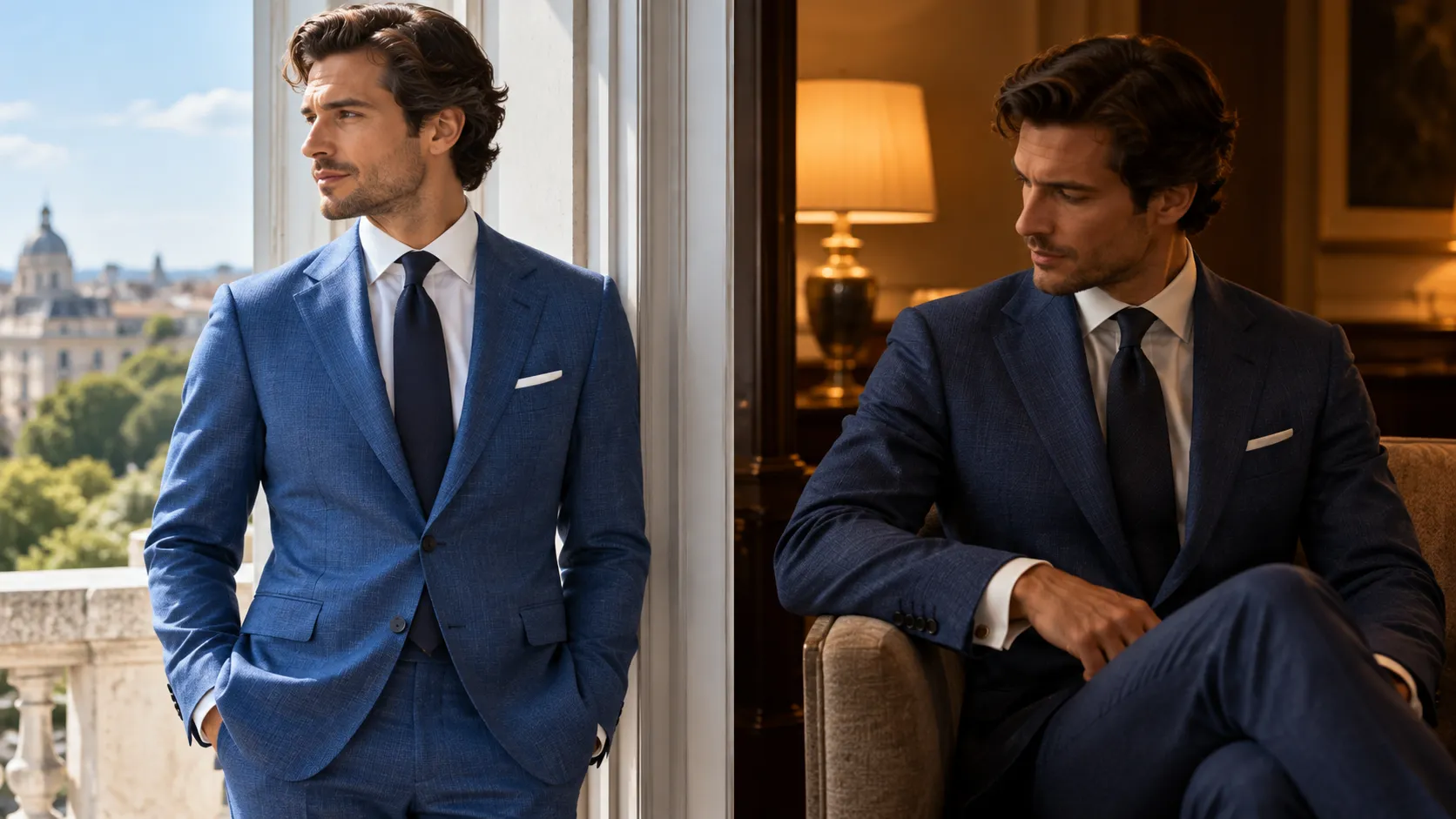

Blue clothes can look different under different lighting because the light source changes the wavelengths reflected by the fabric and how our eyes perceive them. A jacket that looks bright blue outdoors may appear darker under warm indoor lighting. Fabric texture, dye, surrounding colors, and camera settings can also influence its appearance. This is worth understanding before purchasing a suit, ordering clothing online, or choosing an outfit for an important event.
Key Takeaways
- Natural sunlight and indoor lighting can make the same blue garment appear different.
- Fabric texture and weave influence how light reflects from clothing.
- Camera settings and digital screens can alter the appearance of blue.
- Comparing colors under more than one light source helps avoid surprises.
- A physical fabric swatch can be useful when color accuracy matters.
Why Lighting Changes the Appearance of Blue Fabric
The color we see depends partly on the light reaching an object. When light falls on a garment, some wavelengths are absorbed while others are reflected. Our eyes interpret the reflected light as color. However, not every light source contains the same balance of wavelengths.
Daylight typically provides a different spectrum from warm household lighting. As a result, a blue fabric may appear more vibrant in one environment and more muted in another. This explains why two garments that seem similar inside a shop may look noticeably different outdoors. The effect can be especially relevant when comparing blues that differ in brightness, saturation, or undertone.
Natural Daylight Is a Useful Starting Point
Natural daylight is often helpful when evaluating clothing colors because it allows you to see fabric outside the influence of a single indoor lighting system. If possible, examine the garment near a window or in indirect outdoor daylight. Look at the fabric from several angles.
Some materials have a consistent matte finish, while others develop highlights depending on the direction of the light. Avoid evaluating color only in intense direct sunlight, which can create strong highlights and shadows. A shaded outdoor area can provide a more balanced view. For a suit intended for daytime events, checking its appearance in daylight is particularly useful.
Indoor Lighting Can Change Your Impression
Warm indoor lighting may make some blue garments appear duller or less vivid. Cooler lighting can produce a different impression. The exact result depends on the fabric's dyes and the spectral characteristics of the light source. This phenomenon is related to metamerism, where colors that appear to match under one light source may no longer match under another.
Imagine purchasing a blue jacket and trousers separately. Under a store's lighting, the colors may appear close enough to form a coordinated outfit. Later, outdoors, the difference between the fabrics becomes easier to notice. This is one reason buying matching tailored garments as a set can be preferable when an exact color match is important.
Fabric Texture Matters as Much as Color
Two blue garments can use similar dyes yet appear different because of how their fabrics are constructed. Smooth, tightly woven cloth often reflects light differently from textured materials. Consider these examples:
| Fabric | Visual characteristic | Potential appearance |
| Smooth wool | Relatively even surface | More consistent color |
| Wool twill | Subtle diagonal texture | Variation with viewing angle |
| Linen | Natural surface irregularities | Softer, textured appearance |
| Velvet | Directional pile | Strong light-to-dark variation |
| Satin | More reflective surface | Noticeable highlights |
| Denim | Textured yarn construction | Uneven or washed appearance |
These differences are not necessarily signs of poor quality. They're part of how materials interact with light. When choosing formalwear, examine both the color and the fabric construction rather than relying entirely on the shade name.
Badass Bespokery's guide to men's suit fabrics and styles provides additional context on how tailoring materials influence the finished appearance.
Why Blue Clothing Looks Different in Photographs
A camera doesn't reproduce color exactly as the human eye sees it. White balance, exposure, lighting, and image processing can all influence the final photograph. For example, a phone camera may automatically adjust a photograph taken under yellow indoor lighting. That correction can change the appearance of a blue jacket.
The screen used to view the photograph introduces another variable. Brightness, display settings, and color calibration can make the same image look different across devices. This matters when shopping online. A product photograph provides useful information about garment construction and styling, but it shouldn't be treated as a perfect representation of the physical fabric.
Five Ways to Check Blue Clothing Before Buying
When color matters, use more than one method to evaluate it.
1. Check the Garment in Natural Light
If shopping in person, examine the fabric in indirect daylight where possible.
2. Compare It With Clothing You Already Own
Bring the shirt, trousers, or accessory you intend to wear with the garment. This helps identify color combinations that look different when viewed together.
3. Look at the Texture
Check whether the fabric is matte, textured, or reflective. The surface can influence how formal or vibrant the color appears.
4. Request a Fabric Swatch
When ordering tailored clothing, ask whether a physical sample is available. A swatch is particularly useful if you need to coordinate several garments.
5. Check the Return or Alteration Policy
If purchasing ready-made clothing online, understand your options if the delivered color differs from your expectations. For custom garments, clarify fabric selection before confirming the order.
Choosing Blue Clothing for Day and Evening Events
Lighting conditions can influence which shade of blue feels most appropriate for an occasion. A brighter blue may create a lively impression during a daytime celebration. A deeper, more subdued blue can provide a restrained appearance for evening events or conservative business settings.
However, formality depends on more than color. Fabric, garment construction, shirt choice, footwear, and accessories all influence the result. For example, a structured blue suit in fine wool creates a different impression from a relaxed blue linen jacket. The best choice considers the complete outfit and the environment where it will be worn.
Frequently Asked Questions
Why does my blue suit look almost black indoors?
Dark blue fabrics may appear nearly black under certain indoor lighting conditions, particularly when illumination is dim or warm. The effect depends on the fabric and light source. Checking the garment under indirect daylight can make its underlying color easier to distinguish.
Can two blue fabrics match indoors but look different outside?
Yes. Different fabrics and dyes can reflect light differently. Two garments may appear similar under one light source and noticeably different under another. If you need an exact match, compare physical fabric samples under several lighting conditions.
Does fabric texture affect the appearance of blue?
Yes. Matte, smooth, textured, and reflective surfaces interact with light differently. Satin may show stronger highlights, while linen often appears more textured and subdued. The underlying color can be similar even when the overall visual impression differs.
Conclusion
Understanding why blue clothes look different in lighting helps you make more informed clothing purchases. Natural daylight, artificial lighting, fabric construction, and digital photographs can all affect how a shade appears.
Before choosing a garment for an important occasion, check the fabric under different conditions and compare it with the clothing you plan to wear. A color that looks right in one photograph should also work in the environments where you'll actually use it.



















Sign in to leave a comment.