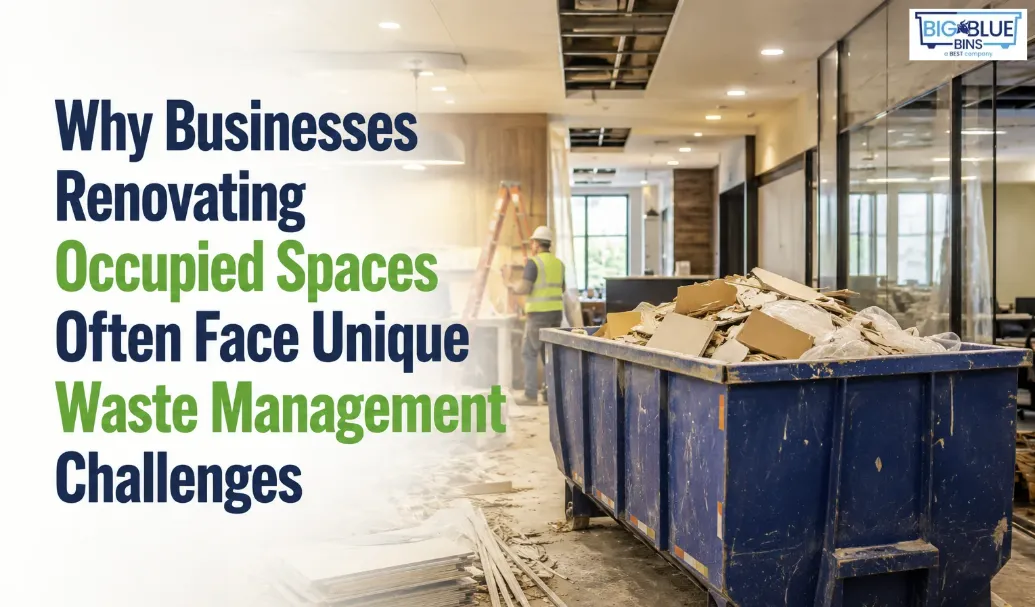

Many commercial renovations happen while the business is still up and running. Contractors are tearing out flooring, installing fixtures, and updating the space while employees keep serving customers like nothing's going on. In situations like this, managing debris matters just as much as the renovation itself. That's why many businesses rely on roll-off dumpster solutions in Crystal River: they keep things organized, keep walkways safe, and let daily operations run without a hitch.
An occupied space isn't like renovating an empty building. What usually works is planning waste pickup around business hours, not just the crew's schedule. What often fails is treating trash removal as an afterthought; that's when things get messy fast. Honestly, if waste logistics aren't part of the plan from day one, the whole project pays for it later. Good commercial waste management isn't just about hauling trash. It's about protecting people and keeping the business moving while work gets done.
Why Renovating an Occupied Business Is More Complex
When a building's empty, contractors can leave tools and materials sitting until the next workday. Occupied spaces don't offer that kind of flexibility.
Every renovation has to account for:
- Employee safety
- Customer accessibility
- Daily business operations
- Contractor efficiency
- Compliance with workplace safety standards
Without a clear waste plan, debris stops being a by-product of progress and turns into an obstacle fast. What usually works is staying on top of cleanup daily, not weekly. What often fails is letting materials pile up "just for now." My take? That "just for now" pile is exactly what someone trips over.
The Biggest Waste Management Challenges During Occupied Renovations
1. Limited Space for Debris
Most commercial properties just don't have room for a big waste pile. Businesses are usually sharing:
- Parking lots
- Loading zones
- Sidewalks
- Emergency exits
- Customer entrances
Let debris sit in any of these spots and you're asking for trouble; it's inconvenient and it's a liability waiting to happen. What usually works is putting the dumpster right next to the work area so materials get tossed immediately instead of stacking up "temporarily." What often fails is placing the dumpster somewhere convenient for delivery but far from the actual work; crews just end up dumping stuff nearby anyway.
2. Safety Risks Increase Every Day
Keeping customers and employees safe is probably the biggest worry during an occupied renovation. You're dealing with hazards like:
- Loose drywall pieces
- Exposed nails
- Broken tiles
- Wood scraps
- Packaging materials
- Dust buildup
Staying on top of debris removal cuts these risks down a lot and makes the space easier to move through. Honestly, a clean site isn't just about looking tidy; it's what stops someone from getting hurt in the first place.
3. Business Operations Must Continue
Occupied renovations aren't like new builds. The business usually stays open, so contractors end up working:
- Before opening hours
- After closing
- Overnight
- In carefully planned phases
Waste removal has to work around these hours too, or it throws off the whole operation.
Why Renovation Waste Is Different From Everyday Commercial Trash
Regular business waste generally consists of predictable materials like paper, cardboard, and packaging.
Renovation projects generate heavier, bulkier materials such as:
- Drywall
- Flooring
- Lumber
- Concrete
- Ceiling tiles
- Cabinets
- Metal framing
- Roofing materials
These materials require proper renovation waste disposal, as standard trash services usually aren't designed to handle construction debris efficiently.
Warning Signs Your Waste Management Plan Needs Improvement
Many project delays aren't caused by construction problems; they result from poor cleanup planning. This is exactly why Big Blue Bins gets called in on so many occupied renovation jobs. Watch for these common warning signs:
Watch for these common warning signs:
- Debris piling up throughout the workday
- Contractors repeatedly moving waste
- Blocked entrances
- Dust spreading into occupied areas
- Overflowing temporary bins
- Reduced productivity
- Increased safety concerns
Practical Strategies for Better Waste Management
1. Create Dedicated Disposal Zones
Stop letting debris scatter all over the building. Pick one spot near the active work zone and stick to it. Fewer wasted trips, less mess, and the whole renovation just feels more under control.
2. Remove Debris Throughout the Project
Holding off on cleanup until demo's totally done? Bad move, almost every time. Stuff just stacks up and gets in the way. Cleaning as you go actually helps:
- Improve job site safety
- Increase productivity
- Reduce dust
- Keep work areas accessible
- Maintain a professional appearance
What usually works is tackling cleanup in small chunks as the demo happens. What often fails is pushing it all to "the end"; that's when a quick task turns into a full-blown mess to dig through.
3. Separate Waste Materials
Sort as you go and disposal gets a lot simpler, plus you might catch more recycling along the way. Usual categories are:
- Wood
- Metal
- Concrete
- Cardboard
- Mixed construction debris
Yeah, sorting feels like one more chore in the moment. But it pays off big time later. Organized waste just clears out faster, no way around it.
Good Waste Management vs. Poor Waste Management
A solid waste management plan really does make or break how safe and smooth a renovation site feels. Here's the honest difference:
With good waste management:
- Walkways stay clear and easy to move through.
- Work areas stay clean and organized.
- Safety risks drop, a lot.
- Contractors move faster and work better.
- Customers and employees barely notice the disruption.
- Debris gets hauled off regularly, so clutter never builds up.
With poor waste management:
- Debris blocks walkways and work zones.
- Clutter means more accidents, plain and simple.
- Productivity slows down because crews keep stopping to clean.
- Dust and waste spread everywhere.
- Customers walk away with a bad impression.
- Materials pile up, and the whole project falls behind.
A Real-World Scenario
Picture a busy medical clinic redoing exam rooms while patients are still coming in all day. Crews are ripping up old flooring, putting in new fixtures, swapping out cabinets and staff are still walking patients down the same hallways the whole time.
Instead of letting debris sit inside, it goes straight into a nearby dumpster, multiple times a day. Walkways stay open, dust stays down, and the work just keeps moving without turning into a big disruption.
This is what usually works: hauling stuff out right away instead of stockpiling it. What often fails is waiting to "make the trip worth it," which sounds smart but really just means junk sits around longer than it needs to. Honestly, this one habit is usually the whole difference between a clinic renovation that goes smoothly and one that becomes a mess for everyone walking through.
Small Cleanup Habits Deliver Big Results
Contractors who've been at this a while all say the same thing: cleaning as you go actually speeds the job up, not the other way around. A few habits that really move the needle when it comes to streamlining renovation cleanup:
- Clear demolition debris before starting the next task.
- Keep exits and walkways open. No exceptions, ever.
- Toss waste right away instead of letting it sit "for now."
- Check customer-facing spots often, not just at closing time.
- Set aside real time for cleanup at the end of every shift.
Small stuff, yeah, but it's what keeps a site safe and a project on schedule.
Key Takeaways
- Occupied commercial renovations require careful planning to keep business operations running safely and efficiently.
- Effective commercial waste management helps minimize disruptions for employees, customers, and contractors.
- Timely renovation waste disposal prevents debris from accumulating and reduces potential safety hazards.
- Regular construction debris removal keeps walkways clear, improves productivity, and supports a cleaner work environment.
- Planning waste management before the renovation begins can help avoid delays, improve organization, and keep the project on schedule.
- Choosing the right dumpster solution makes it easier to manage renovation waste while maintaining a safe and professional business environment.
Conclusion
Renovating a business that's still running takes more than solid construction work. Debris needs a plan too, or it ends up messing with safety, slowing things down, or bugging customers who are just trying to walk through. A decent waste plan keeps work areas cleaner, cuts down on accidents, and keeps contractors moving instead of hitting constant stops.
Office, retail shop, healthcare facility, restaurant- the business type doesn't really change any of this. Planning waste removal early is what saves you from delays nobody asked for. Big Blue Bins offers reliable dumpster rental solutions that help businesses handle renovation debris properly, keeping job sites safer, cleaner, and easier to manage.
Frequently Asked Questions
1. Why is waste management more challenging during occupied commercial renovations?
Occupied buildings stay open during construction, so debris must be managed carefully to keep walkways clear, maintain safety, and minimize disruptions to daily business operations.
2. What types of waste are generated during commercial renovations?
Commercial renovations often produce drywall, wood, flooring, concrete, metal, cabinets, insulation, and other construction debris that requires proper disposal.
3. How often should renovation debris be removed?
Debris should be removed regularly throughout the project. Frequent cleanup improves safety, reduces clutter, and keeps the renovation moving efficiently.
4. How does proper waste management improve safety?
Timely waste removal reduces trip hazards, controls dust, keeps exits accessible, and creates a safer environment for employees, contractors, and customers.
5. Can good waste management help renovation projects finish faster?
Yes. An organized job site reduces delays, improves workflow, and allows contractors to work more efficiently throughout the renovation.
6. What should businesses plan before starting renovation waste disposal?
Businesses should estimate debris volume, plan dumpster placement, and schedule regular waste removal to keep the project organized and on track.


























Sign in to leave a comment.