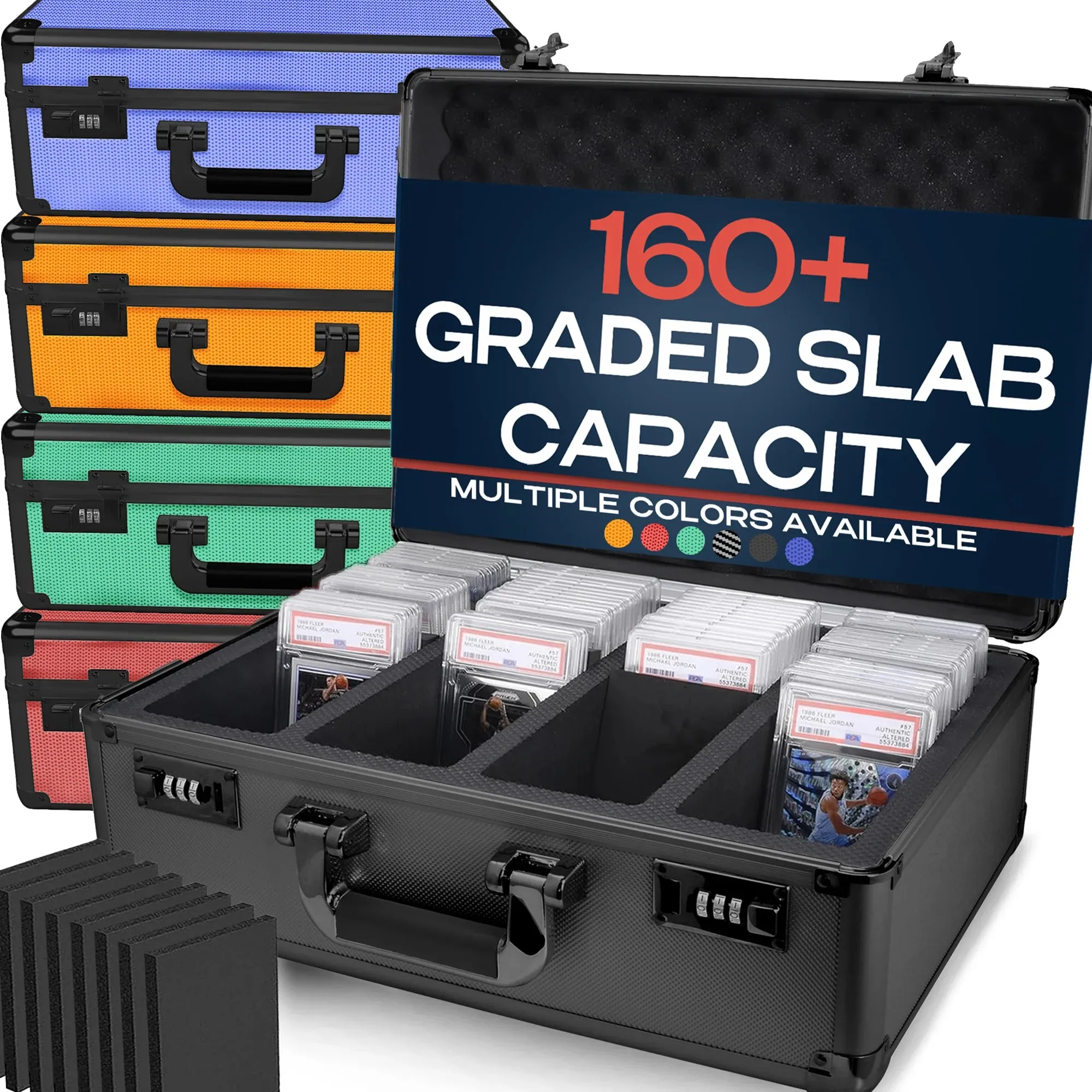

Card damage during storage is more common than most collectors think. PSA's own backlog once approached 10 million cards, per ESPN. That volume shows how many cards move through boxes, mailers, and shelves before ever reaching a grading table.
Poor-fitting card boxes for trading cards are a major cause of this damage. A box too large lets cards shift and bend during handling. A box too small crushes cards from the sides.
Define the Problem
Warping happens when a card bends slightly and does not spring back. It often starts small, a soft curve near one corner. Left alone, that curve can turn into a permanent crease.
The cause is almost always pressure or space. Too much space lets cards slide and knock against each other during transport. Too little space forces cards to bow under constant pressure.
Humidity makes the problem worse. Cardboard itself can absorb moisture from the air. A card boxed inside a damp container absorbs that moisture too, softening its structure over time.
Scale makes the issue more pressing each year. The trading card market reached roughly $13 billion in 2024, per PR Newswire. More cards changing hands means more chances for a poor-fitting box to cause harm.
Why Common Approaches Fail
Many collectors reach for whatever box is on hand. A shoebox or a repurposed shipping box seems fine at first glance. Neither one is built to match card dimensions precisely.
Oversized boxes are the most common mistake collectors make. They assume extra room protects cards from friction and pressure. In practice, that extra room lets cards tip, slide, and stack unevenly.
Cheap, flimsy construction fails in a different way. A box that flexes under its own weight cannot support cards stacked several inches deep. The box itself becomes part of the damage problem.
Trading volume adds to the risk. eBay buyers spent more than $2.6 billion on trading card singles in 2025, per cllct. Much of that volume travels through boxes never designed for the job.
The Better Approach
Effective card boxes for trading cards start with a snug internal fit. Cards should sit close enough to prevent sliding, but not so tight that removing one bends its neighbors.
Rigid construction matters just as much as fit. A sturdy box holds its shape even when fully loaded. That rigidity keeps outside pressure from ever reaching the cards inside.
Moisture resistance rounds out the design. A box with some resistance to humidity protects cards during storage in garages, closets, or basements. That resistance slows down long-term warping by a wide margin.
How to Apply It
Turning these principles into practice takes a few concrete habits. Small changes often make the biggest difference over time.
- Match box length and width closely to card size, leaving minimal side-to-side movement
- Choose rigid materials that hold their shape once the box is fully loaded
- Avoid storage in damp basements or uninsulated garages whenever possible
- Check stacked cards periodically for early signs of bowing or soft corners
These habits catch small problems before they turn into permanent damage.
What This Means for You
Card boxes for trading cards will keep mattering as collections grow larger. More cards in circulation means more chances for storage mistakes to cause damage. Choosing the right fit and materials now prevents costly problems later on.
A well-matched box costs little compared to the cards it protects. That small investment pays off over years of handling, shipping, and storage. Warping is preventable, and prevention is far easier than fixing cards already bent.
A few minutes spent checking box fit now can save an entire collection later.


























Sign in to leave a comment.