
“If you don't like something, change it. If you can't change it, change your attitude.”
Maya Angelou
Believe it or not, change is an inherent aspect of our lives. It stands as a constant force shaping our experiences and presenting us with a regular flow of new opportunities and perspectives. Despite the discomfort and uncertainty often associated with change and adaptability, it is crucial to recognize that reluctance to embrace inevitable change can impede both personal and social growth, leading to distress and depression. Change, considered a cornerstone for survival in the natural world, holds equal significance in our human experience. Navigating the dynamic landscape of the modern world necessitates an openness to the inevitable changes we must all deal with, sometimes on a daily basis. By fostering some resilience in our everyday habits, both individuals and whole societies can navigate the unpredictable currents of shifting circumstances, emerging stronger in the face of future challenges.
Innovation and a willingness to embrace new perspectives are essential in the face of changing circumstances, and expand our alternative choices when dealing with uncharted territories. Resistance to change hinders the motivation that leads to innovation. Historical evidence demonstrates that those who embraced change have stood at the forefront of progress, shaping the contours of our collective future.
On a personal level, embracing change becomes a pragmatic compass leading us toward growth. Venturing beyond comfort zones, confronting challenges, and adapting to new environments act as profound catalysts for self-discovery and improvement. Whether acquiring new skills, navigating unconventional career paths, nurturing relationships, or modifying your habits and behavior, change becomes the landscape and practical incentive for your own growth.
The path towards change is frequently blocked by dread and uncertainty. However, it is imperative to recognize that avoiding change does not negate the uncertainty in life but merely promotes limited and/or dysfunctional responses to life’s challenges. Confronting and navigating the unknown and trying something out of your comfort zone fosters emotional intelligence and fortitude that not only helps you have the potential for robust mental well-being but also fosters motivation and resilience. Furthermore, the ability to adjust to shifting norms, values, and viewpoints is essential for social advancement. Embracing diversity, challenging antiquated beliefs, and making an impact on evolving social structures all contribute to the creation of a more just and equitable society. Opposition to change runs the risk of preserving inequality and impeding the growth of communities and society as a whole.
Embracing change and fresh perspectives helps us to refine our abilities to solve both personal and interpersonal problems effectively. Accepting the inevitability of change encourages a realistic outlook that views challenges not as insurmountable obstacles but as opportunities for growth and improvement. Our inability to adapt to change becomes a formidable impediment to progress when it comes to ourselves and our constantly changing lives. This makes the acceptance of change a practical and necessary requirement for personal, interpersonal, and social development. By acknowledging the intrinsic benefits of adaptability, fostering a pragmatic outlook towards uncertainty, and embracing the opportunities that change begets, we can purposefully navigate the complexities of life with resilience, pragmatism, and an unwavering commitment to continual growth.
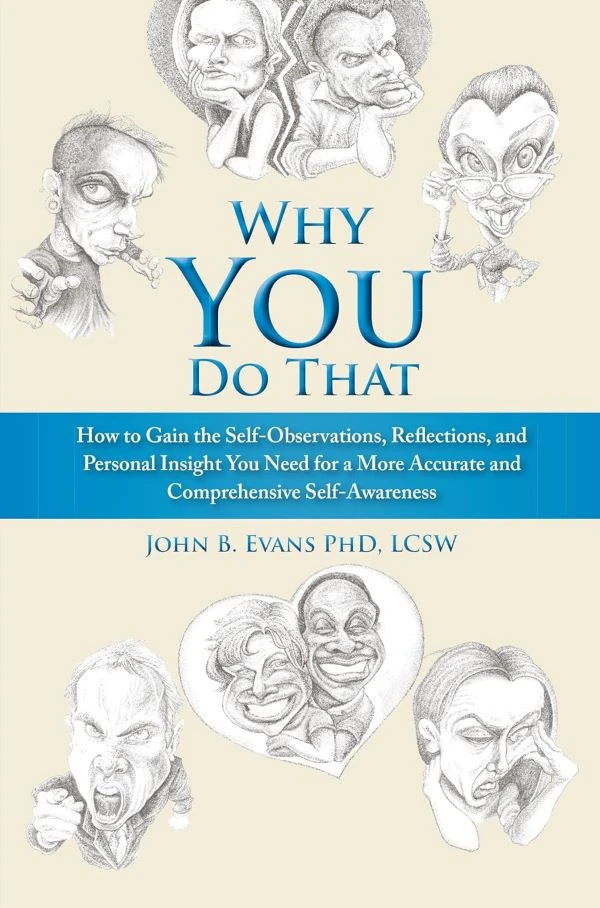
For more help and insight into the process of change, and to help yourself embrace a proactive and assertive personality type, take a look at the remarkable book "Why You Do That,” by John B. Evans, PhD. “Why You Do That" serves as a transformative tool for fostering an assertive personality and resilient behavior. By exploring the reasons for one's actions, and increasing ones self-awareness, individuals gain a deeper understanding of their values, desires, and decision-making processes. An increase in self-awareness inevitably increases one’s self-control and lays the foundation for assertiveness, empowering individuals to control their thoughts, emotions, and behavior with confidence. Furthermore, by fostering the capacity to adjust to obstacles and disappointments, this book’s introspective approach encourages resilience. Understanding the "why" behind our thoughts, emotions, and behavior provides a cognitive framework that aids in navigating change with composure and purpose. This combination of an increase in self-awareness and self-control allows the reader to constructively accept change with a measured and rational mindset.










Sign in to leave a comment.