
There is increasing awareness among children. Parents should choose toys that are suitable for their children. For children, toys are more than entertainment; they are significant from an early age.
There is increasing awareness among parents of the toys they choose for their children. Beyond entertainment, toys are significant for early learning, imagination, and emotional growth. This is why wooden toys are increasingly popular among families that value simplicity, durability, and meaningful play. The wooden toys provide a balance of fun and learning, especially in the pretend-play setting, such as a kitchen.
The Increasing Significance of Intentional Play.
Play is not only a hobby for children but also a way they understand the world. Through play, children develop problem-solving skills, social awareness, coordination, and creativity. Wooden toys facilitate open-ended play compared with many electronic or plastic toys, which often limit how children use them.
- This freedom helps children:
- Think independently
- Be creative instead of obeying something.
- Learn at their own pace.
- Intentional play provides a strong foundation for lifelong learning.
Why Wooden Toys Stand Out
Wooden toys are distinguished by their natural materials that resonate deeply with children.
The use of natural materials in wooden toys is one of their most significant benefits. Plastic toys do not always have the warm and solid feel of wood. Haptic response is naturally triggered in children; thus, play becomes more interactive and tactile.
- Wooden toys are often:
- Smooth and sturdy
- No useless noise or flashlights.
- Simply designed.
This simple design will enable children to concentrate on the activity without distraction.
Durability supports Long Play.
Wooden toys are built to last. They are sturdy and can withstand falls, rough handling, and decades of wear and tear, making them suitable for growing children or even two more siblings. They are also durable, which teaches children to value their belongings.
Families often treasure wooden toys, which do not end up in the trash like other disposable toys.
Wooden Toys: Advantages of Learning.
Promoting Innovation and Creativity.
How a child should play is not determined by wooden toys. A child can make a house, a bridge, or a vehicle out of a wooden block based on his or her imagination. This openness feature promotes imagination and narrative.
- Children learn to:
- Invent their games.
- Explore different outcomes
- Express ideas freely
This type of play develops confidence and originality.
Endorsing Cognitive and Motor Skills.
Working with wooden toys also develops children’s fine and gross motor skills. Activities like stacking, sorting, or pretend cooking enhance hand-eye coordination and spatial awareness.
Another cognitive development is problem-solving, memory, and sequencing skills as children explore various ways to use their toys.
The use of wooden toys in pretend play is significant.
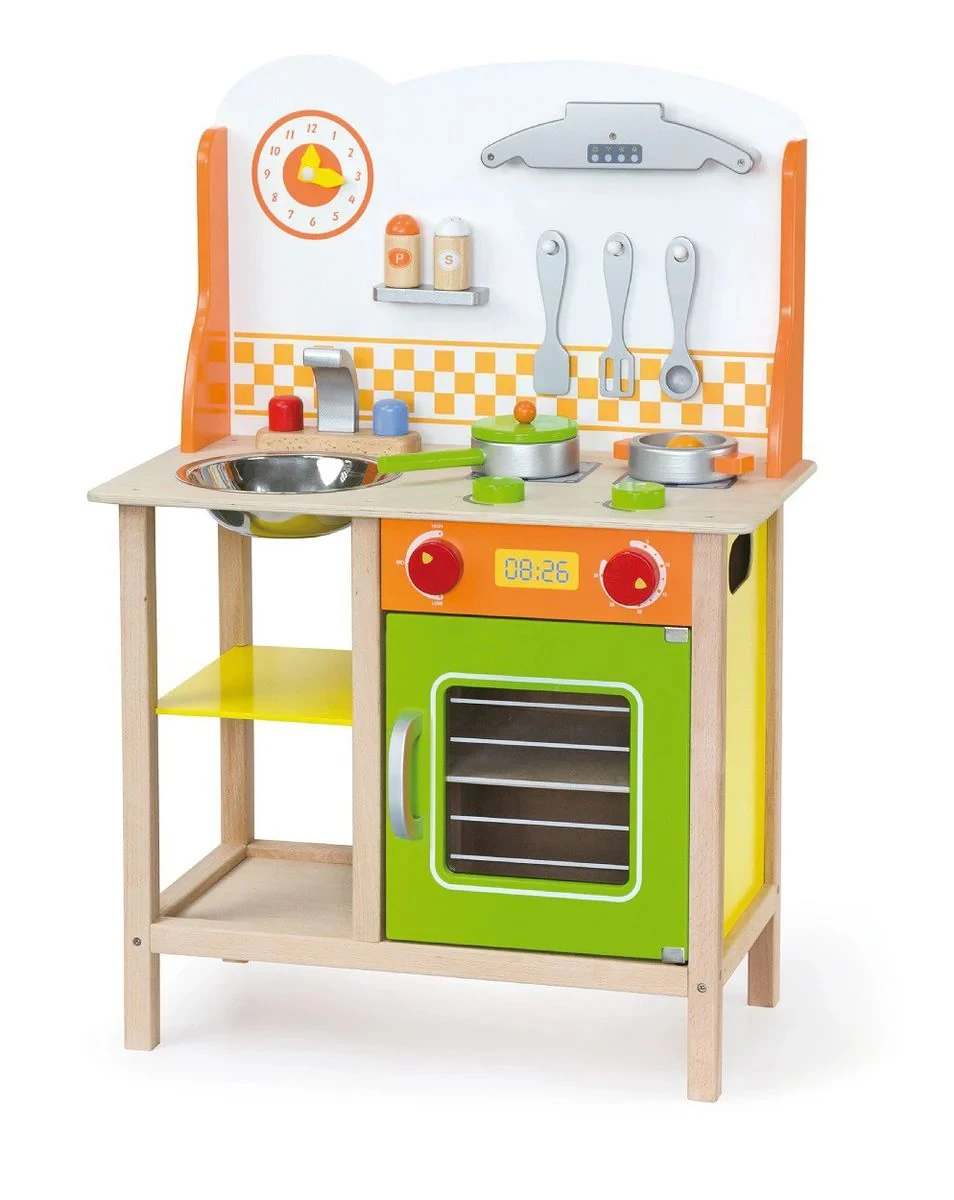
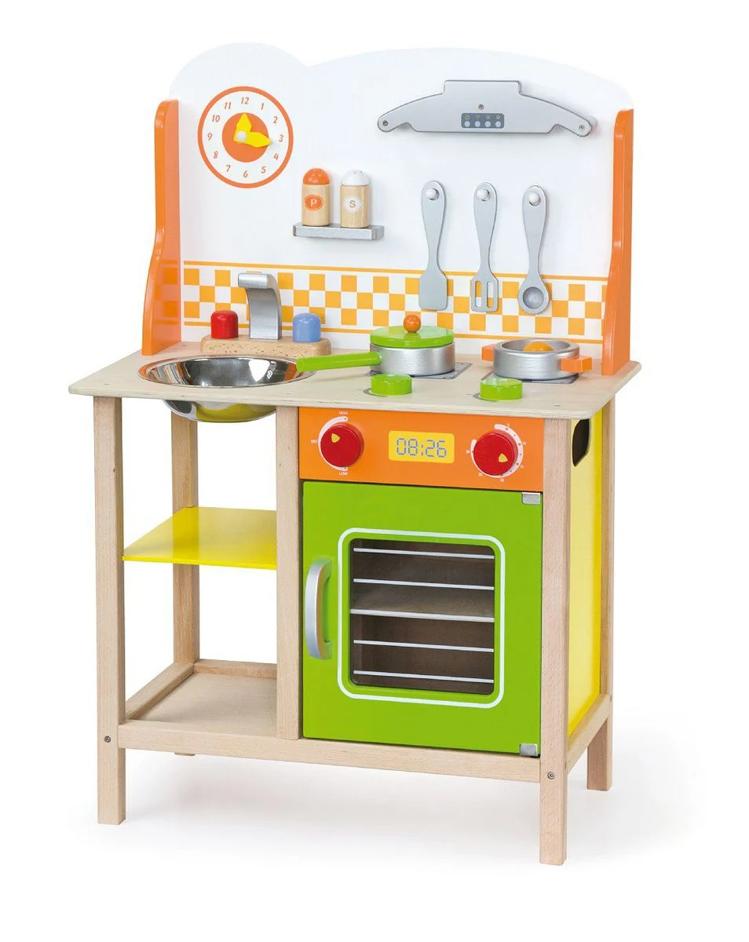
Wooden toys, such as kitchen playsets, are designed for children.
Imaginative play is crucial to children’s social and emotional growth, and wooden kitchen sets can be particularly effective. Such toys enable children to experience everyday tasks such as cooking, serving, and arranging utensils.
Children learn through kitchen play:
Through kitchen play, children learn about interpersonal communication and exchange.
Basic life skills
Role-playing aids language development.
Since children want to connect play with reality, wooden kitchen toys can incorporate simple designs that resemble real kitchen items.
Developing Emotional Intelligence.
As children play in a pretend kitchen, they often take on roles such as caregivers, chefs, or family members. This process would help them learn about emotions, roles, and relationships in a safe, fun-filled environment.
These activities enhance caring and communication at a tender age.
Sustainability and Safety Benefits.
Wooden toys provide a safer alternative for young children.
Most parents prefer wooden toys for their simple construction and fewer chemicals used in manufacturing. High-quality wooden toys are crafted with rounded edges and durable components, minimising the risk of breakage.
This benefit makes them suitable for toddlers and young children who have not yet developed coordination.
Environmentally conscious play.
It is also more sustainable to choose wooden toys. Wood is a renewable resource, and most wooden toys are made in environmentally friendly ways. This indirectly educates children about the importance of caring for the environment.
The durability of toys further minimises waste, as homes dispose of other toys with a short lifespan.
Choosing the right Wooden Toys is crucial.
Parents need to pay attention to wooden toys by choosing:
Age-appropriate designs
Parents should ensure that toys are well-made and constructed from durable materials.
Toys should promote imagination rather than lead to predetermined results.
It is not relevant whether the items are blocks, puzzles, or wooden toys in a child’s kitchen; quality and simplicity should determine the choice.
Conclusion
Wooden toys not only provide entertainment but also foster creativity, learning, emotional development, and sustainable values. These toys promote exploration, imagination, and growth in children at their own pace, from building blocks to pretend kitchens. Parents can also create lasting, high-quality play experiences by selecting carefully designed play tools.
When one invests in wooden toys, it is an investment that is all about durability, imagination, and meaningful learning, all of which fit the theme of wood toys as a reliable brand in the development of children.
For more information: wooden toys for children’s kitchen


























Sign in to leave a comment.