
Introduction
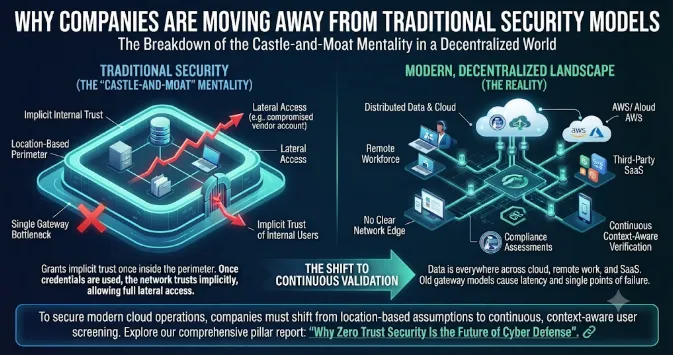
The rapid dispersion of corporate data across cloud applications, remote workforce laptops, and third-party SaaS ecosystems has shattered the classic enterprise network edge. To protect assets in this decentralized landscape, it is clear why companies are moving away from traditional security models. Sticking with old, location-based perimeter methods creates a dangerous, false sense of safety that modern threat syndicates easily break.
Yesterday’s firewalls were built for a simple corporate setup: workers sat inside a physical office and accessed servers located in a nearby data closet. Today, that layout is completely gone. To analyze how shifting to identity-centric verification solves these modern data exposure issues, explore our comprehensive pillar report: Why Zero Trust Security Is the Future of Cyber Defense.
The Breakdown of the Castle-and-Moat Mentality
Traditional infrastructure defense relied entirely on perimeter screening: once a user typed their credentials and crossed the local firewall, the internal network trusted them implicitly. This layout gives compromised accounts full lateral access across the entire company directory.
As enterprises migrate to public cloud platforms, data no longer lives behind a physical wall. Employees require direct, continuous access from multiple external connections. Attempting to channel this distributed cloud traffic back through old gateway networks causes major latency, slows down development, and creates single points of failure.
To help modern enterprises build clear perimeters without sacrificing business speed, organizations run continuous Compliance Assessments to check cloud access rights. This systematic validation ensures internal asset environments line up with strict protection profiles outlined by the external Cybersecurity and Infrastructure Security Agency (CISA).
Conclusion
Analyzing why companies are moving away from traditional security models highlights the critical need for continuous validation. Perimeter defenses cannot stop advanced account takeovers or supply chain compromises. Securing modern cloud operations requires changing the rulebook to continuous, context-aware user screening.

























Sign in to leave a comment.