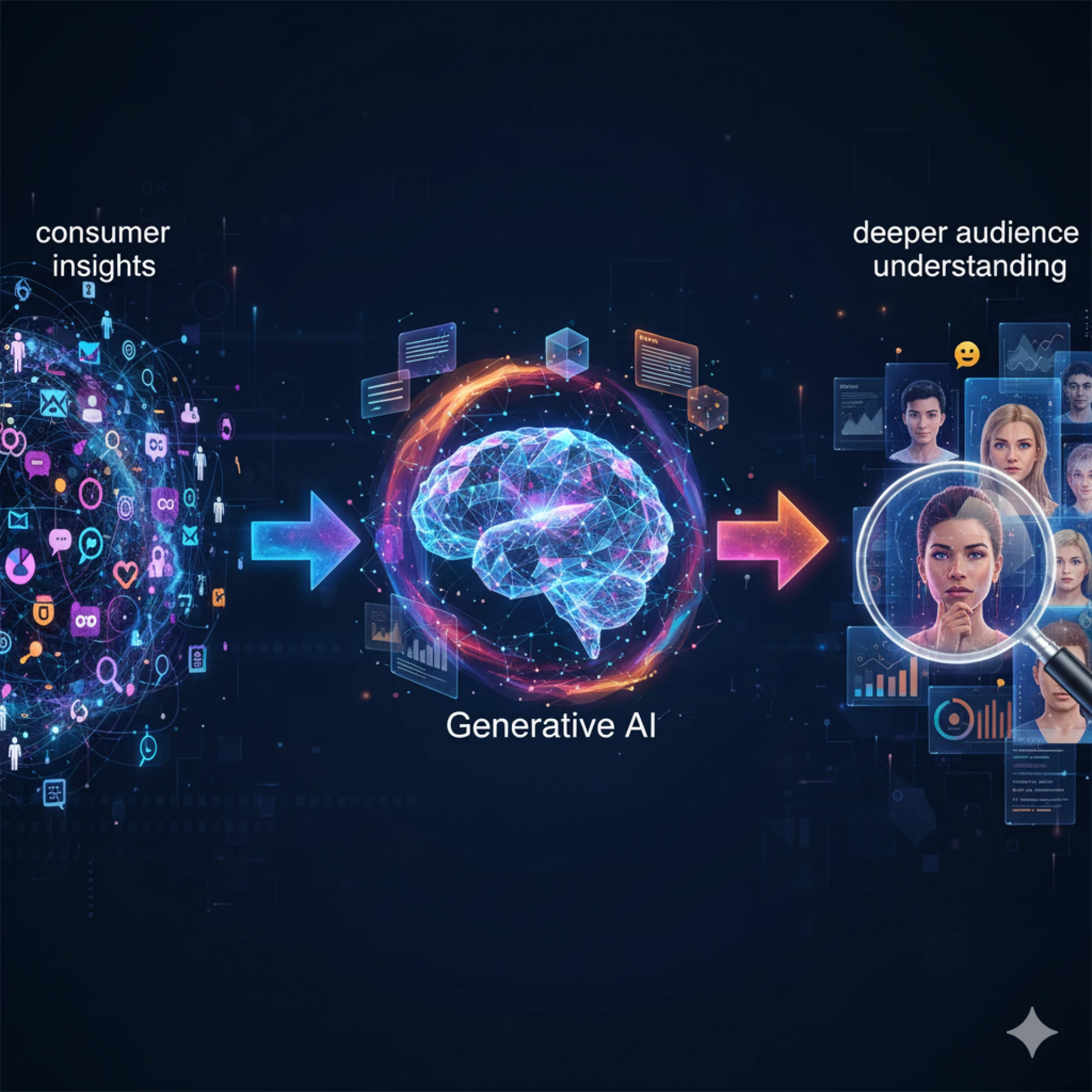

In the evolving landscape of market research, consumer insights companies are increasingly adopting generative AI to gain a deeper understanding of their audiences. Traditional methods of analyzing structured data are being supplemented—and in some cases, replaced—by AI-driven tools capable of processing vast amounts of unstructured data from sources like social media, reviews, and open-ended survey responses. This shift enables faster, more personalized insights, allowing brands to stay ahead in a competitive market.
The Rise of Generative AI in Consumer Insights
Unleashing the Power of Unstructured Data
Generative AI excels at processing unstructured data, such as customer reviews, social media posts, and open-ended survey responses. By analyzing this data, consumer insights companies can uncover hidden patterns and sentiments that traditional methods might miss. For instance, AI can identify emerging trends in customer preferences or detect shifts in brand perception before they become apparent through conventional analytics.
Enhancing Personalization at Scale
AI-driven tools allow for the segmentation of audiences based on nuanced behaviors and preferences. This enables brands to deliver highly personalized experiences to their customers, improving engagement and satisfaction. By understanding individual customer journeys, companies can tailor their messaging and offerings to meet specific needs, leading to increased loyalty and conversion rates.
Accelerating Insight Generation
Traditional market research methods often involve lengthy processes of data collection, cleaning, and analysis. Generative AI streamlines these processes, providing real-time insights that can inform decision-making. According to a report by Harvard Business Review, AI tools have significantly reduced the time required to analyze data, allowing companies to act on insights more swiftly and effectively.
Key Benefits of Generative AI for Consumer Insights Companies
Faster Decision-Making: AI tools can process and analyze data in real-time, enabling quicker responses to market changes.
Improved Accuracy: By identifying patterns in large datasets, AI reduces human error and bias in analysis.
Cost Efficiency: Automating data analysis reduces the need for extensive manual labor, lowering operational costs.
Scalability: AI systems can handle increasing volumes of data without a proportional increase in resources, supporting business growth.
Challenges and Considerations
Data Quality and Integration
The effectiveness of AI-driven insights depends on the quality of the data fed into the system. Inaccurate or biased data can lead to misleading conclusions. Moreover, integrating AI tools with existing data systems can be complex and requires careful planning to ensure seamless operation.
Ethical Implications
The use of AI in analyzing consumer data raises ethical concerns, particularly regarding privacy and consent. Consumer insights companies must ensure that they comply with data protection regulations and maintain transparency with customers about how their data is used.
Trust and Transparency
For AI-generated insights to be trusted, the processes behind them must be transparent. Companies should be able to explain how AI models arrive at their conclusions and provide stakeholders with confidence in the results.
Leading AI Market Research Tools
Several AI-powered tools are leading the way in transforming market research:
- i-Genie.ai: An AI-driven consumer intelligence platform that synthesizes data from billions of online searches, social conversations, ratings and reviews, and videos to provide actionable insights. Its proprietary AI tools, such as Presto, democratize access to insights across organizations, enabling faster and more informed decision-making
- Quantilope: Offers an AI co-pilot named Quinn that assists in survey automation and data analysis.
- Brandwatch: Provides social listening capabilities to monitor brand sentiment and competitor activity.
- Speak AI: Specializes in audio and video analysis, extracting insights from multimedia content.
- Pecan: Focuses on predictive analytics, helping companies forecast future trends based on historical data.
These tools exemplify how AI can enhance various aspects of market research, from data collection to analysis and reporting.
Future Outlook
The integration of generative AI into consumer insights is expected to deepen, with advancements in natural language processing and machine learning further enhancing the capabilities of AI tools. As AI becomes more adept at understanding context and nuance in human behavior, consumer insights companies will be able to provide even more precise and actionable insights.
However, the adoption of AI also necessitates ongoing efforts to address challenges related to data governance, ethical considerations, and the need for skilled personnel to interpret AI-generated insights. Companies that can navigate these challenges effectively will be well-positioned to leverage AI for sustained competitive advantage.
Conclusion
Generative AI is revolutionizing the way consumer insights companies understand their audiences. By harnessing the power of AI to analyze unstructured data, companies can uncover deeper insights, personalize customer experiences, and make faster, more informed decisions. While challenges remain, the potential benefits of AI in market research are substantial, making it a valuable tool for companies aiming to stay ahead in a rapidly changing market.


























Sign in to leave a comment.