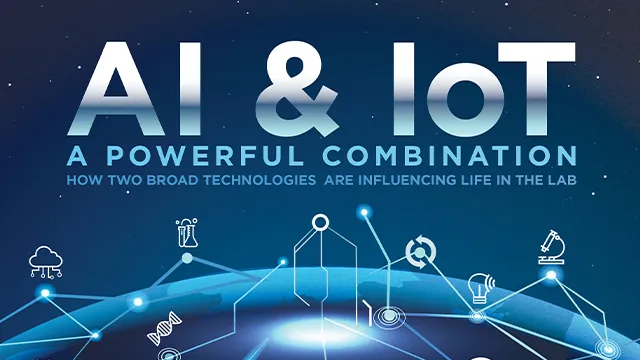

For years, businesses have invested in sensors, connected devices, and smart equipment with the expectation that collecting more data would automatically improve operations. However, many organisations soon discover that millions of data points alone do not create business value. The real advantage comes from transforming raw information into actionable intelligence.
Modern IoT connectivity is no longer just about connecting devices—it is about creating an ecosystem where machines, software, cloud platforms, and people collaborate seamlessly. This shift is changing how enterprises operate across healthcare, manufacturing, logistics, retail, and energy.
From Connected Devices to Connected Decisions
Traditional monitoring systems simply report what is happening. Advanced IoT ecosystems explain why it is happening and recommend what should happen next.
Imagine a manufacturing plant where equipment sends temperature readings every second. Rather than storing endless logs, an intelligent IoT platform analyses trends, identifies abnormal behaviour, predicts component failures, and automatically schedules maintenance before production stops.
This proactive approach reduces downtime, lowers maintenance costs, and improves operational efficiency.
Building a Digital Feedback Loop
Successful organisations treat IoT as a continuous feedback system instead of a collection of smart devices.
The cycle includes:
- Collecting real-time operational data
- Processing information through cloud platforms
- Applying analytics and machine learning models
- Triggering automated business actions
- Continuously improving future decisions
This feedback loop enables businesses to become increasingly efficient over time.
Why Scalability Matters
Many IoT initiatives begin with a pilot involving a handful of connected devices. Problems arise when businesses attempt to scale from dozens of devices to thousands across multiple locations.
Scalable IoT architectures require secure communication protocols, cloud-native infrastructure, API integrations, and flexible device management capabilities. Without these foundations, performance bottlenecks and security risks quickly emerge.
This is where professional IoT application development services become essential, enabling organisations to design platforms that grow alongside business requirements.
Integrating Legacy Systems Instead of Replacing Them
One of the biggest misconceptions surrounding digital transformation is that every existing system must be replaced.
In reality, many organisations gain greater value by connecting legacy infrastructure with modern IoT platforms. Existing machinery can be enhanced using sensors and connectivity layers that capture operational data without disrupting daily business processes.
This hybrid approach reduces implementation costs while accelerating digital transformation.
Security as a Design Principle
Every connected endpoint expands the attack surface of an organisation. Security cannot be treated as an afterthought once deployment is complete.
A resilient IoT strategy includes:
- Device authentication
- Encrypted communication
- Secure firmware updates
- Continuous monitoring
- Identity and access management
- Automated threat detection
Embedding security into every layer of the architecture builds trust and protects critical business operations.
The Human Element Behind Smart Systems
Despite advances in automation, successful IoT deployments remain centred around people. Engineers, operators, clinicians, and business leaders all rely on intuitive dashboards and meaningful insights rather than overwhelming amounts of technical data.
The best connected solutions simplify decision-making instead of creating additional complexity.
Organisations investing in user-focused IoT application development services often achieve faster adoption rates because employees can easily interpret and act on system intelligence.
Preparing for an AI-Driven Future
Artificial intelligence depends on reliable, high-quality data. IoT provides the real-time information that powers predictive analytics, intelligent automation, and autonomous decision-making.
As AI capabilities continue to evolve, businesses with mature IoT infrastructures will be better positioned to optimise operations, personalise customer experiences, and respond rapidly to changing market conditions.
Rather than viewing IoT as a standalone technology, forward-thinking organisations see it as the digital foundation that supports long-term innovation and competitive advantage.
Conclusion
The future of IoT connectivity is not defined by the number of connected devices but by the quality of insights generated from them. Businesses that build scalable, secure, and intelligent ecosystems can transform operational data into measurable business outcomes.
Investing in robust IoT application development services today creates the infrastructure needed for smarter automation, predictive intelligence, and sustainable growth in an increasingly connected world.



















Sign in to leave a comment.