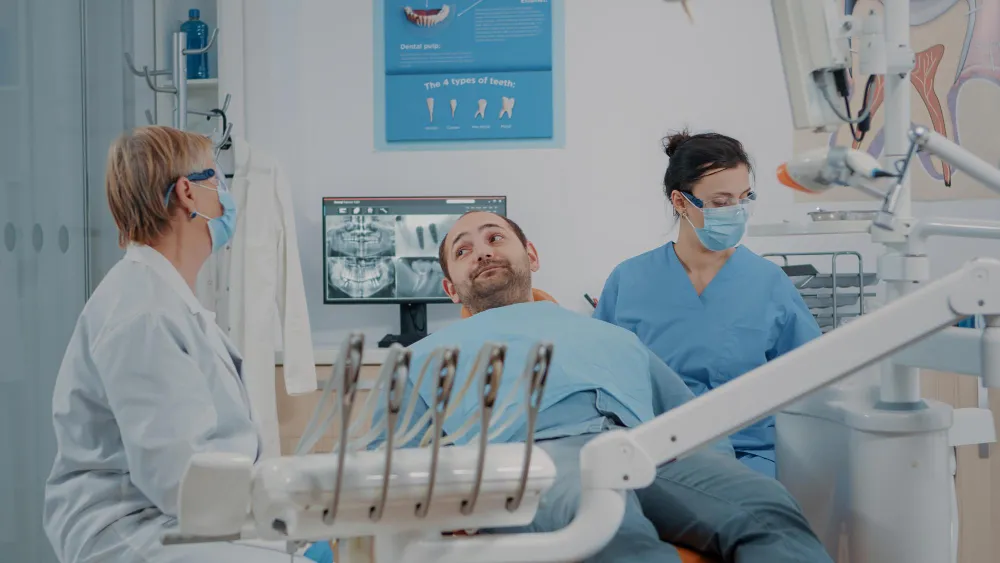

If you've ever sat in the dentist's chair and wondered why you're getting an X-ray again this year, you're definitely not alone. It's one of those routine steps that happens so often; most people stop questioning it. However, there is a valid explanation for it. X-rays are used by dentists in Saskatoon SK, to view areas of your mouth that a standard examination just cannot.
In this blog, we'll walk through what these images actually show, why yearly imaging tends to be the norm, and how it all fits into your overall dental care. By the end, you'll have a clearer picture of what's really going on behind that lead apron.
What Do Dental X-Rays Actually Show?
A visual examination only provides a portion of the information. Your dentist can see the surface of your teeth and gums, but a lot happens beneath that surface, between teeth, under the gumline, and inside the jawbone itself. That's where X-rays come in.
They provide a glimpse of places that would otherwise remain concealed, such as the gaps between teeth that are inaccessible to a mirror and light. Bone levels around the teeth, root positioning, and the condition of tissue below the surface all show up on imaging in ways a standard checkup can't capture.
Why Yearly X-Rays Are Commonly Recommended
Oral health doesn't usually change overnight. It shifts gradually, sometimes so slowly that neither you nor your dentist would notice without something to compare against. That's really the point of yearly imaging: it gives a general dentist near Saskatoon a way to track those small changes over time rather than starting from scratch at every visit.
The Canadian Dental Association notes that X-ray frequency should be based on individual risk factors rather than a fixed rule for everyone. So, someone with a history of cavities might need imaging more often, while another patient with strong oral health might go longer between scans. This is usually something discussed and adjusted at a dental clinic in Saskatoon based on what's actually going on with your mouth.
What X-Rays Can Help Identify Early
Since imaging reaches areas a visual exam can't, it often catches things before they become noticeable on their own. A few examples worth mentioning:
- Cavities forming between teeth, which are easy to miss otherwise
- Changes in bone levels connected to gum health
- Issues with tooth roots, or how developing teeth are positioned in kids and teens
- Wisdom teeth that may be impacted or growing at an awkward angle
None of this means something is necessarily wrong; it just means your dentist has a fuller picture to work from when planning your care.
How X-Rays Fit into Routine Dental Care
In Saskatoon, X-rays are typically included with a routine examination and dental cleaning in Saskatoon. Together, these give a fairly complete snapshot of where your oral health stands at that point in time.
The imaging itself is quick and involves a low dose of radiation, so it's a fairly simple part of the appointment rather than a separate ordeal. More than just spotting problems, X-rays also help with planning ahead, so if any treatment is ever needed, your dentist already has a clear reference to work from instead of guessing.
Conclusion
Yearly X-rays give your dentist a way to track changes that aren't visible during a regular exam, from early decay to shifts in bone health. Since oral health tends to change gradually, this kind of ongoing imaging helps keep your care plan accurate and up to date.
West 14 Dental, a dental care clinic in Saskatoon, offers routine exams and imaging as part of everyday patient care, with appointments planned around each person's individual needs. If it's been a while since your last checkup or you're due for an X-ray, contact West 14 Dental to check what's available.


























Sign in to leave a comment.