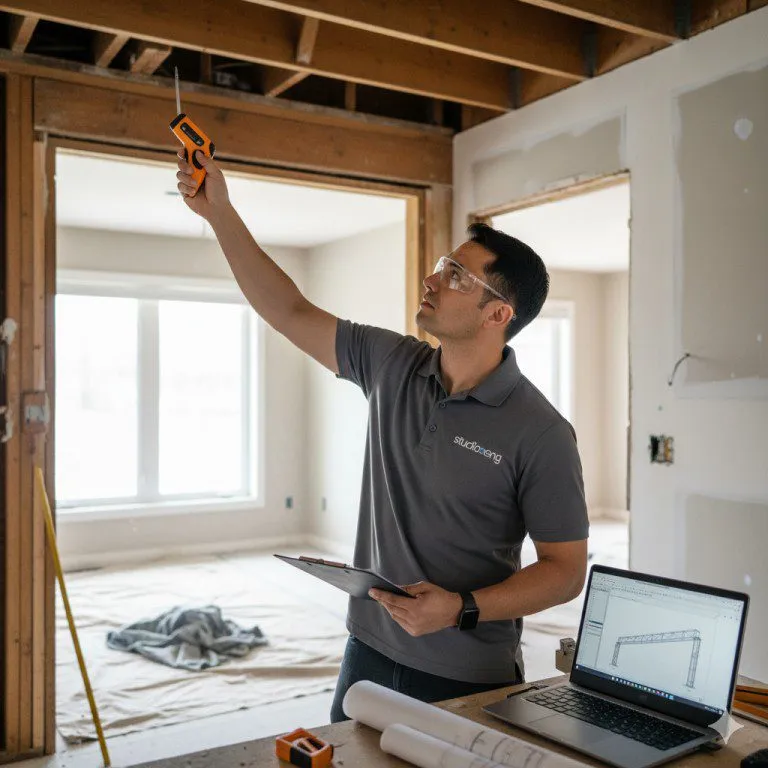

Florida buildings deal with conditions most states never have to think about — hurricane wind loads, saltwater corrosion, high water tables, and concrete that's aging well past what it was originally designed for. That's the reason Florida structural engineers show up at nearly every stage of a building's life, from the first shoring design plan on a job site to the reserve study a condo board files decades later. Below is a walkthrough of the main services a structural engineer in Florida performs, who's required to get them, and how to spot a qualified firm versus one that's cutting corners.
What Do Florida Structural Engineers Actually Do?
Structural engineers examine the loads on the building structure, its behavior when stressed and its ability to withstand deterioration over time. For a structural engineer in Florida, the work does not only involve new constructions. Structural engineers in Florida provide services in structural design and analysis of new structures, forensic analysis of old concrete structures, assessment of damages caused by hurricanes and the mandatory periodic inspections required by state law of condos and commercial buildings.
The significance of licensing is higher in this region than elsewhere. Having the designation of a Professional Engineer means that the person issuing the report has written a national exam, completed his or her experience while being supervised and holds himself/herself responsible legally for everything signed. The person seeking structural engineering services near me should make sure about their PE license first and foremost.
Why Does Shoring Design Matter So Much on Florida Job Sites?
Shoring holds up concrete formwork and excavation walls while a structure cures, or while other work happens underneath it. Get it wrong, and the failure isn't cosmetic — it's catastrophic. That's why shoring design services are treated as their own specialty rather than something folded into general contracting.
A shoring design specialist calculates the loads a temporary support system will carry, everything from wet concrete weight during a pour to lateral pressure pushing against an excavation wall. This work overlaps heavily with formwork engineer responsibilities, since formwork plans and shoring plans typically get reviewed side by side before a pour gets the green light. Formwork inspections confirm the system was actually built to match the stamped plans, and any deviation gets caught before concrete goes in, not after.
Scaffold engineers handle a related but separate function — sizing scaffold systems for worker access and material staging rather than structural support during a pour. Scaffold plans still need engineering sign-off in most Florida jurisdictions, particularly on multi-story commercial jobs.
In dense construction corridors, shoring scaffolds in Broward and similarly built-up counties draw extra scrutiny from building departments, since a shoring failure on an occupied job site can affect the structures next door too. Firms offering a shoring design specialist in Miami typically handle both the calculations and the field verification that follows.
| Shoring-Related Service | What It Covers |
| Shoring design | Load calculations and stamped plans for temporary support systems |
| Formwork plans | Engineering drawings for concrete form systems |
| Formwork inspections | Field verification that formwork matches the stamped plans |
| Scaffold plans | Engineering sign-off for scaffold load and configuration |
| Shoring inspections | Field checks confirming installed shoring matches the design |
What Happens During a Threshold Inspection?
A threshold inspection is a Florida-specific requirement for buildings above a certain height or occupancy threshold — hence the name. Threshold inspections apply to structural elements considered critical to life safety, meaning columns, beams, connections and load paths get checked at defined construction stages not just once at the end.
A threshold inspector in Florida has to hold a separate certification beyond a standard PE license and this person is required to be on site at key construction milestones rather than reviewing paperwork after the fact. Threshold inspection services in Miami and other high-rise markets tend to see the heaviest demand since dense vertical construction triggers the requirement far more often than low-rise residential work does.
Florida's threshold inspection requirements trace back to Florida Building Code Section 553.79, which was tightened after several high-profile structural failures exposed gaps in construction oversight. Builders on qualifying projects should make sure threshold inspections in Florida get scheduled ahead of pouring critical structural elements — not scheduled around the pour itself.
How Do Milestone Inspections Work in Florida?
After the Surfside collapse of 2021, the state of Florida enacted SB-4D which instituted mandatory milestone inspections of condominium and cooperative structures three stories or higher. Milestone inspection is something that Florida law requires when a building reaches 30 years of age or 25 years if the building is within three miles of a coastline with subsequent milestone inspections every 10 years.
The milestone inspection report will reflect the condition of the load bearing components of the structure, waterproofing, as well as signs of distress within the building. Failing to get a milestone inspection could pose safety risks and make the building difficult to insure because milestone inspections have become standard practice by insurance companies.
Milestone inspections in Florida are specific about scope. A Florida milestone inspection usually runs in two phases: a visual assessment first, followed by a more invasive Phase 2 review if the engineer spots signs of real structural deterioration. Milestone certification in Florida only gets issued once both phases — Phase 2 included, where it applies — are complete and documented.
Plenty of boards choose to schedule their milestone inspection and structural integrity reserve study together, since both processes look at overlapping building systems and combining the site visits cuts down on disruption for residents.
Milestone Inspection Timeline
- Building reaches 30 years of age
- Local building official notifies the association
- Phase 1 visual structural inspection is scheduled
- Phase 2 (if triggered) involves more detailed testing
- Milestone inspection report is filed with the local building department
- Re-inspection required every 10 years
What Is a Structural Integrity Reserve Study and Who Needs One?
A structural integrity reserve study is a financial and structural planning document required under Florida Statute 718.112(2)(g) for condo and co-op associations. Unlike a milestone inspection, which looks at current safety, a structural integrity reserve study Florida law requires looks ahead — projecting when major structural components will need repair or replacement and how much the association ought to be setting aside.
Structural integrity reserve studies cover components like the roof, load-bearing walls, floors, foundation, fireproofing, plumbing, and electrical systems. Associations in structural integrity reserve study Miami FL markets often face tighter timelines given how many aging coastal buildings are packed into the area, so getting on a qualified engineer's schedule early helps avoid compliance gaps.
Florida's structural integrity reserve study requirements mandate that a licensed engineer or architect perform the visual inspection portion of the study. This isn't optional paperwork to file away. Associations that skip or delay it risk falling out of compliance with state law and losing the ability to waive or reduce reserve funding — which has direct consequences for owner assessments.
When should a homeowner hire a Structural Engineer for a home inspection?
Not every property issue calls for an engineer but certain warning signs make it worth the call. Diagonal cracks running across a wall, doors and windows that suddenly stop closing right, sloping floors or visible foundation movement are all reasons to look past a general home structural inspection and bring in a licensed professional.
A structural engineer home inspection differs from a standard real estate inspection in both scope and authority. A general home inspector notes what's visible, a structural engineer house inspection digs into the underlying cause and can issue a stamped report addressing whether the concern is cosmetic or load-bearing. Buyers searching for a house structural engineer ahead of closing are usually trying to confirm that a defect flagged in a standard inspection isn't more serious than it looks on the surface.
Search terms like structural inspectors near me, structural inspection near me, or residential structural engineer near me usually point to this exact situation — a specific concern that needs a specific answer, not a general walkthrough. A residential structural engineer brings calculation-based analysis to a question a general inspector isn't licensed to answer.
In markets with dense older housing stock, a home structural inspection in Miami, or general house inspection in Miami, often gets requested before purchase, especially on homes built before more recent wind-load code updates. Home inspection companies in Miami frequently send buyers to a licensed engineer once a red flag turns up during their walkthrough.
A structural analysis engineer working a residential case will typically:
- Document visible cracking, settlement, or deflection
- Determine whether the issue is active or historical
- Identify the likely cause — soil movement, water intrusion, or an original construction defect
- Recommend whether monitoring or repair design is warranted
- Issue a signed and sealed report suitable for insurance or real estate use
What Should You Look for in a Structural Engineering Firm in Florida?
Florida has no shortage of engineering companies in Florida, but not every structural engineering firm covers the full range described above. Some structural engineering companies focus purely on new design work and outsource inspections; others specialize narrowly in one compliance area. When comparing structural engineering consultants near me, ask directly whether the firm handles design, threshold inspection, milestone inspection, and reserve studies in-house — or whether the project gets handed off partway through.
Multi-state licensure is a useful signal of depth. A firm registered as Florida structural engineers as well as licensed elsewhere has generally been vetted against more than one state board's standards. Membership or alignment with groups like the Florida Structural Engineers Association also points to ongoing engagement with code changes, rather than static credentials from years back.
Regional coverage matters too. Engineering companies in Tampa deal with different soil and wind-exposure conditions than firms concentrated in Miami-Dade, so a structural engineer in Tampa FL working across both coasts brings broader exposure to varied building conditions. Whether the comparison is structural engineering services for a coastal high-rise or a structure engineering near me search for a single-family renovation, the same core question applies — is this structural engineering service licensed, insured, and experienced with your specific building type.
FAQs
Do all Florida condos need a milestone inspection?
Buildings three stories or taller generally need one at 30 years of age, or 25 if within three miles of the coast.
What's the difference between shoring design and shoring inspection?
Design creates the stamped engineering plan; inspection verifies the built system matches that plan on site.
Who can perform a threshold inspection in Florida?
Only a certified threshold inspector — a distinct credential beyond a standard Professional Engineer license.
When does a structural integrity reserve study need to be conducted?
In Florida, it has to be done once at the beginning, and after that every 10 years, based on the milestone inspections schedule.
When should a homeowner call a structural engineer and not the home inspector?
When there is evidence of cracking, sloped floors or jammed doors – that’s when you have a movement problem, not wear and tear.



















Sign in to leave a comment.