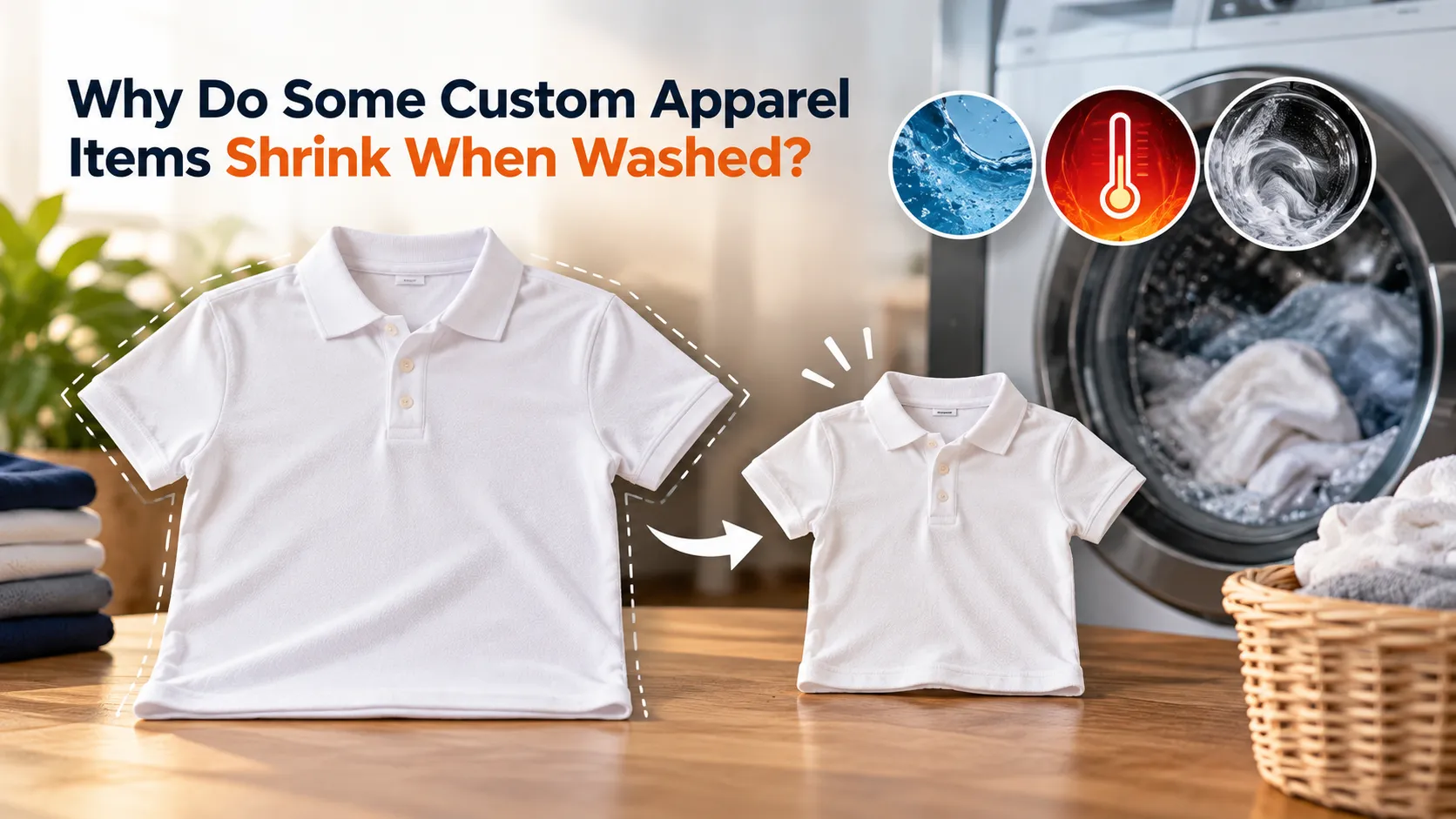

You pull a brand new t shirt out of the wash expecting it to look exactly like it did an hour ago. Instead it fits like it was tailored for a smaller sibling. If this has happened to you, you are not imagining things, and you are definitely not alone.
Shrinkage is one of the most common complaints in bulk custom apparel orders, and the reason behind it has less to do with bad luck and more to do with basic fiber science.
It Starts Long Before the Washing Machine
Cotton fibers are naturally short, curly, and a little messy on their own. To turn them into smooth, usable thread, manufacturers pull and stretch them during spinning and weaving. That stretching locks a kind of tension into the fabric, almost like winding a spring and holding it in place.
The fabric stays that way, stretched and tense, right up until it meets water and heat. That is when the real story begins.
What Actually Happens During a Wash
When cotton fabric absorbs water, the fibers swell, sometimes expanding in diameter by as much as 25% according to textile researchers. This swelling loosens the internal bonds holding the stretched fibers in place.
Heat makes this process move faster. Warm or hot water increases the energy in the fibers, which disrupts the hydrogen bonds that were keeping the thread stretched out. Once those bonds loosen, the fibers do what any stretched material tends to do when released. They contract back toward their natural, shorter shape.
Add the tumbling and agitation of a washing machine on top of that, and you get what textile scientists call relaxation shrinkage. The fabric is not being damaged in a chemical sense. It is simply returning to the shape it wanted to be in before manufacturing stretched it out.
Why the First Wash Hits the Hardest
Most of the shrinking happens during that very first wash cycle. Untreated cotton can shrink anywhere from 10 to 20% when exposed to hot water and high heat, while fabric that has been properly preshrunk during manufacturing usually loses only 2 to 5%.
Preshrinking works by deliberately running the fabric through controlled heat and moisture before it ever becomes a garment, so most of the relaxation happens at the factory instead of in your washing machine. It is not a shrink proof guarantee, but it dramatically reduces the surprise factor for anyone placing a bulk order.
Fabric Weave and Blend Matter Too
Not every fabric shrinks the same amount, even within the cotton family. A loosely woven or knitted fabric has more room for the fibers to contract, so it tends to shrink more noticeably than a tightly woven one. This is part of why a soft, stretchy cotton t shirt can shrink more than a dense cotton pair of jeans.
Blended fabrics behave differently as well. Polyester fibers do not swell with water the way cotton does, since they are synthetic and far more stable under heat. A 50% cotton and 50% polyester blend typically shrinks less than half as much as pure cotton of similar construction, because the polyester fibers act like a scaffold holding the whole structure in place.
What Actually Causes Shrinkage, in Short
Three things combine to shrink a garment. Water lets the fibers swell and loosen. Heat speeds up that loosening by breaking down the bonds holding the fibers in their stretched shape. And mechanical agitation from the washing machine pushes the fibers to settle back into their natural, shorter form faster.
Take any one of those three away, and shrinkage slows down considerably. That is exactly why cold water and air drying are the two most reliable ways to protect a cotton garment.
What This Means for Bulk Custom Apparel Orders
For anyone managing uniforms, event merchandise, or branded t shirts across a team, this science has a very practical side. Fabric that has not been properly preshrunk can throw off an entire size chart after just one wash, leaving a batch of uniforms that no longer match the sizes they were ordered in.
A reliable custom apparel manufacturer should be able to explain their preshrinking process clearly, along with the fabric composition and expected shrinkage percentage for the garments being ordered. This single detail prevents a lot of after delivery complaints and reorders.
The Bottom Line
Shrinkage is not random and it is not a sign of a poorly made garment by default. It comes down to fiber tension, water, heat, and how the fabric was finished before it ever reached you.
Whether you are sourcing through a custom apparel manufacturer in Patna or anywhere else, asking about preshrinking and fabric composition before a bulk order goes a long way toward avoiding the kind of shrinkage surprise that ruins a perfectly good batch of custom apparel.
















Sign in to leave a comment.