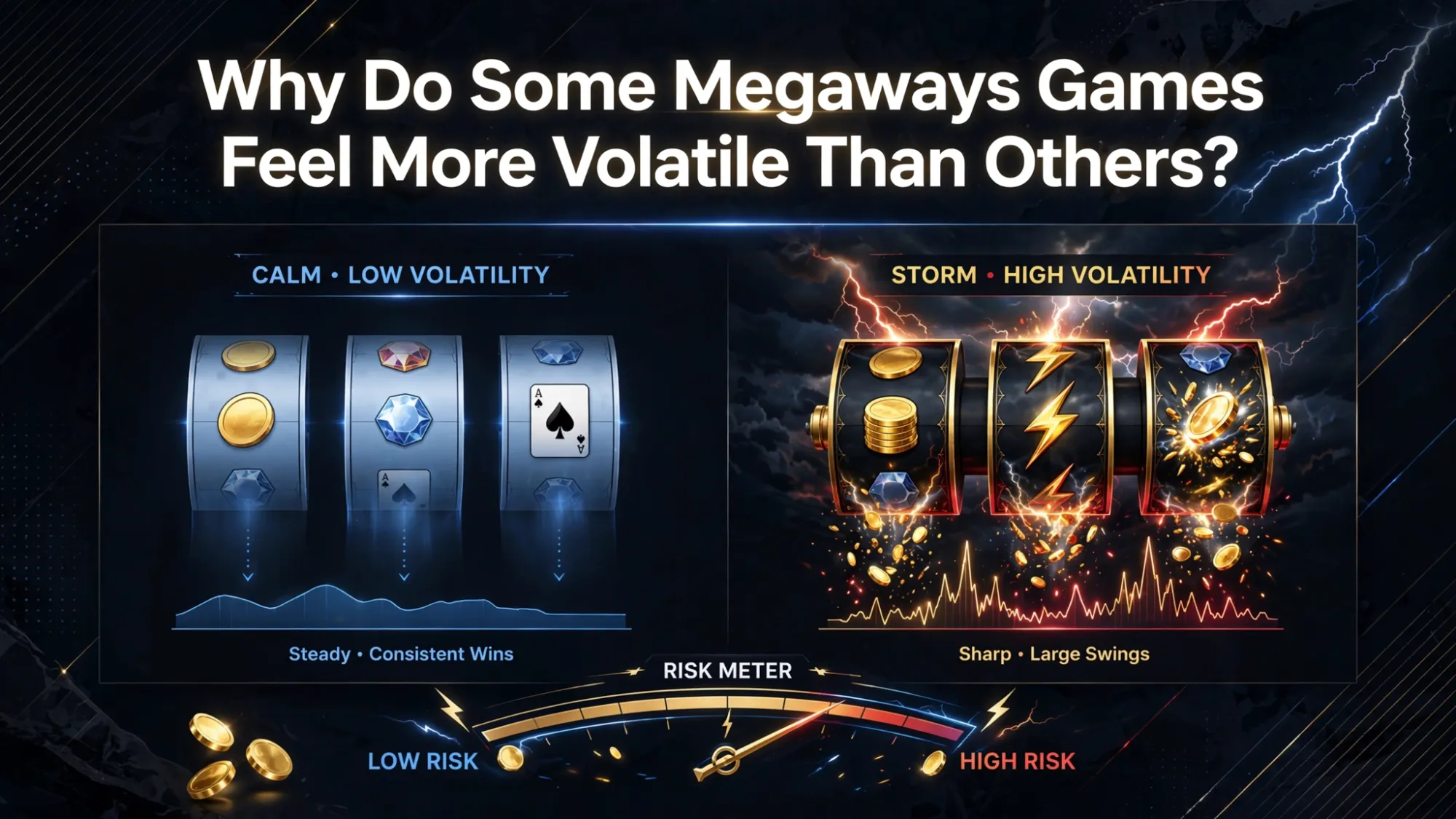

Play a handful of different variable-reel titles back to back and the difference in how they feel becomes obvious fast. Some produce steady, frequent smaller wins. Others go long stretches with almost nothing, then pay out a large amount all at once. Both types share the same underlying reel mechanic, so the reason they feel so different comes down to a handful of design choices layered on top of it.
The Reel Mechanic Sets the Baseline, Not the Ceiling
Every title in this category uses the same basic principle: a variable number of symbols on each reel, recalculated on every spin, which changes the total ways to win constantly. That baseline mechanic already pushes most megaways casino slots toward the higher end of the volatility spectrum compared to fixed payline formats. But the mechanic itself is only the starting point. How volatile a specific title actually feels depends on a set of design decisions built on top of that foundation.
Symbol Distribution Plays a Bigger Role Than the Reel Structure
Two games can share an identical maximum ways to win figure while feeling completely different to play, and the reason usually comes down to symbol distribution. If high-paying symbols appear rarely across the reel set, wins will be less frequent and, when they do land, potentially larger. If those same symbols appear more often, the game will pay more frequently but typically in smaller amounts. This single design choice, largely invisible to the player, has more influence on how a title feels than the ways to win maximum printed on the paytable.
Multiplier Caps Change the Shape of Volatility
Bonus round multipliers add another layer to this. Some titles cap the multiplier at a fixed number, which limits how large a single win within the feature can grow. Others use an uncapped, unlimited multiplier that can, in theory, keep climbing with each consecutive cascade. Titles with uncapped multipliers tend to feel noticeably more volatile, since the ceiling on a single bonus round result is effectively open-ended, compared to a title where the multiplier stops at a fixed number regardless of how the round unfolds.
Hit Frequency Is the Number Behind the Feeling
Hit frequency, the percentage of spins that produce any win at all, is one of the clearest technical indicators of how volatile a game will feel in practice. A title with a hit frequency around 20 to 25 percent will feel noticeably steadier than one sitting closer to 10 percent, even if both share similar RTP figures. This number is not always displayed prominently in the game interface, but it is often available through the developer's published information or third-party reviews, and it is one of the more reliable ways to compare volatility across different megaways casino slots.
How Reel Height Range Affects the Feel of a Session
Not every title uses the same minimum and maximum reel height. Some allow reels to shrink down to a single symbol on a bad spin, dramatically lowering the ways to win total for that round, while others set a higher floor that keeps the combination count from dropping too far. A wider range between the minimum and maximum reel height tends to produce more visible swings from spin to spin, which contributes directly to how volatile a session feels even before any bonus features come into play.
Bonus Frequency and Trigger Requirements
How often the bonus round actually triggers, and how many scatter symbols are required to reach it, also shapes the overall feel. A title that requires four scatters spread across six reels will trigger far less often than one requiring three scatters on a smaller grid. Since bonus rounds are typically where the larger multipliers and expanded reels come into play, a lower trigger frequency generally pushes the overall volatility of the title higher, since more of the potential value is concentrated into a rarer event.
Comparing Titles Beyond the Headline Numbers
Because so many factors combine to produce the final feel of a game, comparing titles purely on their maximum ways to win figure or advertised RTP misses most of what actually drives volatility. Checking the volatility rating directly, along with hit frequency where available, gives a far more accurate sense of how a specific title will play compared to relying on the headline numbers alone.
Frequently Asked Questions
Do all Megaways titles have the same volatility?
No. While the underlying mechanic pushes most titles toward higher volatility, individual design choices like symbol distribution and multiplier caps create significant differences between games.
What is hit frequency and why does it matter?
It is the percentage of spins that produce any win at all. A lower hit frequency generally means longer stretches without a win, which increases how volatile a title feels.
Does an uncapped multiplier always mean higher volatility?
Generally yes, since it removes the ceiling on how large a single bonus round result can grow, compared to a title with a fixed multiplier limit.
Why do two games with the same ways to win maximum feel different?
The maximum only describes the reel structure. Symbol distribution, multiplier design, and bonus trigger frequency all shape how that structure actually plays out.


























Sign in to leave a comment.