
Millions of Indians and their families are affected by food allergies and other food hypersensitivities. Food allergies happen when the body's immune system reacts to specific proteins.
The intensity of food allergy responses ranges from moderate symptoms, such as hives and swelling of the lips, to severe, life-threatening symptoms, commonly known as anaphylaxis, which may involve lethal breathing issues and shock.
Despite the development of potential preventative and treatment techniques, food allergies remain incurable. Therefore, recognising food allergies early and understanding how to manage them, including which foods to avoid, are crucial measures to prevent significant health repercussions.
To safeguard individuals with food allergies and other hypersensitivities there are stricter labelling requirements for foods or chemicals that cause allergies or different hypersensitivity reactions. Some major food allergens are:
CeleryCereals containing wheatCrustaceansEggsFishLupinMilkMolluscsMustardNuts (tree nuts)PeanutsSesameSoyaSulphur dioxide (sulphates)Control Points for Allergens in the making Process
Ingredient Storage
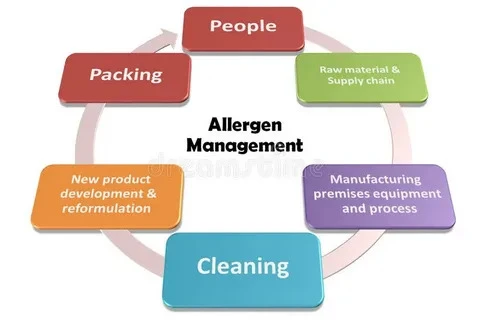
Food and drink companies must find out what allergens are in their products and take steps to keep them separate from other products that don't contain allergens that are made in the same facility. Likewise, ingredients that contain allergens should be kept away from ingredients that don't contain allergens.
Planning for production
In allergen management, it is common to set up production schedules to separate products that contain allergens. Cross-contamination can be avoided with proactive scheduling, saving employees' time and money spent on cleaning and time when production is stopped.
Surfaces that touch food
It's essential to remember that allergens on food-contact surfaces aren't spread out evenly in the next batch of products. So when the run is over, all allergen-containing products must be removed by cleaning and sanitising the area well.
Surfaces that don't touch food
Even though these areas may not come into direct contact with foods that don't cause allergies, things like employee handling and high-pressure spraying can cause allergen-containing debris to get back on clean surfaces.
Using samples and tests
Test kits can look for almond, egg, gliadin, hazelnut, milk, peanut, and soy residues in food products. Testing is usually done in a manufacturing setting by people who work in quality assurance or have special training.
Packages with the correct labels
If employees need to learn that a product has an allergen, they may change the packaging without cleaning it and label it as not having an allergen.
Importance of Allergen Course
People with food allergies must be cautious while consuming any specific item containing allergens. It is because they are forced to rely on the product label's descriptions of the ingredients. Therefore, recommended allergen management in the food industry is necessary for businesses specialising in food products.
Food producers must always ensure that an allergic person does not consume their products. Persons with food allergies may show various impacts on consuming specific allergy-causing foods like eggs, peanuts, gluten in milk and wheat, and so on.
The Most Reliable Allergen Courses in India
An allergen certificate is vital for managing allergies, and FICSI has training modules. It has taken this food safety initiative to a new height to show that it is serious about ensuring that consumers eat healthy food and is interested in effective allergen management programs.
The institution presents an allergen control strategy, primarily a written document covering handling, storing, packaging, processing, and identifying allergic foods and materials. This control plan needs to be implemented, audited, and updated frequently. The company must be aware of the changes when the plan is modified. As a result, the business needs to be mindful if a new product is introduced, a procedure is altered, or a new employee is employed. If the duties of the currently employed staff have changed, the company should be informed. The current allergy control plan must be explained to every employee in the factory. It will be accomplished thanks to formal training.A Word of Advice
At FICSI, the training modules will assist you in learning more about allergen management in the food industry. Moreover, the institute helps you to find better careers in the food processing sector. Therefore, getting your foot in the door can be an excellent approach if you seek a career in the food sector.











Sign in to leave a comment.