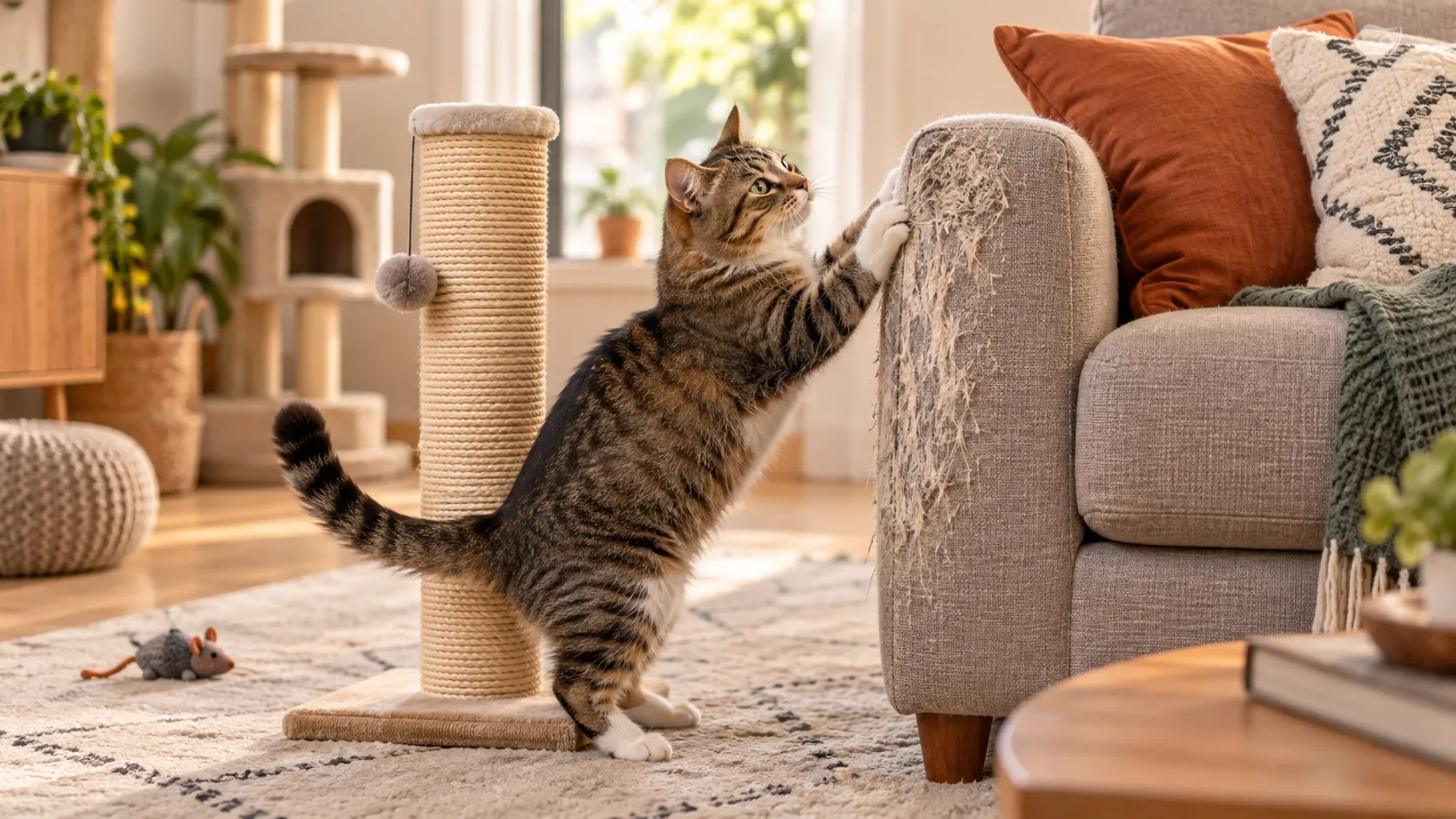

Cats do not scratch furniture simply because they are being difficult. Scratching is a normal feline behavior connected with stretching, claw maintenance, scent marking, and communication.
The frustrating part for owners is when a cat ignores several scratching posts and continues returning to the same corner of the sofa.
That usually means the furniture is providing something the alternatives are not.
The Location May Matter More Than the Scratching Post
One common mistake is placing scratching furniture where it looks best in the room rather than where the cat actually wants to scratch.
Cats often scratch after waking, during transitions between activities, or in areas they regularly pass through. A post hidden in a spare room may therefore be much less attractive than the sofa beside the living-room doorway.
If your cat repeatedly scratches one piece of furniture, try placing an appropriate scratching surface directly beside that location first.
Once the cat begins using it consistently, you can experiment with moving it gradually.
The Texture May Be the Real Attraction
Cats can have strong surface preferences.
Some prefer:
- sisal
- cardboard
- carpet-like material
- rough woven fabric
- horizontal scratching pads
- tall vertical posts
A cat that consistently chooses the side of an upholstered sofa may simply prefer that texture or scratching angle.
Instead of repeatedly redirecting the cat to a post it ignores, test different materials and orientations.
Height and Stability Make a Difference
A scratching post may technically be large enough for a cat but still feel unsatisfying.
Many cats like to stretch their bodies fully while scratching. If the post is too short, moves when pressure is applied, or tips easily, the sofa may provide a much better experience.
This can be especially noticeable with larger cats.
A useful scratching structure should feel stable enough that the cat can lean into it without movement.
Scratching Can Become Part of a Routine
Once a cat has used the same location repeatedly, the behavior can become strongly established.
Cats also leave scent information through glands around their paws, which can make a familiar scratching area particularly meaningful.
That is why simply telling a cat “no” or moving it away may not solve the problem.
A better approach is to make the preferred alternative easier and more rewarding.
Place the new scratching surface directly beside the targeted area and encourage exploration with play or positive reinforcement.
At the same time, temporarily protecting the furniture can reduce opportunities to continue the old pattern.
Boredom Can Increase Destructive Behavior
Sometimes the scratching problem is not only about scratching.
A cat with limited stimulation may become more persistent with activities that create movement, texture, or attention.
Look at the entire daily environment.
Does the cat have opportunities to climb, observe from elevated spaces, chase toys, explore, and interact?
Puzzle feeders, toy rotation, window viewing areas, climbing structures, and interactive play can all make the home environment more interesting.
MeoWoff's own cat-care content also discusses enrichment and appropriate scratching outlets as part of managing unwanted behavior rather than treating scratching as simple disobedience.
Sudden Changes Deserve More Attention
There is also a difference between a long-standing scratching habit and a sudden behavioral change.
If a cat unexpectedly becomes much more destructive, restless, vocal, withdrawn, or otherwise behaves differently, consider whether something else in the environment has changed.
Changes may include:
- a new pet
- a new person in the household
- furniture being rearranged
- changes to feeding routines
- reduced interaction
- construction or unusual noise
- changes in another pet's behavior
Behavior changes can sometimes also accompany discomfort or medical problems. If the change is sudden, persistent, or accompanied by physical symptoms, a veterinarian should be consulted.
The Goal Is Redirection, Not Elimination
Trying to stop scratching completely is unrealistic because scratching is normal behavior.
The practical goal is to give the cat a better place to perform it.
That may require some experimentation with placement, texture, height, and enrichment rather than buying one scratching post and expecting every cat to prefer it.
Observing where and when the behavior happens often provides more useful information than reacting only after furniture has already been damaged.
For more cat-care, breed, behavior, and ownership resources, visit:
























Sign in to leave a comment.