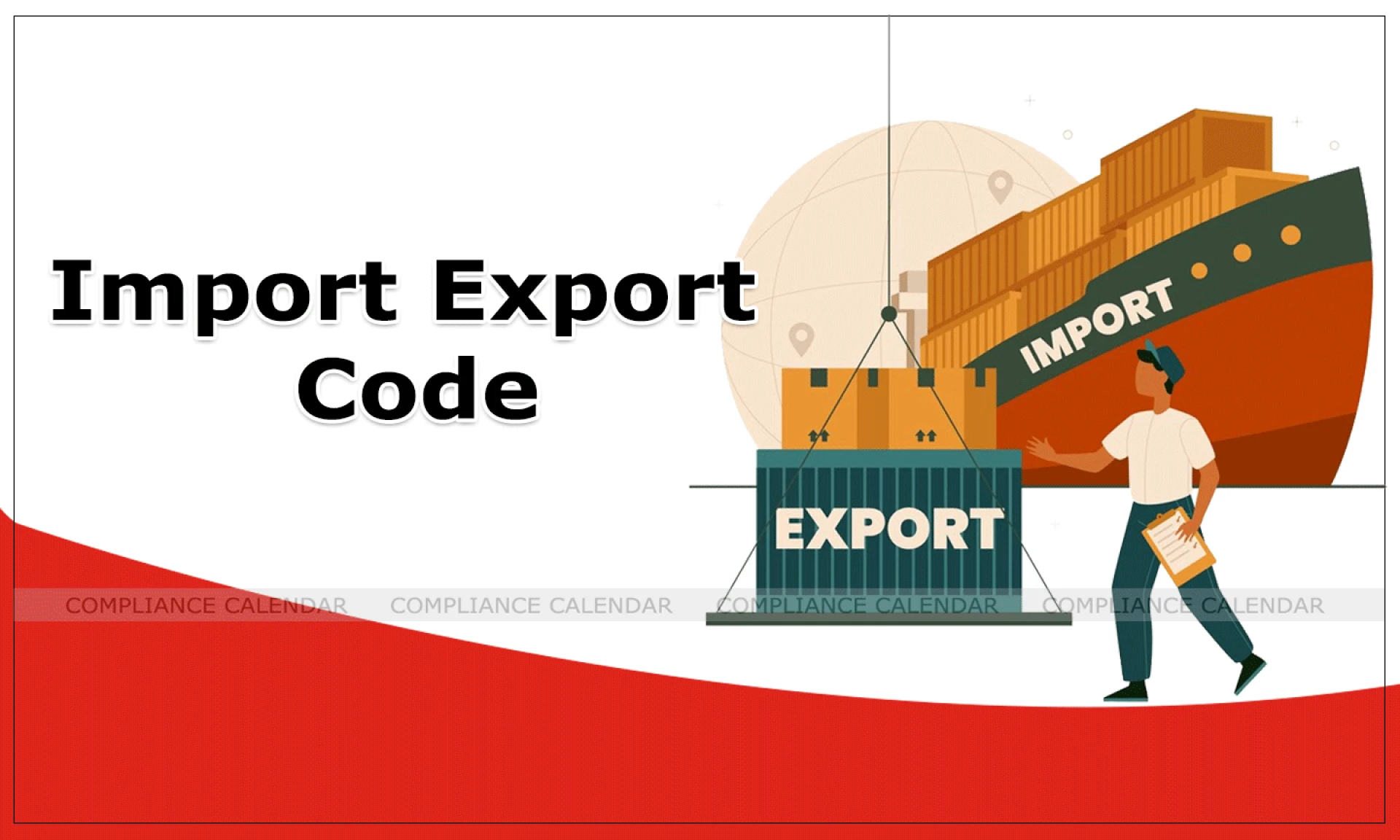

Entering foreign markets is an important step for every company. Businesses need to obtain an IEC Code (Import Export Code) to export products or services legally. Any organization involved in international trade must register for the IEC Code to confirm compliance with legal requirements. Businesses are unable to process shipments or accept overseas payments if they are not properly registered with the IEC. The significance of an import export code, how to get one, and the necessity of frequent IEC Updates for exporters are all covered in this article.
What is an IEC Code?
The Ministry of Commerce and Industry's Directorate General of Foreign Trade (DGFT) issues 10-digit unique identifiers known as IEC Codes. Any company doing import-export operations in India must have it. Through the one-time IEC Code Registration process, companies can:
·
- Legally export and import goods or services.
- Avail benefits under various government schemes.
- Open global business opportunities by complying with trade regulations.
Key Features of an IEC Code
1 Mandatory for Global Trade – Without an IEC, businesses cannot secure in import/export transactions.
2 Lifetime Validity – The IEC Code does not require renewal unless updated.
3 Simplifies International Payments – Enables businesses to receive payments from foreign clients.
4 Supports Duty Exemptions – Helps exporters claim benefits under MEIS, SEIS, and other foreign trade policies.
5 Required for Customs Clearance – Confirms hassle-free shipment processing at customs checkpoints.
Why Every Exporter Needs an IEC Code
1. Legal Requirement for Exporting Goods & Services
Any business planning to export must complete IEC Code Registration before initiating cross-border transactions. The Indian government mandates this process to regulate foreign trade, prevent fraud, and track international business activities.
2. Smooth Customs Clearance
Without a valid IEC Registration, exporters face delays in customs clearance. An Import Export Code is required for documentation when shipping goods internationally, preventing unnecessary interruptions and financial losses.
3. Unlocking Global Business Opportunities
An Import Export Code Registration allows businesses to expand their markets beyond domestic borders. With an IEC, exporters can:
- Trade with international buyers legally.
- Partner with foreign businesses and distributors.
- Increase brand reach in global markets.
4. Availing Export Incentives
The Government of India provides multiple incentives for exporters. Businesses with IEC Registration can avail themselves of benefits such as:
- Merchandise Exports from India Scheme (MEIS)
- Service Exports from India Scheme (SEIS)
- Reduced customs duties under Free Trade Agreements (FTAs)
5. Facilitating International Banking Transactions
Most banks and financial institutions require an IEC Code before allowing businesses to receive payments from foreign clients. It confirms compliance with international trade norms and helps businesses establish credibility in the global market.
Step-by-Step Guide to IEC Code Registration
Step 1: Visit the DGFT Portal
Go to the official Directorate General of Foreign Trade (DGFT) website and create an account.
Step 2: Fill Out the Application Form
Select ‘Apply for IEC’ and enter business details, including:
- Business Name and PAN
- Registered Address
- Type of Business (Sole Proprietorship, Partnership, LLP, or Private Limited Company)
Step 3: Upload Required Documents
Confirm you have the following documents ready for Import Export Code Registration:
- PAN Card of the business or individual
- Aadhaar Card or Passport of the applicant (for sole proprietors)
- Company’s Incorporation Certificate (for LLPs and Pvt Ltd companies)
- Bank details and canceled cheque
- GST Registration Certificate (if applicable)
Step 4: Pay the Registration Fee
After uploading the required documents, pay the government fee online.
Step 5: Receive the IEC Code
Once verified, the DGFT issues the IEC Code within 1-2 working days. You can download the IEC certificate from the portal.
Importance of IEC Update
What is an IEC Update?
As per DGFT regulations, all businesses holding an IEC Code must update their details annually. This process make sure that:
- The business details remain accurate and up to date.
- The IEC remains active for import-export operations.
- Companies comply with government regulations to avoid penalties or suspension.
When Should You Update Your IEC Code?
- If there are any changes in business address, directors, or ownership structure.
- Annually, even if there are no changes (failure to update can lead to deactivation).
How to Update IEC Code?
- Log in to the DGFT portal.
- Select IEC Update option and modify business details.
- Upload supporting documents if changes are made.
- Submit the update request and receive confirmation.
Common Mistakes to Avoid During IEC Registration
1. Entering Incorrect Business Details
Confirm that the business name, address, and PAN details match the records on your incorporation certificate and GST registration.
2. Failing to Update IEC Code
An expired or inactive IEC can lead to difficulties in processing international shipments and payments. Always complete your IEC Update annually.
3. Not Maintaining Compliance with DGFT Guidelines
Even after obtaining an Import Export Code, businesses must comply with DGFT’s guidelines, including export-import policies and trade compliance rules.
4. Missing Required Documents
Uploading incorrect or missing documents can delay the IEC approval process. Always cross-check requirements before submitting the application.
Assumption
Obtaining an IEC Code is not only a legal need for exporters, but also a vital business tool. Eligibility for export incentives, seamless customs clearance, and access to international trade are all guaranteed by completing IEC Code Registration. Frequent IEC updates also guarantee adherence to global trade regulations, enabling uninterrupted corporate operations.
Businesses can safely enter foreign markets, attract foreign investments, and establish a strong presence in the global trade ecosystem by realizing and meeting the standards for Import Export Code Registration.



























Sign in to leave a comment.