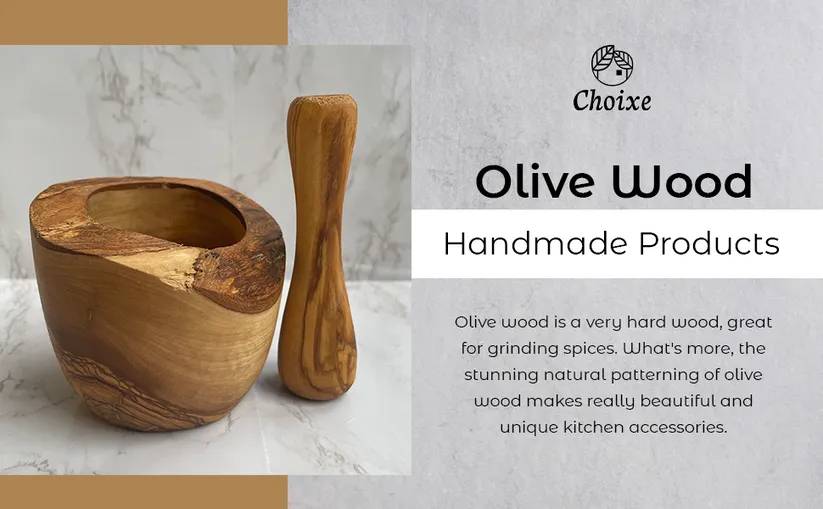

Grinding fresh garlic, cracking whole peppercorns, or making a batch of homemade pesto by hand changes the way food tastes. A good olive wood mortar and pestle does more than crush ingredients — it releases oils, aromas, and flavors that a blender or food processor simply cannot match. If you love cooking with fresh herbs and spices, this simple tool deserves a permanent spot on your countertop.
In this guide, we'll walk through why olive wood is such a smart material choice, how to use and care for a mortar and pestle, and what to look for before you buy one for your own kitchen.
What Makes Olive Wood Special for Kitchen Use
Olive wood has been used for centuries to make bowls, spoons, cutting boards, and grinding tools, and there's a good reason it has stayed popular. The wood comes from olive trees, which grow slowly and produce an extremely dense, tight grain. That density is what makes olive wood so durable for daily kitchen work.
A few reasons cooks reach for olive wood again and again:
- Naturally hard and dense — resists chipping and cracking better than softer woods like pine or basic hardwoods.
- Unique grain pattern — no two pieces look exactly alike, since each one is cut from a different section of the tree.
- Naturally low odor absorption — the tight grain means garlic, onion, and spice smells don't linger the way they can in softer, more porous woods.
- Long lifespan — with basic care, a well-made piece can last for decades, often improving in color and texture with age.
These qualities make olive wood one of the most practical choices among kitchen tools used for grinding, crushing, and mixing by hand.
The Case for Grinding by Hand
Modern kitchens are full of electric gadgets, so it's fair to ask why a hand tool still matters. The answer comes down to texture and flavor control.
When you crush garlic, ginger, or fresh herbs in a mortar, you break down the cell walls slowly and unevenly, on purpose. This releases essential oils gradually, which builds layers of flavor that a fast-spinning blade tends to flatten out. Cooks making pesto, curry pastes, guacamole, salsas, or spice blends often say the texture from hand-grinding is noticeably better — chunkier in some spots, smoother in others, with more depth of flavor overall.
A mortar and pestle also gives you full control over consistency. Want a rough, rustic paste for a chimichurri sauce? Stop early. Want a fine powder for a spice rub? Keep grinding. That level of control is hard to replicate with a machine that only has one or two speed settings.
Everyday Uses in a USA Kitchen
An olive wood mortar and pestle fits naturally into everyday American cooking, not just specialty or ethnic dishes. Here are common ways home cooks put one to work:
- Crushing garlic and ginger for stir-fries, marinades, and sauces.
- Making fresh pesto with basil, pine nuts, garlic, olive oil, and parmesan.
- Grinding whole spices such as peppercorns, cumin seeds, coriander seeds, and mustard seeds.
- Preparing guacamole with a chunky, restaurant-style texture.
- Muddling herbs for cocktails, like mint for a mojito or basil for a gin fizz.
- Crushing dried herbs to release more aroma before adding them to soups and stews.
- Making homemade curry pastes from scratch, blending fresh chilies, garlic, and aromatics.
Because it handles both wet and dry ingredients well, this single tool can replace several small gadgets cluttering a drawer.
How to Choose the Right Mortar and Pestle
Not all mortar and pestle sets are built the same way, and picking the right one matters for both performance and longevity. Here's what to check before buying:
Size — A bowl that's too small makes grinding messy, since ingredients pop out with every strike. A wider, deeper bowl gives you more room to work, especially for pastes and larger batches of spices.
Wood quality — Look for a solid piece with a tight, consistent grain and no visible cracks. Lower-quality wood pieces can split over time, especially with repeated exposure to moisture.
Bowl shape — A rounded interior helps ingredients collect at the base rather than sticking to the sides, which makes the grinding process more efficient.
Pestle grip — The pestle should feel solid and comfortable in your hand. A pestle that's too light won't apply enough pressure; one that's too heavy can be tiring to use for longer grinding sessions.
Finish — A natural, food-safe finish is important. Some pieces are treated with mineral oil to protect the wood without introducing chemicals into your food.
If you're shopping for a natural olive wood mortar and pestle with bowl, prioritize a piece that's been shaped from a single, solid block rather than glued sections, since solid pieces tend to hold up better over years of regular use.
Caring for Your Olive Wood Mortar and Pestle
Wood kitchen tools need slightly different care than ceramic, stone, or metal ones, but the maintenance is simple once you know the basics.
- Hand wash only. Avoid the dishwasher, since prolonged water exposure and high heat can cause warping or cracking.
- Dry immediately. After washing, wipe the bowl and pestle dry with a towel and let them air-dry fully before storing.
- Oil it occasionally. Rubbing a small amount of food-safe mineral oil into the wood every few weeks helps prevent drying and cracking, especially in low-humidity climates.
- Avoid soaking. Never leave the mortar sitting in a sink full of water, as this can loosen the wood fibers over time.
- Keep it away from direct heat. Store away from stovetops, ovens, and direct sunlight, which can dry the wood out faster than normal use.
With this basic routine, an olive wood mortar and pestle can stay in great shape for years, developing a deeper, richer color the longer it's used.
Why This Belongs in Every American Kitchen
Home cooking across the USA has shifted toward fresher, more scratch-made meals — more homemade sauces, more fresh herb blends, more spice mixes made from whole ingredients instead of pre-ground jars. An olive wood mortar and pestle supports exactly that kind of cooking. It's a low-tech tool that pairs well with a modern kitchen, whether you're making a quick weeknight guacamole or slow-building a curry paste on a Sunday afternoon.
It's also a practical gift idea. A solid wood mortar and pestle works for beginner cooks building their first kitchen and for experienced cooks who already have a full set of gadgets but appreciate a well-made hand tool.
For anyone building out a home kitchen with reliable, long-lasting kitchen tools, an olive wood mortar and pestle set is one of the simplest additions that pays off every time you cook. It's not flashy, it doesn't need batteries, and it doesn't take up counter space the way a bulky appliance does — but it earns its spot through daily use.
If you're ready to add one to your own kitchen, take a look at our olive wood rustic mortar and pestle, made from a solid, dense block of olive wood and finished for everyday food use. You can also browse our full range of kitchen tools for other handmade essentials.
Final Thoughts
A mortar and pestle is one of the oldest kitchen tools still in daily use, and olive wood remains one of the best materials for it — durable, naturally resistant to odor, and beautiful in its own simple way. Whether you're grinding spices, making pesto, or muddling herbs for a drink, this small, sturdy tool can quickly become one of the most-used items in your kitchen.
FAQs
1. What is this blog post about?
This blog explains why an olive wood mortar and pestle is a practical addition to any home kitchen, covering its benefits, everyday uses, buying tips, and care instructions.
2. Who should read this guide?
Anyone who cooks at home regularly, especially people who make fresh sauces, spice blends, pastes, or herb-based dishes and want better texture and flavor control.
3. Does this blog recommend a specific type of wood?
Yes, the blog focuses on olive wood specifically, explaining why its density and grain make it a strong choice compared to other wood types.
4. Are there care tips included in this article?
Yes. The blog includes a full section on hand washing, drying, oiling, and general maintenance for wood kitchen tools.
5. Does the blog explain how to choose the right size?
Yes, it covers bowl size, wood quality, shape, pestle grip, and finish as key factors to check before buying.
6. Is this guide specific to cooking in the USA?
Yes, the examples and cooking styles referenced are geared toward common American home-cooking habits, including sauces, spice rubs, and cocktail muddling.
7. Does the blog compare mortar and pestle grinding to electric grinders?
Yes, there's a dedicated section comparing hand-grinding texture and flavor control to using blenders or electric grinders.
8. Can beginners use the tips in this blog?
Absolutely. The guide is written for both new cooks setting up a kitchen and experienced cooks looking to add a reliable hand tool.
9. Does the blog mention gift ideas?
Yes, it notes that an olive wood mortar and pestle set can also work well as a practical kitchen gift for any skill level.
10. Where can I find the products mentioned in this blog?
The products mentioned are linked directly in the article, including the olive wood rustic mortar and pestle and the full kitchen tools collection.




























Sign in to leave a comment.