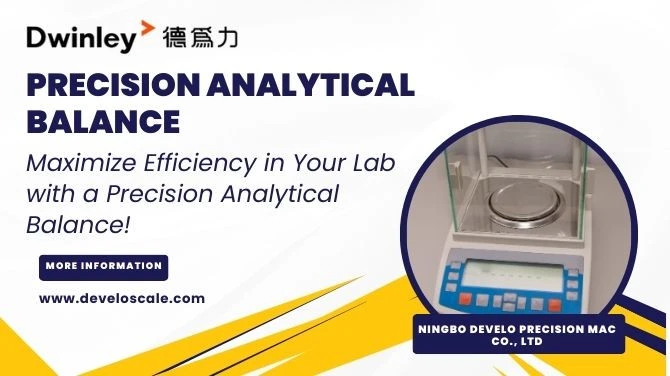

In the dynamic world of scientific research, quality control, and product development, accuracy and consistency are not just goals—they are essential standards. Whether you’re running a pharmaceutical lab, a food testing facility, a research institution, or a chemical manufacturing plant, one tool remains at the cornerstone of precise measurement: the Precision Analytical Balance.
At Ningbo Develo Precision Mac Co., Ltd., we understand the critical role precision equipment plays in laboratory operations. As a globally recognized manufacturer and supplier of high-end weighing solutions, we are committed to providing laboratories and industries with instruments that perform with exceptional reliability and accuracy. Among our premier offerings, our Precision Analytical Balances stand out for their uncompromising precision and innovative features.
What is a Precision Analytical Balance?
A precision analytical balance is a highly sensitive laboratory instrument designed to measure the mass of substances to a very high degree of accuracy—typically up to four or five decimal places (0.0001g or 0.00001g). Unlike simpler weighing scales, these devices are built with advanced load cells, electromagnetic force restoration (EMFR) systems, and enclosed weighing chambers to minimize environmental influences like dust, breeze, or static electricity.
In practice, these balances are used for applications such as:
- Formulation and compounding
- Sample preparation for spectroscopy or chromatography
- Reagent measurement
- Standards and calibration for quality control
- Material research and testing
- Pharmaceutical compounding and USP <1251> compliance
Thus, if your lab is involved in any procedure where the smallest error in weight could result in inaccurate conclusions, failed experiments, or non-compliance with industry regulations, a Precision Analytical Balance is not an option—it’s a necessity.
Why Accuracy Matters in Modern Laboratories?
Accuracy in weighing is not just about scientific integrity—it impacts various operational, regulatory, and economic aspects of laboratory work. For example:
- Regulatory Compliance
- Industries like pharmaceuticals and food production are governed by strict regulations imposed by authorities like the FDA, EMA, and ISO. These regulations often require traceable and documented accuracy in ingredient measurements and batch formulations. Non-compliance doesn’t just result in failed audits—it can lead to serious public health risks and costly legal consequences.
- Enhancing Reproducibility
- Reproducibility is the hallmark of credible research. A well-calibrated Precision Analytical Balance ensures that each measurement taken can be reliably repeated, reducing variability in results over time and across different users.
- Reducing Material Waste
- When accuracy is compromised, so is efficiency. Miscalculations can result in waste of expensive reagents, failed batches, or rejected products—driving up costs and hindering productivity. High-precision weighing helps avoid such losses.
- Improving Safety
- In chemical labs, even minute deviations in measurement can lead to hazardous reactions—especially when working with volatile or reactive substances. A Precision Analytical Balance ensures that you aren't just aiming for accuracy but also fostering a safer laboratory environment.
Benefits of Using a Precision Analytical Balance
When you invest in a high-quality Precision Analytical Balance, such as those manufactured by Ningbo Develo Precision Mac Co., Ltd., you’re not just buying a tool—you’re investing in operational excellence. Here’s why:
- Superior Sensitivity
- Our balances are equipped with state-of-the-art sensors that allow measurement as fine as 0.1 mg (0.0001 g), providing high-level resolution that is vital for critical applications.
- Stability and Repeatability
- Advanced stabilization technology minimizes the time taken for the scale to give a final value, improving both speed and reliability.
- Built-in Calibration
- Influences like room temperature, barometric pressure, and humidity can affect measurements. Automatic internal calibration features ensure real-time recalibration based on these environmental changes.
- Intelligent User Interface
- Modern balances come with LCD or touchscreen displays, user-friendly interfaces, and built-in software functions—like tare, percentage weighing, density determination, and statistical analysis—to support complex weighing tasks more efficiently.
- Data Management and Connectivity
- Some models offer USB, RS232, or Bluetooth connectivity, aiding in GLP/GMP compliance. Data can be logged, exported, and tracked to improve documentation and audit readiness.
Key Features to Consider When Choosing a Precision Analytical Balance:
Given the vast range of models available in the market, how do you choose the right analytical balance for your laboratory? Consider the following aspects:
1. Readability and Capacity
Readability defines the smallest difference in weight that the balance can detect.
Typical readability values are 0.1 mg and 0.01 mg.
Consider the sample sizes you’ll typically weigh when choosing a balance capacity.
2. Calibration Options
External calibration: Requires calibrated standard weights.
Internal calibration: Automatically adjusts for environmental factors and provides convenience.
3. Construction Material
Anti-corrosive stainless steel weighing pans
Draft shield materials (glass or acrylic)
Chemical-resistant outer casing to withstand spills
4. Environmental Considerations
Vibration, temperature, and airflow can hinder performance.
Choose a model with insulation, filters, and leveling systems.
5. Compliance and Certification
Especially important for regulated industries, check if the balance meets ISO, GLP/GMP, USP, or 21 CFR Part 11 standards.
How Ningbo Develo Precision Mac Co., Ltd. Stands Out?
We are not just product manufacturers—we are partners in progress for laboratories worldwide. Here's why thousands of labs trust us:
- In-house R&D to deliver cutting-edge technology
- Stringent quality control ensuring compliance with international standards
- Customization available for specific lab or industrial needs
- Global service and technical support network
- Fast shipping and competitive pricing
Our line of Precision Analytical Balances is engineered for accuracy, durability, and ease of use—ensuring that you get consistent results in every application, big or small.
Maintenance and Best Practices
To ensure optimal performance from your precision equipment:
- Calibrate regularly (or use auto-calibration)
- Keep the balance clean and dust-free
- Use the balance on a vibration-resistant table
- Handle samples with tweezers to avoid temperature influence
- Level the instrument before weighing
- Allow the unit to warm up before use
Future Trends in Analytical Balances
Technology is reshaping the way labs operate. Precision Analytical Balances are now integrating with:
- AI-powered decision support tool
- IoT-based lab connectivity system
- Blockchain-enabled traceability for lab audit
- Cloud storage for batch recording and forecasting
As labs become smarter and more data-driven, having precision instruments like ours ensures you're future-ready.
The Case for Precision
In an era of increased scientific rigor and regulatory scrutiny, laboratories cannot afford to compromise on accuracy. A high-quality Precision Analytical Balance, such as those engineered by Ningbo Develo Precision Mac Co., Ltd., is the foundation of quality, reliability, and efficiency in any scientific or industrial setting.
Choosing the right analytical balance can transform your lab's ability to innovate, comply with global standards, and maintain consistent research results.
So, whether you’re outfitting a new lab or upgrading old equipment, make sure your next investment is a Precision Analytical Balance—because precision is not just a feature; it's a necessity.

Frequently Asked Questions (FAQ)
Q1: What is the difference between a precision balance and an analytical balance?
A precision balance generally has a readability of 1 mg (0.001g) or higher, while an analytical balance typically goes down to 0.1 mg (0.0001g) or further. Many balances now combine both features, offering high precision with extended analytical capabilities.
Q2: How often should a Precision Analytical Balance be calibrated?
We recommend a minimum of once daily, especially in regulated industries. Models by Ningbo Develo Precision Mac Co., Ltd. come with internal calibration capabilities, reducing manual workload and ensuring continued accuracy.
Q3: What environmental factors impact measurement accuracy?
Wind drafts, vibrations, temperature changes, humidity, and even proximity to magnetic fields can influence readings. It’s best to operate the balance in a controlled environment, away from windows, doors, or HVAC ducts.
Q4: Do your balances meet GLP and GMP standards?
Yes. Most of our Precision Analytical Balances are designed to support GLP/GMP compliance with features like data logging, timestamp, biometric access, and audit trails, depending on the model.
Q5: What warranty and support are provided?
We offer a minimum of one-year warranty on all our balances, along with lifetime customer support and access to global service centers.



























Sign in to leave a comment.