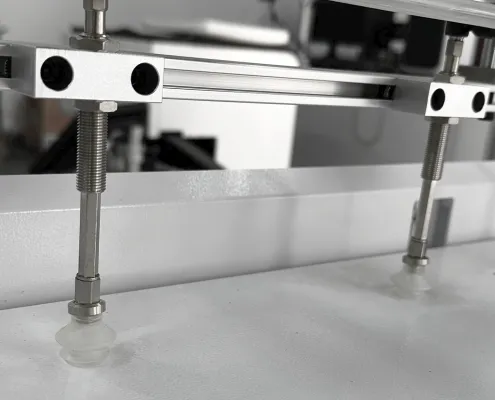

In today’s competitive manufacturing industry, speed, precision, and efficiency are essential for successful packaging operations. Businesses are constantly searching for innovative solutions that can reduce labor costs, minimize errors, and improve productivity. One of the most effective technologies transforming modern packaging systems is the Automatic friction feeder. From pharmaceuticals and food packaging to printing and industrial production, this machine has become an indispensable part of automated workflows.
An Automatic friction feeder is designed to separate, feed, and deliver flat products such as labels, cards, pouches, cartons, leaflets, and envelopes into a packaging or printing line with high accuracy. Unlike manual feeding methods, friction feeders use advanced mechanical systems to maintain consistent speed and alignment, ensuring uninterrupted operations. This automation significantly improves production efficiency while reducing the risk of product damage or feeding errors.
Modern packaging lines operate at high speeds, and even a minor interruption can lead to production delays and financial losses. Manual feeding not only slows down the process but also increases the possibility of inconsistent product placement. By integrating an automated feeder system, manufacturers can maintain continuous production without unnecessary downtime. This is especially beneficial for industries handling large production volumes where precision and timing are critical.
Another major advantage of using an Automatic friction feeder is its versatility. These systems are capable of handling a wide variety of materials and product sizes without requiring extensive adjustments. Whether feeding instruction manuals into pharmaceutical boxes or inserting promotional cards into retail packaging, friction feeders provide reliable and accurate performance. Their flexibility allows businesses to adapt quickly to changing packaging requirements while maintaining operational efficiency.
Cost reduction is another key reason why companies are investing in automated feeding technology. Labor-intensive packaging processes often require multiple workers to maintain production flow. Automation helps reduce dependency on manual labor, lowering operational costs over time. In addition, automated systems reduce material waste caused by improper feeding or product misalignment, further improving overall profitability.
Quality control also becomes easier with advanced feeder systems. Consistent feeding accuracy ensures that every package receives the correct insert or product component. This level of precision is essential for industries such as pharmaceuticals, where packaging errors can lead to compliance issues or customer dissatisfaction. Automated feeding technology helps maintain high-quality standards while improving customer trust and brand reputation.
As manufacturing technology continues to evolve, companies are increasingly focusing on smart automation solutions that improve efficiency and scalability. Robotjet Co., Ltd has been at the forefront of delivering innovative packaging automation equipment designed to meet modern industrial demands. By integrating reliable friction feeder systems into production lines, businesses can achieve faster throughput, improved accuracy, and long-term operational stability.
In conclusion, automated feeding systems are no longer a luxury but a necessity for modern packaging operations. The growing demand for high-speed production, reduced labor costs, and superior packaging accuracy makes friction feeders an essential investment for manufacturers across industries. Businesses that adopt automated feeding solutions today are better prepared to stay competitive in an increasingly fast-paced market while ensuring consistent product quality and operational excellence.
















Sign in to leave a comment.