
Mobile app development is always evolving, and it can be hard to keep up with the latest trends. But if you want to stay ahead of the curve, you need to know about Flutter. Flutter is a cross-platform mobile app development framework that allows you to develop native-looking apps for both iOS and Android from a single codebase. This means that you can save time and money by developing your app only once, instead of developing separate versions for each platform. In this blog post, we'll explore why Flutter app development is the future of cross-platform mobile apps. We'll discuss the benefits of using Flutter and how it can help you save time and money when developing your next app.
What is Flutter?
Flutter is a cross-platform mobile app development framework that enables developers to create high-quality native apps for Android and iOS. Flutter is used by some of the world’s largest companies, including Google, Alibaba, and Tencent.
Flutter’s key features include a reactive framework, fast development cycles, expressive and flexible UI, and native performance. Flutter apps are built using Dart, a programming language that is easy to learn for beginners and has excellent tooling support.
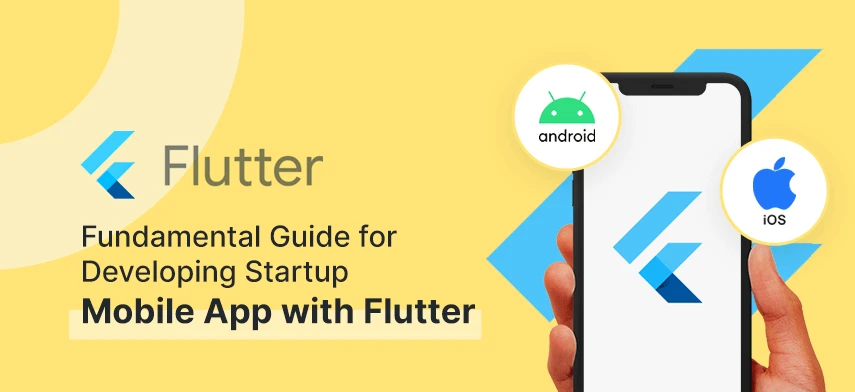
Developers can use Flutter to create beautiful, performant apps with a native user experience. Thanks to its efficient design, Flutter apps are often smaller in size than their counterparts built using other frameworks. And because Flutter uses the same codebase for both Android and iOS platforms, developers can easily create apps that work on both systems without having to maintain separate codebases.
What are the benefits of developing with Flutter?
Flutter is an open source, cross-platform mobile app development framework created by Google. It allows developers to create native-looking Android and iOS apps with a single codebase.
Flutter is gaining popularity among developers because it eliminates the need to develop separate apps for each platform. This saves time and effort, as well as money since one codebase can be used for both Android and iOS devices.
Another big advantage of Flutter is its hot reload feature. This allows developers to make changes to their code and see the results instantly on their devices, without having to restart the app or recompile the code.
Overall, Flutter’s efficient development process and ability to create high-quality apps make it a promising tool for mobile app development.
How does Flutter compare to other cross-platform mobile development frameworks?
Cross-platform mobile development frameworks allow developers to create apps that can be run on multiple mobile operating systems. Flutter is one such framework, and it has several advantages over its competitors.
First, Flutter uses the Dart programming language, which is easy to learn for developers with experience in other languages such as Java or JavaScript. Dart is also a compiled language, which means that apps built with Flutter run faster than those built with interpreted languages like JavaScript.
Second, Flutter includes a rich set of widgets that can be used to build beautiful user interfaces. These widgets are optimized for performance and can be customized to match the look and feel of the target platform.
Third, Flutter provides excellent support for integration with existing codebases. This means that developers can reuse their existing skills and knowledge when building apps with Flutter.
Fourth, Flutter comes with a comprehensive set of tools that make app development easier and faster. These tools include a visual editor, a CLI tool, and an emulator.
Finally, Flutter is backed by Google, which means that it will continue to improve and evolve over time. Google is also committed to supporting the development community by providing resources and training materials.
Who is using Flutter?
There are many big names in the tech industry that are using Flutter for their mobile app development needs. Some of these include Google, Alibaba, and Tencent. All three of these companies have invested heavily in Flutter and are committed to its future success.
Flutter is also being used by a number of start-ups and smaller companies. Many of these companies are attracted to Flutter because it offers a fast and easy way to develop high-quality cross-platform mobile apps. In addition, Flutter is free and open source, which makes it very attractive to small businesses and individual developers.
How do I get started with Flutter development?
Are you looking to build cross-platform mobile apps? If so, then you should consider using Flutter. Flutter is an open-source mobile app development framework created by Google. It allows developers to create native-looking Android and iOS apps with a single codebase.
Flutter is perfect for creating high-quality, responsive user interfaces. Plus, it offers a great way to increase your productivity as a developer. In this blog post, we'll show you why Flutter app development is the future of cross-platform mobile apps.
If you're new to Flutter, then you might be wondering how to get started. Well, the first step is to install the Flutter SDK on your computer. Then, you need to set up an editor or IDE that supports Flutter development. Finally, you can create your first Flutter app!
If you want more information on getting started with Flutter development, then check out our comprehensive guide: How to Develop Your First Cross-Platform Mobile App with Flutter.
Conclusion
There's no doubt that Flutter is making waves in the world of app development. With its unique approach to cross-platform development, Flutter allows developers to create high-quality apps that can be deployed on both Android and iOS platforms. What's more, Flutter provides a fast and responsive user experience that is second to none. With all these advantages, it's easy to see why Flutter is seen as the future of cross-platform mobile app development.







Sign in to leave a comment.