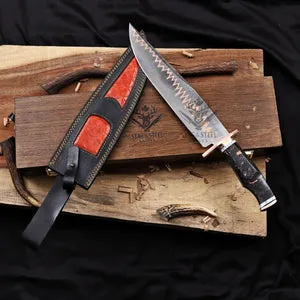

Steel has always told stories, but not every blade earns a legacy. In today’s collector market, handmade Bowie knives are no longer just tools or display pieces; they are evolving into symbols of craftsmanship, identity, and long-term value. Alongside them, Damascus Bowie knives with copper layering are pushing boundaries, blending tradition with raw visual power in ways collectors have never seen before.
The Rise of Copper Damascus in Collector Circles
Collectors used to chase patterns. Now, they chase structure. Traditional Damascus Bowie knives relied on layered steel patterns for beauty, but copper-infused Damascus takes that idea further. Instead of surface-level aesthetics, copper becomes part of the blade’s internal architecture.
That shift changes everything.
Copper layering introduces contrast that feels alive. It does not just sit on the surface. It runs through the steel billet itself, forming organic wave patterns that shift under light. This creates depth that standard Damascus simply cannot replicate.
More importantly, collectors recognize the rarity. Copper layered billets demand higher forging precision. The smith must control temperature, bonding, and pressure perfectly. One mistake and the entire structure fails. That level of difficulty naturally increases value.
Why Collectors Are Choosing Handmade Over Mass Production
Mass-produced knives flood the market. They look sharp, they feel decent, but they lack soul. Collectors know the difference instantly.
Handmade bowie knives stand apart because each piece carries the marks of human craftsmanship. Slight variations in grind lines, handle shaping, and pattern flow tell a story. No two blades match exactly.
That uniqueness drives emotional value.
A collector once compared two knives side by side. One came from a factory line. The other came from a small forge using traditional hammering techniques. The handmade blade showed subtle asymmetry in its Damascus flow, especially near the spine. That imperfection became the highlight. It proved the blade lived through fire, pressure, and human touch.
Collectors do not just buy knives. They buy stories forged into steel.
Structural Depth: What Makes Copper Damascus Different
Standard Damascus relies on alternating layers of steel to create patterns. Copper Damascus changes the game by introducing a non-ferrous metal into the mix.
Here’s what happens at a technical level:
- Copper integrates into the billet during forging, not after
- It creates visible bands that run through the blade body
- It enhances contrast without relying on acid etching alone
- It affects heat distribution during forging, requiring advanced control
This structural integration means the pattern is not cosmetic. It becomes part of the blade’s identity.
Collectors value this because it cannot be faked easily. Surface etching can mimic Damascus patterns, but it cannot replicate true copper layering inside the steel.
Visual Impact That Commands Attention
Let’s be real. Collectors love pieces that stand out in a display.
Copper Damascus delivers that instantly.
The interplay between dark steel layers and bright copper veins creates a dramatic effect. Under natural light, the blade almost shifts in tone. That dynamic appearance makes it a centerpiece in any collection.
Pair that with bold design elements like an 11-inch blade or a copper guard, and the knife becomes more than functional. It becomes a statement.
Even modern touches like carbon fiber handles add contrast. They balance traditional forging with contemporary materials, giving collectors the best of both worlds.
Real-World Collector Scenario
A seasoned collector once built a themed display around rare materials. The collection included meteorite steel, mosaic Damascus, and antique blades. Yet the piece that drew the most attention was a copper Damascus Bowie.
Why?
Because visitors could immediately see the difference. The copper lines were not just decorative. They had depth. They looked embedded, almost flowing beneath the surface.
That knife became the anchor of the entire collection. Not because it was the oldest or the most expensive, but because it told the strongest visual story.
Durability Meets Legacy Value
Collectors care about longevity just as much as aesthetics.
Handmade bowie knives forged with high-quality materials offer both. When crafted correctly, these blades resist wear, maintain edge integrity, and age beautifully.
Copper Damascus adds another layer of value here. Since the copper exists within the structure, the pattern does not fade over time. Proper care keeps the blade looking striking for decades.
This makes such knives ideal heirloom pieces. They do not just survive. They evolve, gaining character with age.
Expert Insight: What Truly Drives Collector Value
Collectors who understand metallurgy and craftsmanship tend to prioritize these factors:
- Authentic forging techniques over machine stamping
- Structural pattern integration instead of surface decoration
- Material rarity, especially copper-infused billets
- Balance between visual appeal and functional integrity
- Proven craftsmanship from experienced makers
Each of these elements contributes to long-term appreciation. When combined, they create a knife that holds both emotional and monetary value.
Customization and Personal Connection
Another reason collectors gravitate toward handmade pieces lies in customization.
Choosing blade length, handle material, and design details creates a deeper connection. It transforms the knife from an object into a personal artifact.
Some collectors commission pieces to mark milestones. Others design knives that reflect their outdoor experiences or heritage.
This level of personalization simply does not exist in factory-made products.
Key Takeaways for Serious Collectors
Understanding the shift toward copper Damascus helps collectors make smarter decisions:
- Copper layering increases both visual and structural uniqueness
- Handmade forging ensures no two knives are identical
- True Damascus construction offers authenticity that collectors trust
- High-quality materials improve longevity and heirloom potential
- Unique designs elevate display and storytelling value
Conclusion: A New Standard in Blade Collecting
The collector market keeps evolving, and the bar continues to rise. Handmade Bowie knives now represent more than craftsmanship; they symbolize individuality, resilience, and legacy. At the same time, Damascus Bowie knives with copper layering redefine what collectors expect from both design and structure. Together, these blades do not just fill display cases. They dominate them, setting a new standard for what true collector value looks like.

























Sign in to leave a comment.