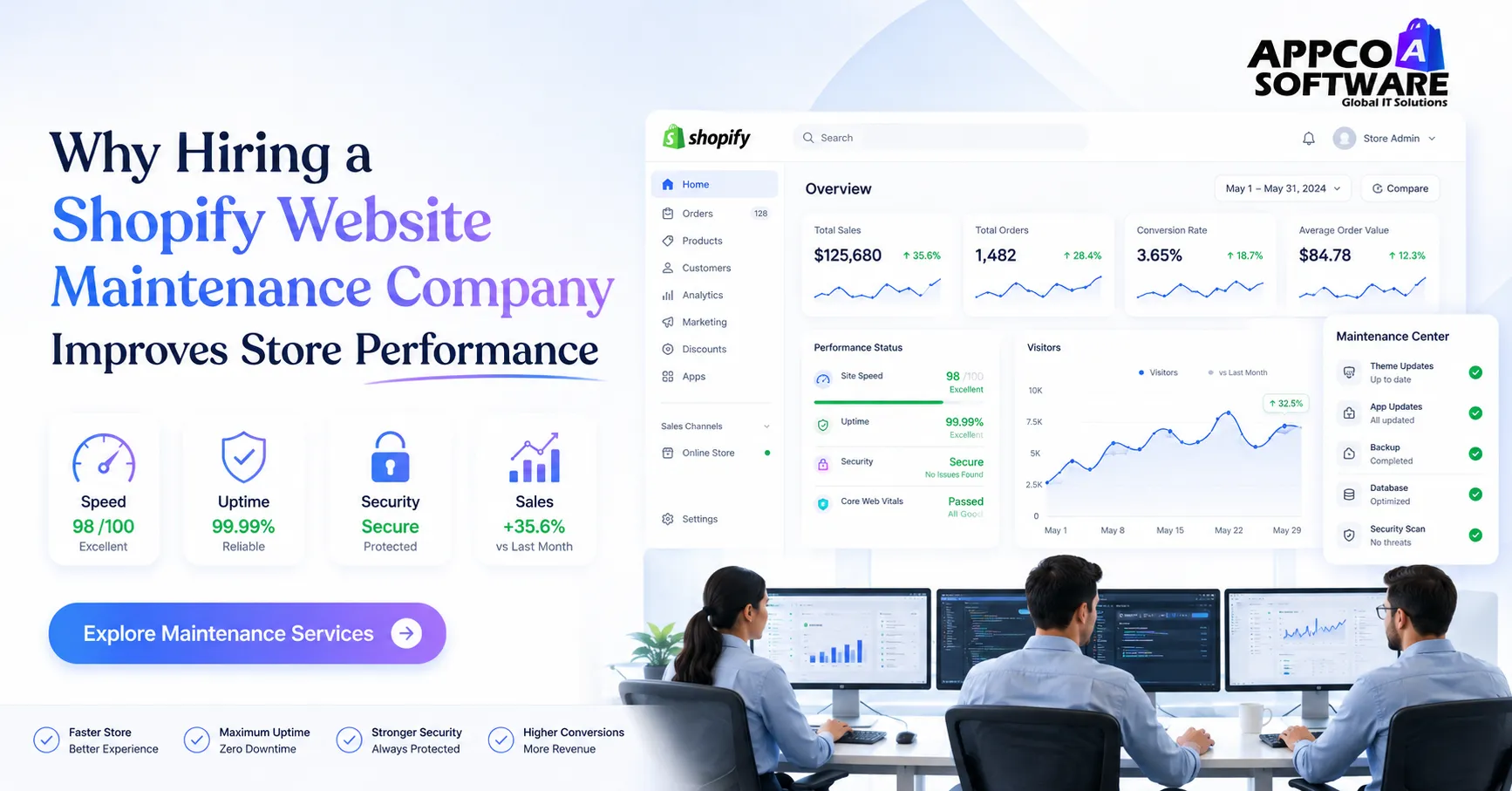

Running a successful e-commerce store in India’s highly competitive digital landscape requires much more than just a beautiful homepage and a great product catalog. With over 70% of Indian online shoppers browsing exclusively on mobile devices, even a minor lag can cause immediate drop-offs and high cart abandonment rates. While the Shopify platform provides an exceptionally sturdy, reliable, and secure infrastructure out of the box, it is a dynamic ecosystem that demands continuous attention. To ensure your digital storefront runs smoothly around the clock, partnering with a specialized Shopify website maintenance company is the most strategic investment you can make to protect and grow your bottom line.
Many emerging D2C brands and established enterprise merchants in India start by managing their stores independently. However, as you scale up your inventory, install third-party applications, run promotional campaigns, and introduce custom design patches, small technical errors quietly accumulate. This platform drift directly harms user experience, lowers your search visibility, and depresses your conversion rates. Professional maintenance is not just about fixing occasional broken bugs; it is an active, ongoing strategy that guarantees your store operates at peak efficiency, converts casual visitors into loyal buyers, and stays ahead of shifting search engine algorithms.
The Hidden Cost of Technical Debt in E-Commerce
Technical debt refers to the long-term cost of choosing quick, temporary software fixes over well-structured, sustainable engineering solutions. For an Indian online merchant, technical debt accumulates every time a redundant app is left installed, an unoptimized tracking pixel is deployed, or an oversized lifestyle image is uploaded directly to a featured collection. Over time, these minor oversights compound into a sluggish storefront that frustrates users and costs millions in missed sales.
When a store suffers from technical debt, pages take longer to display, buttons hesitate when clicked, and checkout processes freeze. In the fast-paced retail ecosystem, attention spans average fewer than 8 seconds, making technical delays highly damaging. Rather than waiting for a slow page to finish rendering, modern shoppers will simply exit and buy from a competitor. Regular technical audits and structured engineering maintenance prevent these bottlenecks from developing, ensuring your storefront remains agile, stable, and highly profitable as your catalog grows.
1. Accelerating Conversions via Shopify Performance Optimization
The Direct Correlation Between Loading Speed and Revenue Growth
Every single fraction of a second your store takes to load has a quantifiable impact on your business revenue. Global e-commerce benchmarks reveal that digital storefronts loading under 2 seconds achieve up to 2.5 times higher conversion rates than those taking 5 seconds or longer. For an Indian brand aiming to scale operations, optimizing these fractional delays is the most direct way to unlock trapped revenue.
How Professional Engineering Drives Speed Gains
A dedicated maintenance agency approaches Shopify performance optimization through systematic, template-level adjustments rather than superficial patches. By analyzing your theme's underlying Liquid architecture, professional developers eliminate redundant asset calls, clean up legacy styling sheets, and ensure critical structural files load efficiently. This deep code cleaning ensures your site renders quickly on all devices, even over inconsistent mobile networks.
Keeping Pace with E-Commerce Standards
With heavy retail traffic moving over mobile devices, speed is a foundational pillar of modern user experience. Professional maintenance teams establish a lightweight code structure that prevents performance regressions when new products or collections are published. Keeping your storefront highly responsive ensures you capture high-intent traffic and maximize your marketing return on investment.
2. Passing Google’s Core Web Vitals with Shopify Speed Optimization
Master the Three Core Metrics Google Evaluates
Google evaluates your website’s overall user experience using three strict performance signals known as Core Web Vitals. These metrics track real-world user data and directly influence your store's organic search visibility:
- Largest Contentful Paint (LCP): Measures how quickly your main visual content, like a product hero image, appears on screen (Target: Under 2.5 seconds).
- Interaction to Next Paint (INP): Tracks page responsiveness when a user clicks a menu, opens a filter, or taps a button (target: under 200 milliseconds).
- Cumulative Layout Shift (CLS): Measures whether layout elements shift unexpectedly as resources load (Target: Below 0.1).
Executing Advanced Diagnostics and Script Management
Achieving a sustainable passing score across these three metrics requires specialized Shopify speed optimization techniques. Maintenance experts use advanced developer tools to profile the browser's main thread and identify long-running scripts that cause interaction delays. By implementing smart resource hints, such as preconnecting to external domains and preloading above-the-fold hero images with high-priority tags, they ensure the browser renders critical elements first.
Eliminating Visual Shifts for a Stable Shopping Experience
Sudden layout shifts break user trust and cause accidental clicks, which is why maintaining visual stability is crucial. Maintenance engineers fix layout shifts by declaring strict aspect ratio dimensions for all imagery and managing late-loading promotional banners or cookie compliance alerts. This level of technical oversight satisfies search engine criteria while providing a smooth, reliable browsing experience for your customers.
3. Streamlining Core Code with Shopify App Management
Managing the Real Cost of App Sprawl
The primary cause of slow loading speeds on modern storefronts is not the platform itself, but the accumulation of third-party applications. The average online store runs 15 to 20 apps for marketing, reviews, cross-selling, and loyalty rewards. Each app injects external JavaScript and styling sheets into your theme, often loading synchronously across your entire site even on pages where the app performs no function.
Implementing Technical Governance and Script Conditioning
Continuous Shopify app management establishes strict control over this external code. Maintenance professionals regularly audit your app stack to ensure every script justifies its performance cost through clear business value. They implement conditional loading rules, ensuring that heavy review scripts or size-guide tools execute only on individual product templates rather than slowing down your main homepage.
Complete Code Cleanup After Deletions
When an app is uninstalled through the standard admin dashboard, it frequently leaves behind residual liquid code fragments inside your theme. These orphaned code elements create unnecessary browser requests that slow down performance over time. Experienced maintenance engineers manually inspect your theme files to remove this dead code, keeping your platform clean, secure, and clear of background script errors.
4. Securing Organic Visibility via Shopify SEO Maintenance
Preserving Search Traffic and Technical Health
Search engine optimization is not a one-time project; it is an ongoing process of technical health monitoring. As you frequently update inventory, adjust product descriptions, and modify collections, technical search issues naturally emerge. Broken redirect paths, duplicate collection parameters, and crawl errors in your robot's configuration can quickly hurt your organic visibility if left unmonitored.
Ongoing Audits and Schema Automation
A proactive approach to Shopify SEO maintenance keeps your organic search rankings secure. Dedicated maintenance teams run structured, weekly technical crawls to catch broken links, fix canonical formatting issues, and verify indexation parameters. They also maintain your structured data schemas, ensuring search engines accurately read and display your pricing, stock status, and product reviews directly in rich search snippets.
Adapting to Algorithm Shifts and Crawl Budgets
Search engines continuously update their crawling systems to favor fast, well-structured, and authoritative websites. Maintenance teams monitor your crawl data through webmaster tools to ensure search crawlers can navigate your store without wasting resources on duplicate URLs or broken paths. Keeping your site's technical architecture clean helps preserve your organic traffic during major search engine updates.
5. Maximizing ROI with Shopify Conversion Rate Optimization
Turning Traffic Into Active Revenue
Attracting users to your e-commerce platform is only half the battle; the real value lies in converting those visitors into paying customers. The gap between an unoptimized storefront and a finely tuned retail site is significant, with top-tier brands achieving conversion rates three times higher than the industry average. Ongoing Shopify conversion rate optimization focuses on removing small points of friction throughout the entire buying journey.
Refining High-Impact Pages and User Journeys
Conversion optimization relies on continuous data analysis, user testing, and behavioral tracking. Maintenance teams use heatmaps and session records to identify precisely where buyers hesitate or abandon their carts. By refining primary navigation menus, simplifying site-search filters, and optimizing cart drawer interactions, they create an open, intuitive path from your homepage straight to a completed purchase.
- "A 0.1-second improvement in mobile loading speed can increase retail conversion rates by an average of 8.4%, proving that technical maintenance directly drives financial growth."
Simplifying the Final Checkout Experience
The checkout phase is where the majority of online sales are lost due to hidden shipping fees, forced account creation, or confusing input fields. Maintenance specialists streamline this critical step by removing non-essential fields, ensuring security badges display correctly, and integrating smooth guest-checkout paths. Minimizing these points of resistance helps lower cart abandonment and maximizes your marketing returns.
6. Elevating Customer Experiences with Shopify Product Page Optimization
Designing High-Converting Product Showcases
Your individual product pages serve as the primary closing points for your e-commerce business. To convince a buyer to add an item to their cart, these pages must load instantly while delivering clear product information, high-quality media, and compelling social proof. Achieving this balance requires careful optimization to ensure rich media assets do not compromise page performance.
Technical Image Strategies and Media Delivery
To maintain fast load times, professional Shopify product page optimization balances visual clarity with technical performance. Maintenance teams use advanced compression methods to reduce image file sizes while preserving sharp product details. They implement native lazy-loading scripts, ensuring that below-the-fold lifestyle photos or tutorial videos load only as the user scrolls down the page.
Optimizing Data Fields and Variation Logic
Modern product layouts often rely on custom fields and metafields to display technical specs, size charts, or product variations. If these fields are built with inefficient theme code, they can slow down server response times. Maintenance engineers optimize these data calls, ensuring that product variations, real-time stock levels, and review widgets load smoothly without delaying the primary page display.
7. Reducing Operational Downtime with Shopify Migration Support
Managing Technical Shifts Safely
Whether you are upgrading from an older theme architecture to a modern Dawn-based setup, moving to Shopify Plus, or migrating from a legacy platform, structural shifts carry technical risks. Without proper planning, major theme updates can break app integrations, cause data loss, or create broken page links that damage your established search engine rankings.
Structured Pre-Migration Planning and Data Protection
Partnering with an experienced team provides reliable Shopify migration support that eliminates operational risk. Maintenance developers handle major updates in secure, isolated staging environments, thoroughly testing theme code and app compatibilities before going live. They manage deep data transfers, ensuring your complete product catalogs, historical order logs, and customer profiles transfer without error.
Protecting Search Ranking Authority
The biggest risk during any site migration is losing your hard-earned organic search presence. Maintenance specialists protect your SEO equity by mapping comprehensive 301 redirect paths for every legacy URL, ensuring old links route seamlessly to their new pages. This rigorous technical preparation keeps your storefront stable, preserves your search rankings, and prevents drop-offs in customer traffic.
Why Choose Appco Software
Appco Software is a trusted partner for high-performing Indian e-commerce brands requiring reliable, enterprise-grade Shopify engineering. Our dedicated team delivers continuous, comprehensive Shopify maintenance that keeps your store fast, secure, and optimized for maximum conversions. We focus on cutting code bloat, managing app performance, and keeping your technical SEO healthy so you can focus entirely on scaling your business. Partner with Appco Software to transform your store's technical performance into a sustainable competitive advantage.
Conclusion
In the competitive e-commerce landscape, technical excellence is a vital requirement for long-term growth. Leaving your storefront unmonitored opens the door to app bloat, slow loading speeds, and technical SEO issues that drive customers away. Entrusting your platform to a professional Shopify website maintenance company ensures your store remains fast, reliable, and secure. Investing in continuous performance optimization protects your marketing spend, improves user experiences, and drives consistent, predictable sales growth.
Frequently Asked Questions
1. How often should my store undergo performance maintenance?
Your store should undergo technical maintenance continuously. While basic updates can be handled monthly, a professional maintenance company provides weekly app audits, security monitoring, and speed checks to catch performance bottlenecks before they affect your customer experience.
2. Can uninstalled Shopify apps still slow down my storefront?
Yes, they can. When you uninstall an app, it frequently leaves residual code fragments inside your theme templates. This orphaned code creates unnecessary background requests that slow down browser rendering, making manual code cleanups essential.
3. Will optimizing my store for speed hurt my image quality?
Not at all. Professional optimization uses advanced compression algorithms and modern WebP or AVIF formats to reduce image file sizes by up to 70% while keeping them perfectly sharp. This ensures your product imagery looks great while loading instantly.
4. What is the ideal mobile page loading speed for an e-commerce store?
Ideally, your store should load in under 2 seconds on mobile devices. Because a large portion of Indian e-commerce traffic runs on mobile networks, maintaining an optimized, lightweight code structure is critical to preventing high bounce rates.
5. How does platform maintenance protect my organic search rankings?
Maintenance protects your search visibility by resolving broken redirect paths, fixing indexing issues, and optimizing your Core Web Vitals. Keeping your site fast and technically sound ensures search engine crawlers can index your pages efficiently.






























Sign in to leave a comment.