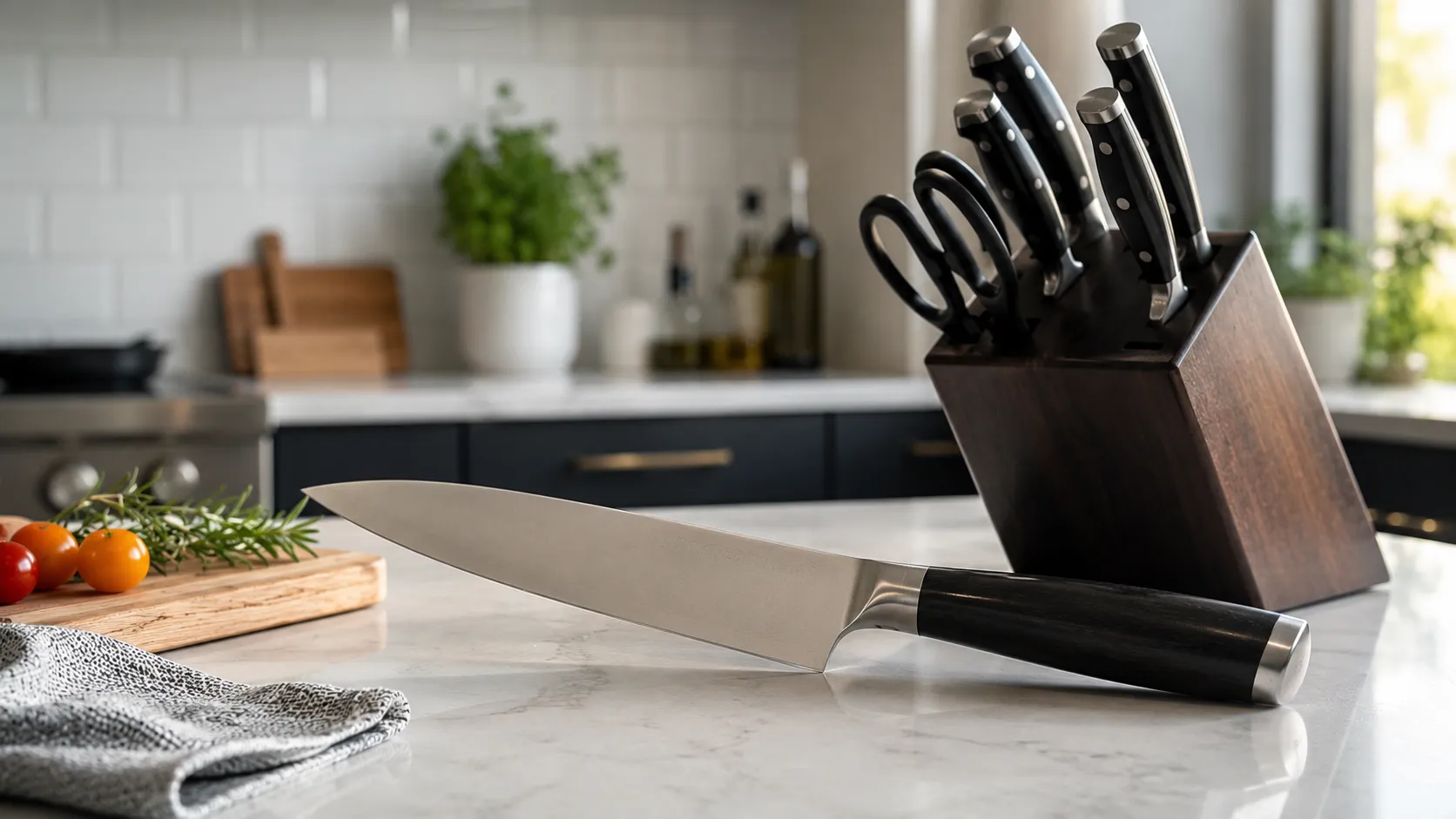

Walk into any home kitchen built five years ago and you'll almost certainly find it: the knife block. Twelve slots, eight blades, maybe a pair of kitchen shears wedged in sideways. Two of those knives have been used this month. The bread knife, technically. And one other - the same one every time.
Something is quietly shifting in how people think about kitchen tools. The overloaded block is starting to feel less like a sign of a serious cook and more like a monument to decisions made without a real plan. And in its place, a different philosophy is gaining ground - one knife, chosen deliberately, maintained with care, used until it becomes an extension of how you cook.
This isn't minimalism as an aesthetic. It's a practical reckoning with what actually makes you better in the kitchen.
The Knife Set Was Always a Marketing Invention
There's no culinary tradition on Earth where a professional cook uses twelve knives to prepare a meal. In Japanese kitchens, a line cook might carry three. In French brigade kitchens, the chef's knife, a boning knife, and a paring knife cover the vast majority of prep. Even the most technically demanding cuisine in the world gets done with a very small selection of well-chosen tools.
The knife block set was popularized in the 1980s and 90s as a retail convenience - one purchase, one box, one spot on the counter. It gave consumers the feeling of being equipped. But 'equipped' and 'prepared' aren't the same thing, and the gap between them shows up every time someone struggles through a task with the wrong blade because the right one for the job simply doesn't exist in their collection.
The shift happening now is cooks - particularly younger home cooks who came up watching professional kitchen content on YouTube and social media - asking a different question. Not which set should I buy, but which blade actually suits how I cook?
The Japanese Knife Moment
The Japanese knife market is projected to reach $285 million globally by 2030 - a number that would have seemed absurd a decade ago when Japanese blades were largely a specialty item confined to professional kitchens and serious enthusiasts. What changed isn't the knives. They've been extraordinary for centuries. What changed is the audience.
Home cooking exploded during the pandemic years and never really contracted. People who picked up cooking as a lockdown activity discovered they actually enjoyed it - and then discovered that the equipment in their kitchen was limiting them more than their skill was. The chef's knife that came with a block set, usually stamped rather than forged, soft enough that it dulled within weeks, started to feel inadequate once people were cooking seriously five nights a week.
Japanese knives entered this conversation as an obvious solution. They're built on a fundamentally different philosophy: harder steel, a more acute edge angle (typically 15° per side versus the 20–25° of most Western knives), and a geometry designed for precise, controlled cutting rather than brute force. The difference isn't subtle. Pick up a well-made Japanese chef knife for the first time and most cooks describe the same experience - it feels like the knife is doing what you were previously doing yourself.
Brands like Kazoku, whose name draws from the Japanese word for family, have built their identity around this transition - making the craftsmanship and philosophy of Japanese swordsmithing accessible to cooks who want something real rather than something that just looks impressive on a counter.
What One Great Knife Actually Does for You
The case for owning one genuinely excellent knife instead of a drawer full of mediocre ones isn't just philosophical. It changes how you cook in concrete, measurable ways.
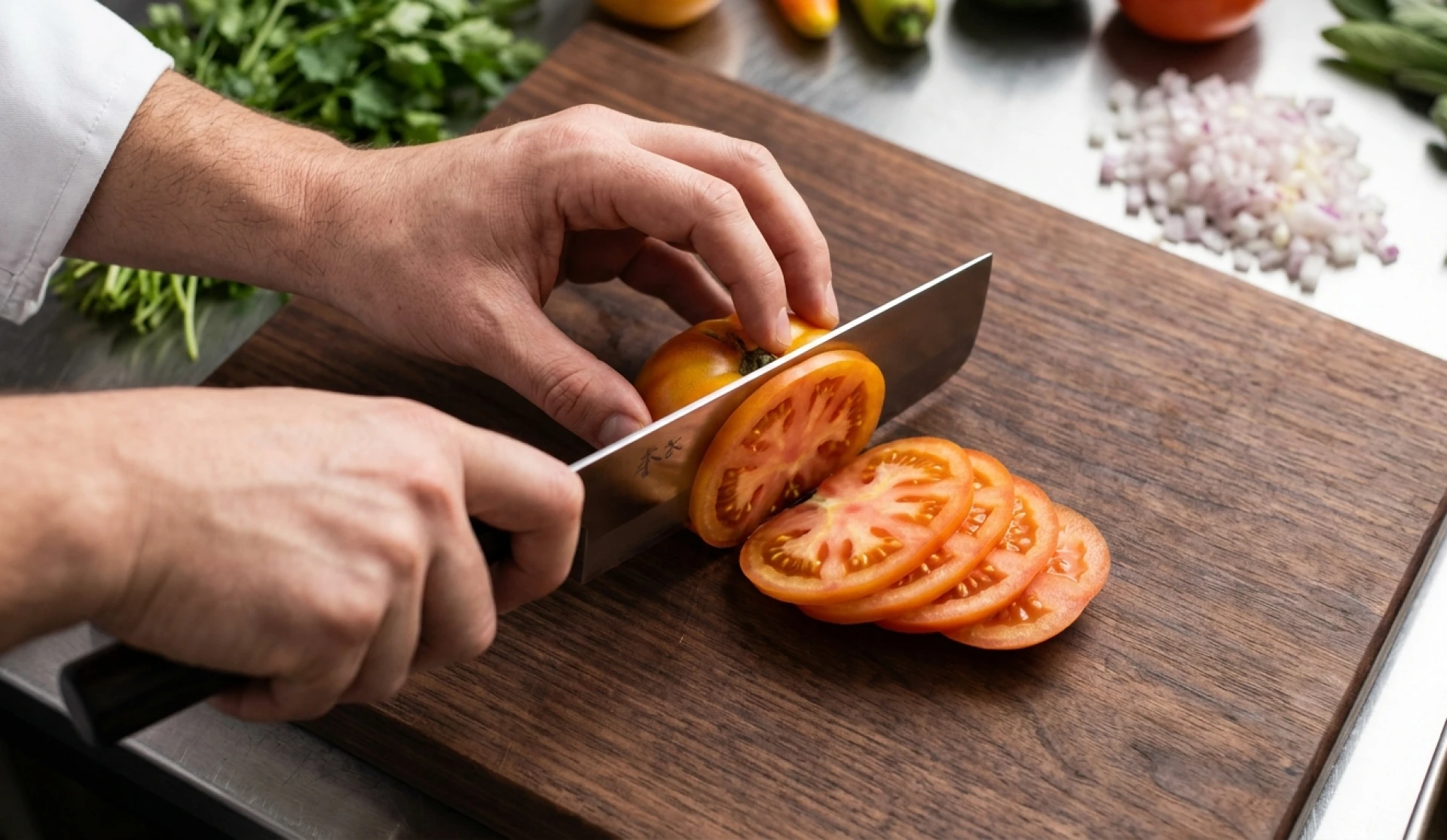
Your prep gets faster: Not marginally - dramatically. A sharp, well-balanced knife cuts prep time because you're not fighting the ingredient. Resistance forces compensation: a slower pace, more pressure, less control. Remove the resistance and the whole process accelerates.
Your cuts become more consistent: Consistency in knife work matters more than most home cooks realize. Uneven cuts mean uneven cooking. Vegetables cut to different sizes finish at different times, which is why some pieces go mushy before others are tender. A knife you trust, with a geometry you understand, produces results you can replicate.
You start noticing things: This one is harder to quantify but real. A better knife makes you a more attentive cook. You feel the difference between cutting with and against the grain of a protein. You notice when an onion is slightly past its peak by how it cuts. The knife becomes a sensory instrument rather than just a piece of hardware.
Your kitchen gets safer: The single most common cause of knife injuries isn't sharpness - it's dullness. A dull blade requires force; force introduces instability; instability causes slips. A sharp knife does the work at a fraction of the pressure, which means the margin for error is wider, not narrower.
Choosing the One
The hardest part of the one-great-knife philosophy is the choosing. Not because the options are bad - they're better than they've ever been - but because choosing means being honest about how you actually cook, not how you imagine you cook.
If you break down a lot of proteins, fabricate whole birds, or do substantial butchery work at home, a gyuto - the Japanese chef's knife - is the obvious answer. The 210mm length covers most tasks, the pointed tip gives you access and control in tight spaces, and the harder steel holds an edge through extended prep work without constantly returning to the whetstone.
If you cook vegetables primarily - if your cutting board spends most of its time under onions, root vegetables, and leafy greens - a nakiri or santoku might actually suit you better. The flat edge of both these blade profiles means full contact with the cutting board on every stroke, producing cleaner, more uniform cuts on produce than the curved belly of a chef's knife allows.
If you're genuinely uncertain, the santoku is probably the safest starting point. It's the most versatile Japanese blade for a home kitchen, forgiving of different cutting techniques, and available across a range of steel grades and price points that let you find the right entry to the category without overcommitting.
The Maintenance Commitment (It's Less Than You Think)
One of the persistent hesitations around investing in a quality Japanese knife is the maintenance question. They're harder steel - does that mean they're fragile? Do you need to sharpen them constantly? Is there some intricate care ritual that will consume your Sunday mornings?
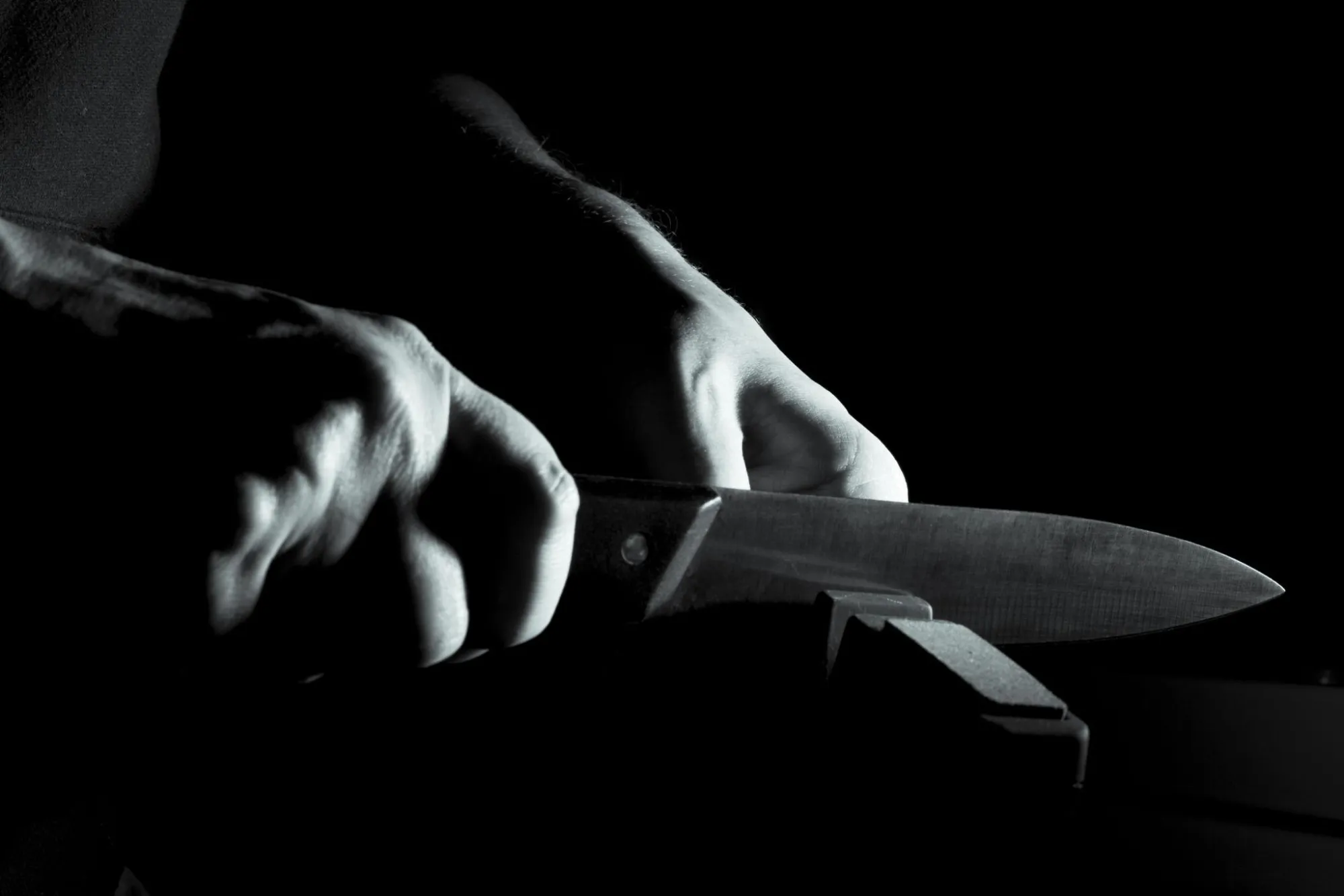
The honest answer: harder steel holds an edge longer than softer steel, which means you sharpen less frequently, not more. A well-maintained Japanese knife used for regular home cooking might need a proper whetstone session three or four times a year. In between, a quick honing pass on a ceramic rod before use keeps the edge aligned.
What Japanese knives do ask of you is basic respect: hand-washing only (dishwashers destroy both the edge and the handle in short order), proper storage on a magnetic strip or in a blade guard, and an awareness that these knives are designed for cutting, not prying, cracking bones, or being dropped on tile floors. Within those fairly reasonable limits, a good Japanese blade is genuinely durable.
The patina that develops on high-carbon steel - a gentle darkening that comes with use - is a feature, not a flaw. It's the knife recording its history. Cooks who understand this relationship often describe maintaining their knife as one of the more meditative parts of their kitchen routine.
The Bigger Shift This Represents
The move away from knife sets and toward a single considered blade is part of something larger happening in home kitchens right now. There's a visible backlash against the idea that better cooking comes from more equipment. The gadget drawer full of single-use tools, the appliance graveyard on the counter - these things don't make people cook better. They make people cook with more friction.
What actually develops skill is repetition, attention, and the right fundamental tools. A knife you know well - whose weight is familiar, whose edge geometry you understand, whose sharpness you can read by feel - becomes an extension of your technique rather than a variable you're constantly adjusting for.
This is why professional cooks carry their own knives. It's not superstition or status signaling. A chef who works with the same blade for years has eliminated an entire category of unpredictability from their work. Every cut they make is informed by thousands of previous cuts with exactly that tool.
Home cooks are starting to understand this logic. And once you experience what it's like to cook with one blade you genuinely trust, the twelve-slot block on the counter starts to look like what it actually is: a lot of compromise dressed up as choice.
A Different Kind of Investment
There's something worth saying about the economics here, because the initial cost of a quality Japanese knife can feel like a barrier. But the comparison isn't between a good knife and a cheap knife. It's between a good knife and a knife set - and when you run those numbers, a single well-made blade that lasts a decade often costs the same or less than the block it would replace.
More importantly, the returns aren't equivalent. Ten years of cooking with a knife you've learned, maintained, and grown alongside produces something a drawer full of mediocre blades never can: actual skill, built through consistent repetition with a consistent tool.
The best kitchen upgrade available to most home cooks right now isn't a new appliance, a fancier pan, or a subscription to another streaming cooking platform. It's a single, honest decision about which blade fits the way you actually cook - and then using it. Every day. Until it becomes part of how you think in the kitchen.
That's the whole philosophy. One knife. Learn it. Trust it. Cook.
Originally published at https://vocal.media/.






















Sign in to leave a comment.