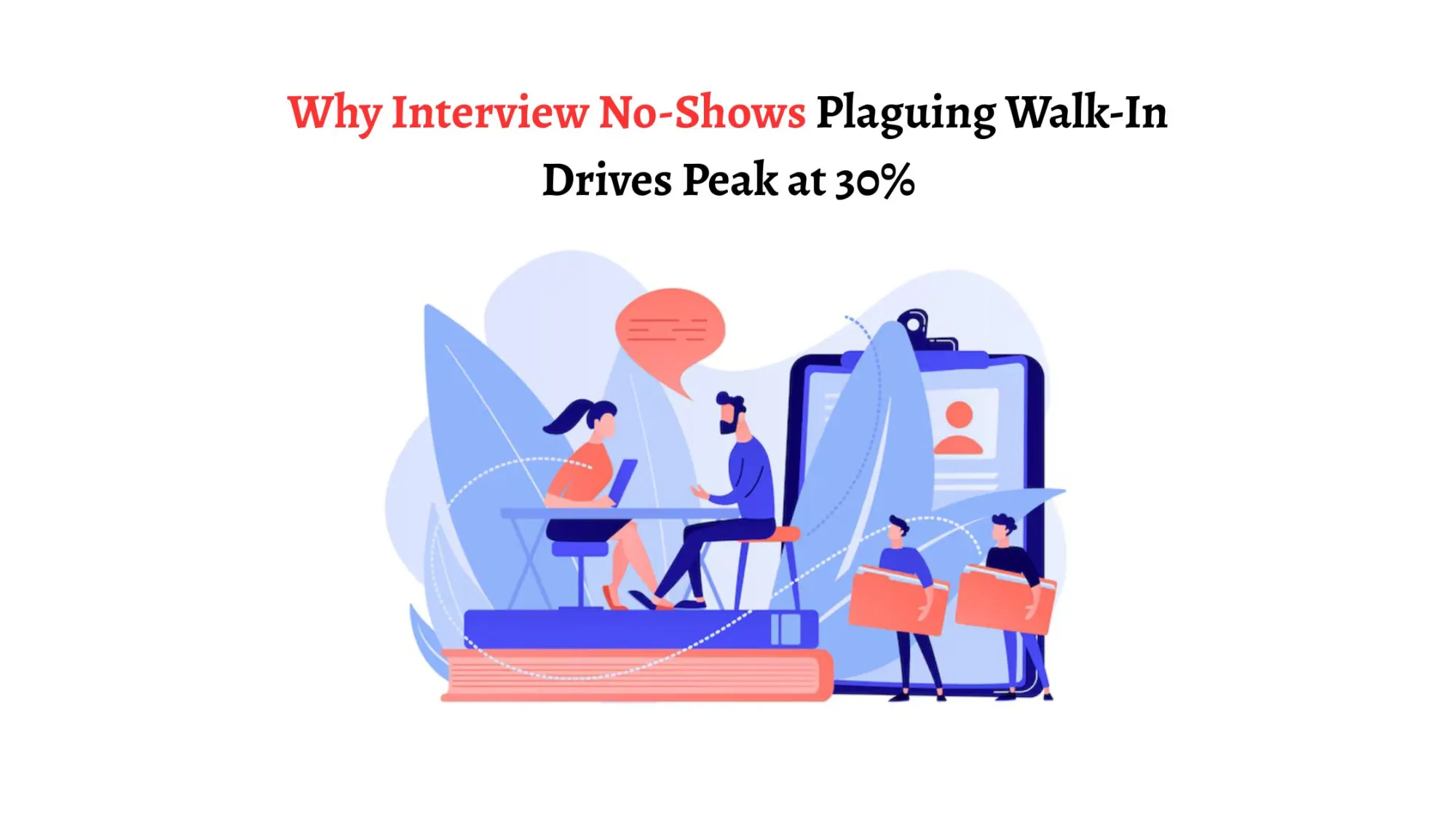

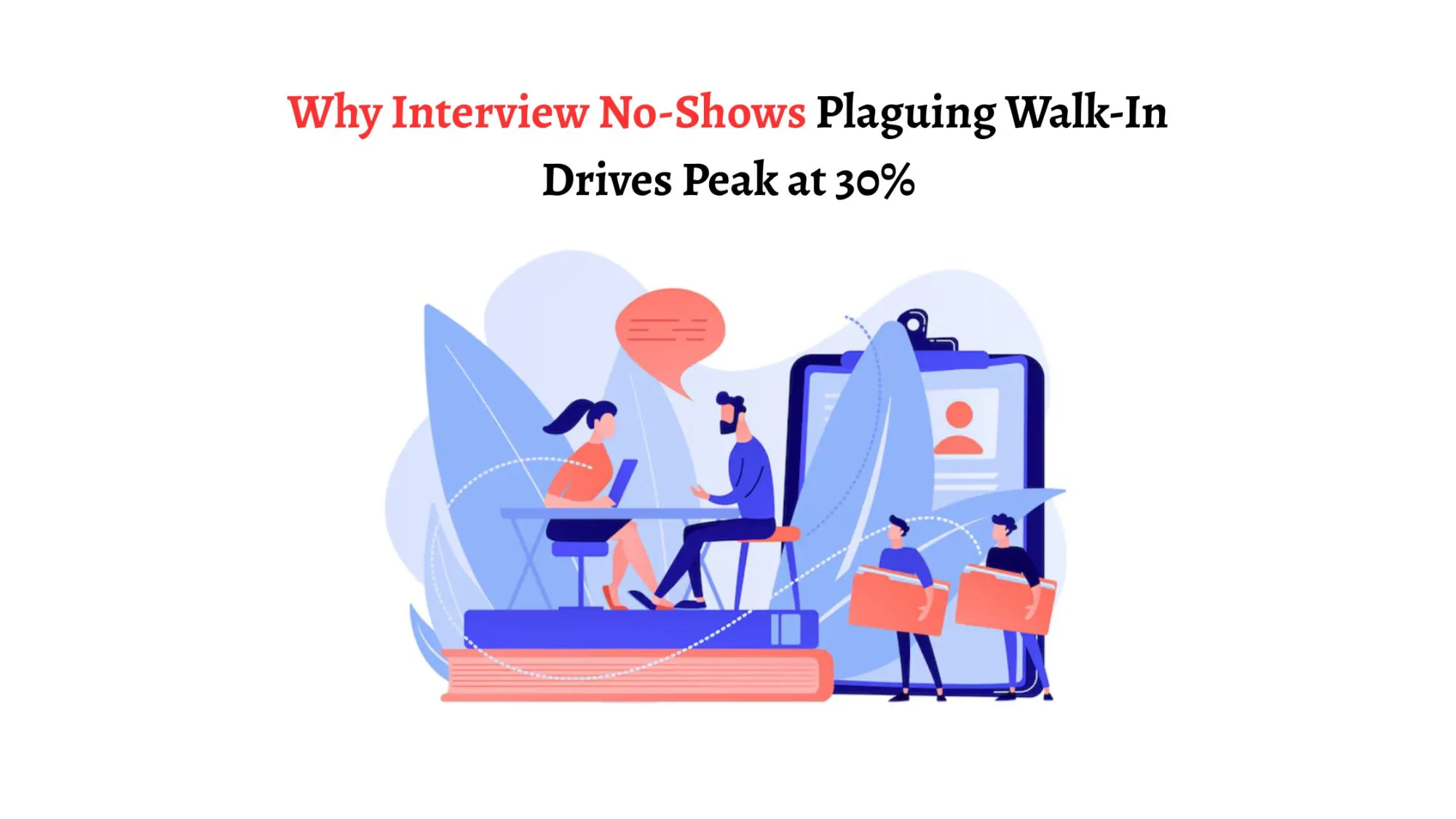
For fast-scaling enterprises and high-volume employers, walk-in drives historically promised a quick win: open the doors, interview hundreds of candidates in a single day, and issue offer letters on the spot.
However, recruitment leaders are facing a costly reality. Walk-in hiring events are suffering from a staggering candidate drop-off rate. Rates of interview no shows routinely peak at 30% or higher. When nearly one-third of pre-registered applicants fail to walk through the door, hiring panels sit idle, venue costs balloon, and critical operational roles remain vacant.
Understanding the core drivers behind this 30% drop-off rate allows CEOs and talent directors to fix their recruitment pipelines and eliminate operational waste.
1. Friction-Heavy Logistics and Waiting Times
The modern job seeker's patience for inefficient processes has dropped. Traditional walk-in drives often force candidates to travel long distances only to spend three to four hours standing in long queues for a 5-minute interview.
When candidates anticipate a chaotic venue experience, their motivation declines. If a competing employer offers a faster, digitized alternative, candidates simply skip the event.
2. Lack of Early Pre-Screening and Engagement
Many organizations treat walk-in drives as open-door casting calls with little to no pre-event interaction. Candidates register online via simple landing pages, receive a generic automated email, and hear nothing else until the morning of the drive.
Without early engagement or personalized pre-screening, candidates feel zero accountability to show up.
- No relationship established: Generic automated invites create emotional distance.
Hirestaffs - Unclear expectations: Candidates who aren't sure if they meet eligibility criteria often drop out rather than risk rejection at the gate.
3. High Competition and Short-Lived Candidate Interest
In fast-paced volume markets such as customer support, retail, logistics, and sales candidates apply to multiple open positions simultaneously.
A gap of several days between registration and event day gives rival employers time to step in with instant phone screens or digital offers. By the time your walk-in drive takes place, top candidates have already taken other opportunities.
Strategic Fix: Modernizing Walk-Ins with Asynchronous Screening
To eliminate interview no shows, forward-thinking companies are replacing open-door walk-in drives with structured, digital-first screening.
Implementing an AI interview platform transforms the hiring funnel:
- Candidates apply and immediately receive an invitation to record asynchronous responses or complete a voice-based assessment on their mobile device.
- The AI platform automatically scores and ranks candidates based on communication skills and role fit.
- HR teams invite only high-scoring, pre-qualified talent to targeted, time-slotted interview sessions.
This approach cuts out physical venue bottlenecks, eliminates candidate ghosting, and ensures hiring managers spend time only on high-intent candidates.
Conclusion
A 30% rate of interview no shows is not an unchangeable reality of bulk recruitment. It is a signal that traditional walk-in events no longer match job-seeker expectations. By replacing chaotic open drives with automated, asynchronous pre-screening, executive teams can lower cost-per-hire and secure top-tier operational talent faster.























Sign in to leave a comment.