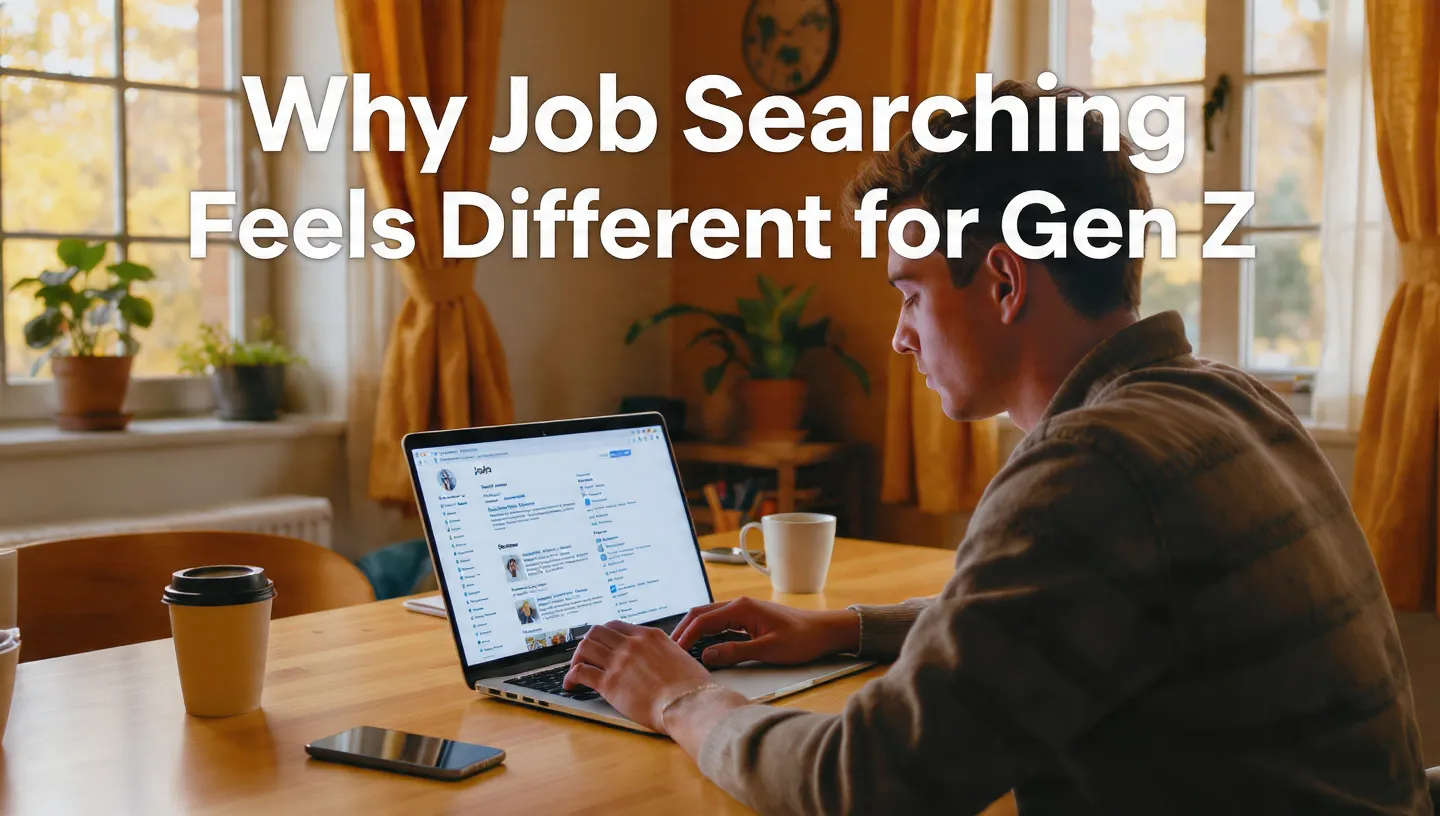

For Gen Z, looking for a first job can feel very different from the traditional job search older workers experienced. Candidates can find openings online, apply from their phones, and connect with recruiters through professional networks. Yet having more tools doesn't always make getting hired easier.
The job search itself has changed. Employers increasingly use digital hiring systems, online applications, applicant tracking systems (ATS), and remote recruitment. At the same time, younger workers often consider flexibility, career growth, learning opportunities, and workplace culture alongside salary.
Quick answer: Job searching feels different for Gen Z because hiring has become more digital, competitive, and complex. Candidates are navigating ATS screening, AI tools, remote competition, entry-level experience requirements, and changing expectations about work.
The Search Has Become More Digital
Previous generations often relied on newspaper listings, referrals, campus recruiting, career fairs, and personal connections. Today, a job search can begin with a search engine, professional network, or job board.
Job boards make it easier to filter opportunities by job title, location, skills, experience level, and work arrangement. However, easier access also means candidates can face competition from a much wider pool of applicants.
Finding a suitable opening is therefore only the first step. Candidates also need to show employers why their skills and experience make them a good match.
Why Do Entry-Level Jobs Ask for Experience?
One of the biggest frustrations for recent graduates is seeing an "entry-level" position that asks for previous experience.
Experience doesn't necessarily mean years of full-time employment. Depending on the role, candidates can demonstrate relevant skills through:
- Internships
- University projects
- Freelance work
- Volunteer experience
- Part-time jobs
- Personal projects
- Portfolios
- Certifications
For example, someone applying for a marketing position without formal marketing experience could describe a social media campaign they created for a university organization. The important thing is to explain what they did, which skills they used, and what the work achieved.
AI Has Changed the Hiring Process
AI has introduced another layer to the modern job search.
Job seekers can use AI to research companies, practice interviews, identify relevant skills, and improve resume clarity. Employers can also use technology to organize applications and streamline parts of the hiring process.
This makes accuracy especially important. Candidates should use AI as a support tool rather than allowing it to create generic or exaggerated applications.
A resume should still reflect the candidate's actual experience and use clear language that both hiring systems and recruiters can understand.
Why Resumes Have to Do More Work
A resume is no longer simply a summary of education and employment history. It needs to quickly show why someone is relevant to a particular position.
A strong resume should:
- Highlight relevant skills
- Show meaningful achievements
- Use language appropriate to the role
- Be easy to scan
- Accurately represent the candidate's experience
This is why some candidates consider a resume writing service when they have difficulty presenting their experience clearly.
Professional help isn't essential for everyone, though. Candidates can also improve their resumes by studying job descriptions and replacing vague responsibilities with specific examples of what they accomplished.
For example, instead of:
"Responsible for social media."
A stronger version could be:
"Created and scheduled social media content for a student organization and monitored engagement throughout the campaign."
Social Media Is Part of the Job Search
The job search doesn't start and end on a job board.
Professional networks and social platforms can help candidates discover companies, follow recruiters, research employers, and learn more about different industries.
A professional profile or portfolio can also demonstrate skills that aren't easy to communicate through a resume. This can be particularly useful in marketing, design, writing, media, and other portfolio-based fields.
Gen Z doesn't need to become an influencer to benefit from social media. A clear professional profile and relevant work samples can be enough.
Gen Z Is Looking Beyond Salary
Salary remains important, but it isn't necessarily the only factor candidates consider.
Job seekers may also look at:
- Flexibility
- Remote or hybrid work
- Learning opportunities
- Career development
- Workplace culture
- Work-life balance
- Benefits
- Job stability
This can make choosing between opportunities more complicated. A job may offer good compensation but limited flexibility, while another may provide valuable learning opportunities but less attractive working conditions.
For many candidates, the goal is finding a reasonable overall fit rather than focusing on one factor.
Why Applying to More Jobs Doesn't Always Help
Applying to a large number of positions can feel productive, but sending the same generic application everywhere isn't necessarily effective.
Before applying, candidates can ask:
- Does my experience match the main requirements?
- Which skills does the employer emphasize?
- Does my resume demonstrate those skills?
- Is the role appropriate for my experience level?
- Does the opportunity fit my career goals?
The goal isn't to apply to as few jobs as possible. It's to spend more effort on opportunities where there is a genuine match.
What Gen Z Can Do Differently
A more focused job search can make the process easier to manage.
1. Build a skills-focused resume
Highlight relevant skills, projects, tools, and achievements rather than listing responsibilities alone.
2. Use job boards strategically
Search using different job titles, skills, locations, and experience levels. Save promising positions and prioritize the strongest matches.
3. Look beyond online applications
Networking, referrals, professional communities, university connections, and direct outreach can complement online applications.
4. Use AI carefully
AI can help with research, interview preparation, and resume refinement. Always verify the information and make sure the final application accurately represents your experience.
5. Track your applications
A simple spreadsheet can record companies, positions, application dates, and statuses. This prevents promising opportunities from getting lost.
6. Get help with repetitive tasks
Comparing listings, organizing deadlines, preparing documents, and tracking applications can become time-consuming. A human assistant for job application tasks can help reduce some of this repetitive workload while leaving important career decisions to the candidate.
Frequently Asked Questions
Why is job searching so difficult for Gen Z?
The process involves digital applications, ATS screening, remote recruitment, networking, and employer-specific requirements. Competition can also be strong for desirable entry-level roles.
Should Gen Z use a job board?
Yes. A job board can make it easier to find and filter opportunities. However, candidates can also use company career pages, networking, referrals, and professional communities.
Is a resume writing service worth it for Gen Z?
It can help candidates who have relevant experience but struggle to present it clearly. Others may be able to improve their resumes independently by focusing on relevant skills and specific achievements.
Can AI help with a job search?
Yes. AI can support company research, interview preparation, skill identification, and resume improvement. Candidates should review and personalize anything created with AI.
How can someone get experience for an entry-level job?
Internships, academic projects, freelance work, volunteering, part-time jobs, personal projects, and portfolios can all demonstrate relevant skills, depending on the role.
The Bottom Line
Job searching feels different for Gen Z because the process has become more digital, competitive, and complex. Candidates have more ways to discover opportunities, but they also need to navigate ATS systems, online applications, AI tools, and changing employer expectations.
A focused approach works better than simply applying everywhere. Building a clear resume, targeting relevant roles, networking, developing useful skills, and using technology carefully can make the search more manageable.
Ultimately, the goal isn't just to find a job. It's to find an opportunity that matches your skills, experience, expectations, and career direction.























Sign in to leave a comment.