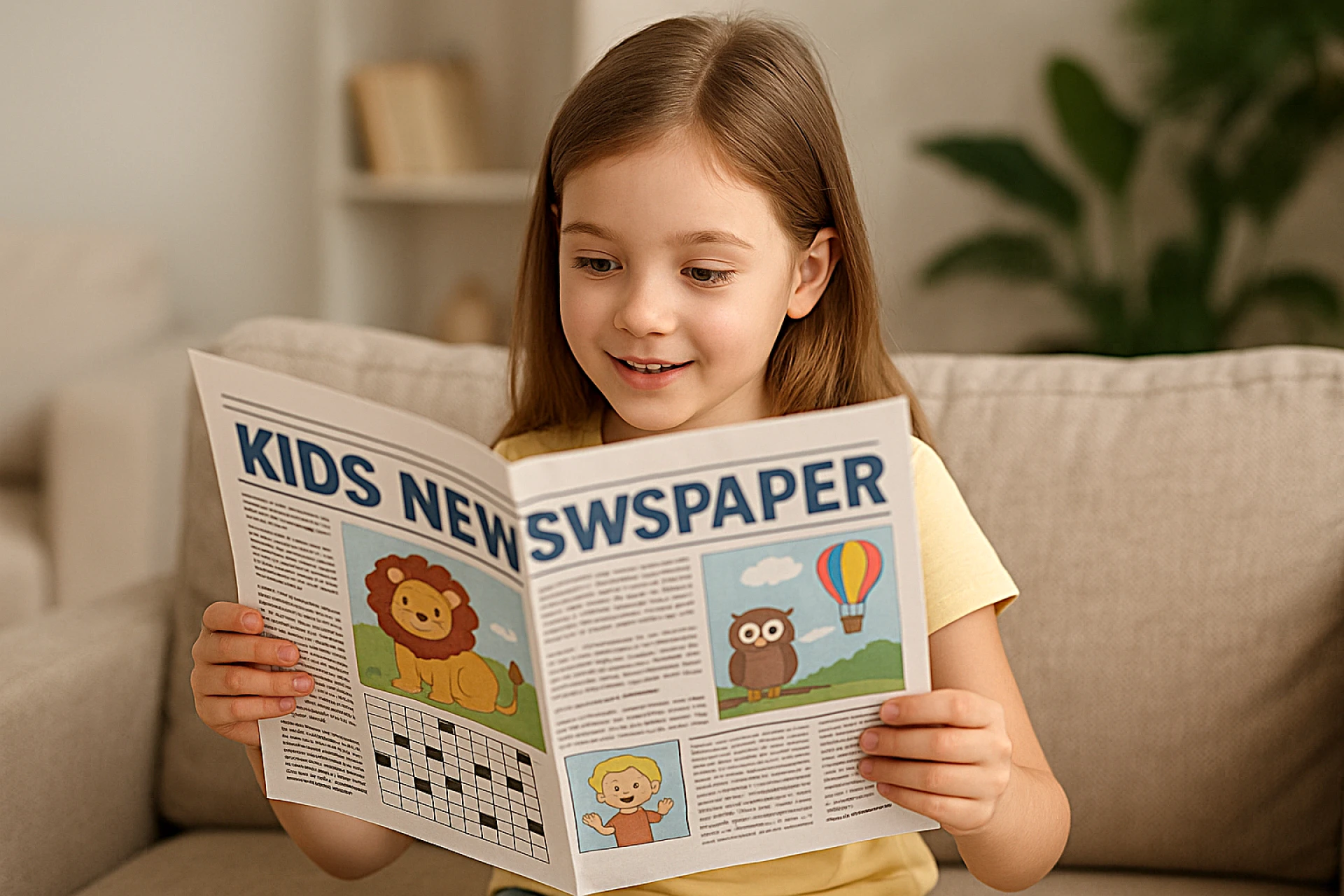

Children are surrounded by screens these days. Television, smartphones, tablets, and computers are all part of their daily routine. Among these, TV often takes the biggest share of a child’s free time. Bright colors, catchy sounds, and endless shows easily capture their attention.
While a little TV may seem harmless, excessive watching can affect children in many ways. It can reduce their interest in reading, weaken their focus, and limit their creativity.
Parents often ask: Is there a healthier alternative to TV that still entertains and educates children? The answer is yes—through a kids newspaper. Designed especially for young readers, children’s newspapers bring knowledge, fun, and learning in one place.
They offer the excitement of discovery but without the harmful effects of excessive screen time.
Let’s explore why kids newspapers can truly replace hours spent in front of the TV.
Reading Builds Strong Habits
Television provides ready-made images and sounds, requiring very little effort from the viewer. Children sit back, watch, and move on to the next program.
A kids newspaper, on the other hand, requires them to read, imagine, and understand. This active involvement strengthens reading habits and builds vocabulary.
Over time, children who regularly read newspapers become more confident in expressing themselves.
They learn new words, understand sentence structures, and slowly build a love for reading. This is a skill that stays with them for life, unlike TV shows that are quickly forgotten.
A Wider Range of Knowledge
TV programs are often limited to entertainment—mostly cartoons, music, or shows with repetitive content. While fun, they don’t always expand a child’s knowledge.
A children’s newspaper offers much more variety. From science experiments and history stories to riddles, fun facts, and creative writing, kids find something new every day.
The best part is that newspapers use simple, age-appropriate language. This means children can easily understand complex topics like the environment, space, or current events in a way that feels exciting rather than overwhelming.
Improves Focus and Patience
Children today are used to fast-moving screens. TV shows change scenes quickly, which makes kids restless and lowers their attention span.
Reading a kids newspaper is the opposite—it allows them to slow down, focus on each story, and think.
For example, when solving a crossword or reading a comic strip, children practice patience and concentration. They are not just consuming content; they are engaging with it.
This process helps them develop focus, which is essential for studies and problem-solving later in life.
Encourages Creativity and Imagination
Television shows present everything visually, leaving little space for children to imagine. A kids newspaper, however, paints pictures with words.
Children imagine the characters, places, and situations while reading stories. They create mental images, which boosts creativity and helps them think in new ways.
When kids read about a jungle adventure or a story of bravery, they don’t just see the words—they build the scenes in their mind. This kind of active imagination is a powerful tool for developing creativity.
Family Bonding Through Reading
One of the most beautiful aspects of kids newspapers is how they can bring families together. Parents can sit with their children, read short articles, and discuss them.
They can laugh over jokes, solve puzzles together, or explain news in simple terms.
These shared activities create special memories and help strengthen family bonds. Unlike TV, which often isolates each person into passive watching, newspapers invite interaction and conversation.
Screen-Free Entertainment
Too much TV can harm children in many ways—eye strain, lack of outdoor activity, poor sleep, and reduced social interaction. Parents often struggle to find safe alternatives.
A kids newspaper offers the perfect solution. It gives children entertainment, but without the side effects of screens.
Crosswords, brain teasers, short stories, and activity pages keep them busy in a productive way.
The excitement of flipping through pages and discovering something new makes reading as enjoyable as watching a favorite show.
Makes Learning Fun
One of the strongest benefits of a children’s newspaper is how it turns learning into fun. Kids often feel stressed when learning is only connected with exams or homework.
But newspapers present knowledge in small, engaging ways—through fun facts, colorful illustrations, and short stories.
For example, a small article about animals can teach values like kindness and care. A riddle can sharpen problem-solving skills.
A quiz can test memory without pressure. Children learn without realizing they are studying, which makes education enjoyable and natural.
Prepares Kids for the Real World
While TV mostly focuses on fictional entertainment, a kids newspaper connects children to the real world.
They learn about what is happening in their country, understand cultures, and explore new ideas. All of this is shared in simple, child-friendly language.
This prepares children to become more aware, responsible, and confident individuals. They begin to ask questions, think critically, and express opinions—qualities that are important for their growth.
Final Thoughts
Television may seem like an easy way to keep children occupied, but excessive screen time does little to support their growth. A kids newspaper is a healthier and smarter alternative.
It develops reading habits, improves focus, builds creativity, and offers screen-free entertainment.
By replacing long hours of TV with the joy of reading, parents can help children grow into curious, confident, and imaginative young learners.
The shift from passive watching to active reading is small but powerful—one that shapes better habits and brighter futures.
Sign in to leave a comment.