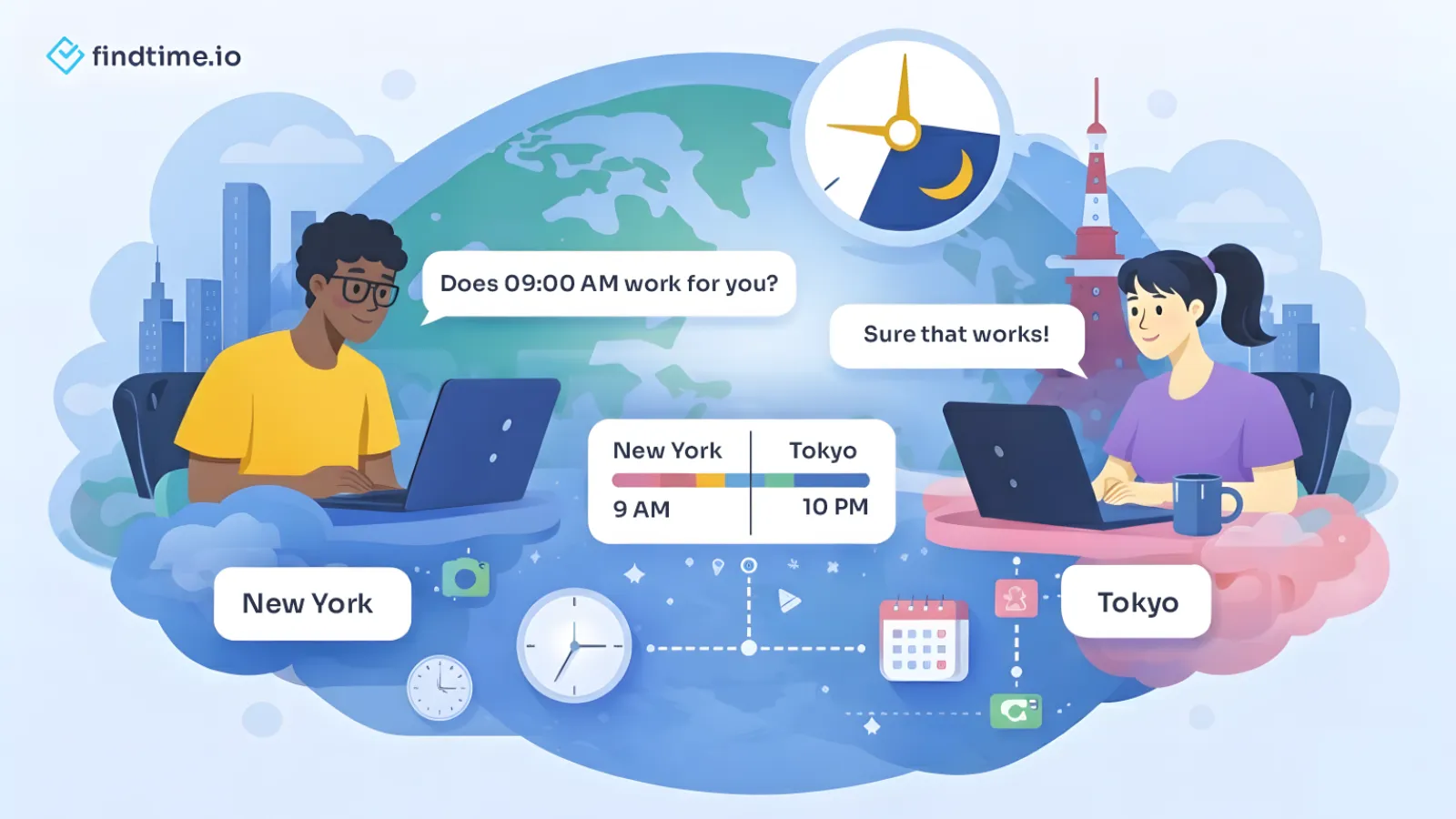

Managing time across multiple cities, countries, and time zones has become a daily challenge for millions of remote workers, freelancers, international businesses, and distributed teams. What once required only a simple clock lookup now often involves coordinating meetings across continents, accounting for daylight saving time changes, and finding fair scheduling windows for people with different working hours.
For years, traditional time and date websites served as the primary solution for these needs. They provided world clocks, time zone information, and basic time conversion tools that helped users answer simple questions. However, the way people work has changed dramatically. Modern remote collaboration requires more than static reference information; it requires intelligent scheduling, real-time context, and tools designed specifically for distributed work.
As a result, a new generation of time management platforms has emerged, offering a more streamlined and practical experience for today's global workforce.
The Evolution of Time Management Online
The internet's earliest time-related websites were built primarily as reference resources. Their goal was straightforward: provide accurate current times, time zone data, and calendar information.
These tools performed their tasks well, and many continue to be valuable resources today. However, they were created during an era when most teams worked from physical offices, meetings happened locally, and international collaboration was less common.
Today's workplace looks very different.
Companies routinely employ team members across multiple countries. Freelancers work with clients worldwide. Digital nomads collaborate across continents. In this environment, simply knowing the current time in another city is no longer enough.
Modern users need tools that help them make decisions, not just access information.
Why Time zone Coordination Has Become More Complex
Remote work has introduced new scheduling challenges that traditional time tools were never designed to solve.
When a team includes members in New York, London, Dubai, Singapore, and Sydney, finding a meeting time that works for everyone becomes surprisingly difficult. Time zone offsets, daylight saving changes, local working hours, and personal availability all influence scheduling decisions.
Manual calculations often lead to mistakes, missed meetings, and inefficient planning.
This is why modern scheduling platforms increasingly focus on overlap detection, meeting planning, and collaborative workflows rather than simple clock displays.
The Shift Toward Scheduling-First Experiences
One of the biggest changes in modern time management software is the move from information-first design to scheduling-first design.
Traditional tools typically require users to gather information and then perform their own planning. Modern platforms attempt to reduce that effort by helping users identify suitable meeting windows automatically.
Instead of answering only "What time is it in Tokyo?" modern solutions also help answer:
- When can our team meet?
- Which hours overlap across multiple locations?
- What is the fairest meeting time for everyone?
- How will daylight saving changes affect upcoming meetings?
These practical workflows align more closely with how remote teams operate every day.
Mobile-First Expectations
Another major shift involves user experience.
Many legacy websites were originally designed for desktop computers and later adapted for mobile devices. While functional, these experiences can sometimes feel crowded or difficult to navigate on smaller screens.
Modern applications are increasingly built with mobile-first principles from the beginning. Responsive layouts, touch-friendly interactions, streamlined navigation, and fast-loading interfaces create a more efficient experience regardless of device.
For professionals who frequently schedule meetings while traveling or working remotely, this flexibility can significantly improve productivity.
The Growing Role of AI in Scheduling
Artificial intelligence is beginning to reshape how people interact with productivity tools.
Rather than requiring users to manually compare multiple cities and calculate overlaps, AI-powered systems can analiyze scheduling scenarios and generate suggestions automatically.
For example, users may describe a scheduling problem in natural language and receive recommended meeting windows without manually performing time zone calculations.
Platforms such as findtime.io are part of this broader shift toward intelligent scheduling experiences. By integrating AI-powered planning capabilities directly into the platform, users can move beyond simple time lookups and focus on making decisions more efficiently.
As AI technology continues to evolve, these capabilities are likely to become increasingly important for teams operating across multiple regions.
Why Modern Architecture Matters
Technology foundations often determine how quickly software can evolve.
Many long-established websites were built using technologies and design assumptions from earlier internet eras. While these platforms may remain reliable, introducing major interface improvements or new capabilities can require significant effort.
Modern applications often use contemporary development frameworks, API-first architectures, and component-based systems that allow teams to iterate more quickly.
This flexibility enables faster feature development, smoother user experiences, and better integration with emerging technologies.
For users, the benefit is simple: tools improve more rapidly and adapt more effectively to changing workplace requirements.
Choosing the Right Tool for Your Workflow
There is no single solution that fits every user.
If someone occasionally needs to check the current time in another city, a traditional time reference website may be perfectly adequate.
However, professionals who regularly coordinate meetings across multiple time zones often benefit from tools specifically designed around collaboration and scheduling workflows.
Important factors to consider include:
- Multi-city comparison capabilities
- Meeting scheduling features
- Mobile usability
- Time zone conversion accuracy
- Daylight saving awareness
- Team collaboration support
- Intelligent scheduling assistance
The best platform is ultimately the one that reduces friction and helps users accomplish tasks more efficiently.
Frequently Asked Questions
Why are modern time tools becoming more popular?
Remote work and international collaboration have increased demand for tools that do more than display clocks. Users increasingly need scheduling assistance and time zone coordination features.
What are the limitations of traditional time websites?
Traditional platforms often focus on reference information rather than helping users coordinate meetings, manage overlaps, or plan schedules across multiple locations.
How does AI improve scheduling?
AI can analyze time zone differences, working hours, and scheduling constraints to suggest practical meeting times and simplify planning.
Are world clocks still important?
Yes. World clocks remain a foundational feature, but many users now need additional functionality such as scheduling tools and time zone collaboration features.
How does findtime.io differ from traditional time tools?
findtime.io combines world clocks, time zone intelligence, scheduling workflows, meeting planning features, and AI-assisted experiences within a modern platform designed for distributed teams and global collaboration.
Final Thoughts
The way people work has changed significantly over the past decade. Global teams, remote collaboration, and cross-time zone communication are now common across industries. While traditional time and date websites continue to provide valuable reference information, modern users increasingly require tools that help them coordinate, schedule, and collaborate more effectively.
Platforms like findtime.io reflect this evolution by combining familiar time-related functionality with modern scheduling workflows, mobile-first experiences, and AI-powered assistance. As remote work continues to grow, the demand for smarter, more collaborative time management solutions is likely to increase, making modern scheduling-focused platforms an important part of the future of global teamwork.



























Sign in to leave a comment.