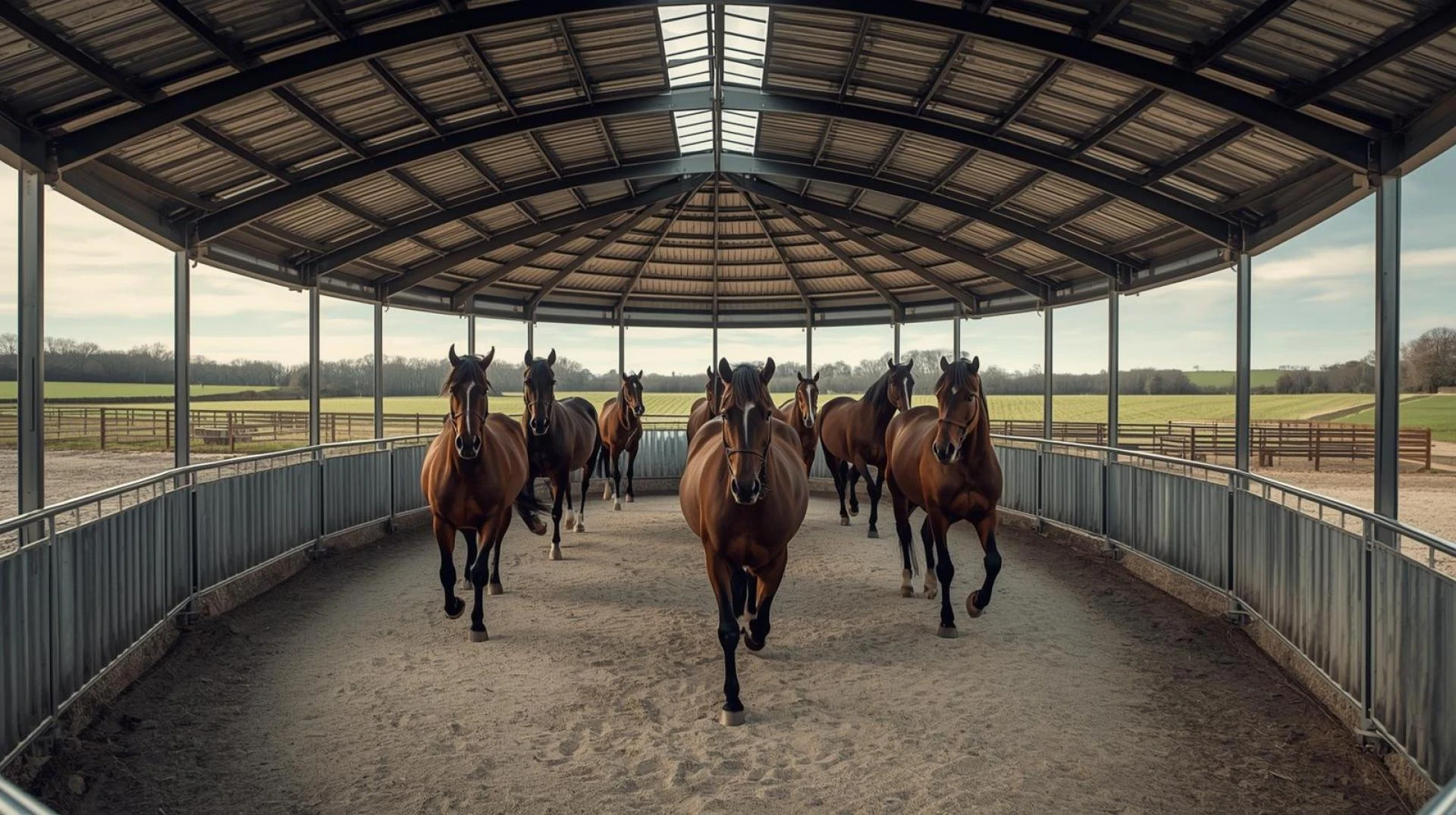

Managing a stable means planning for the unexpected. One day the schedule runs perfectly, and the next day heavy rain or intense sun changes everything.
Horses still need regular movement, but outdoor conditions don’t always cooperate. That’s why many equestrian facilities are now turning to Covered Walkers as a practical solution for maintaining daily exercise routines.
These structures provide a reliable environment where horses can walk comfortably, helping stable owners keep their routines consistent throughout the year.
The Importance of Daily Movement for Horses
Horses are naturally active animals. In the wild, they move for many hours each day while grazing and exploring their surroundings.
In a stable environment, however, movement can become limited depending on turnout schedules, training routines, and available staff.
Regular walking helps support:
- Healthy circulation
- Joint flexibility
- Muscle relaxation
- Mental calmness
Covered Walkers make it easier to maintain that movement even when weather conditions aren’t ideal.
Reliable Exercise in Any Season
One of the biggest advantages of Covered Walkers is their ability to protect horses from harsh weather.
A roofed structure allows horses to walk in a comfortable environment without exposure to:
- Heavy rain
- Strong sunlight
- Snow or frost
- Muddy ground conditions
This means exercise schedules can continue without constant adjustments due to changing weather.
A More Organized Stable Routine
In busy yards, time management is essential. Between feeding, grooming, and training sessions, staff members often have limited time to manually exercise every horse.
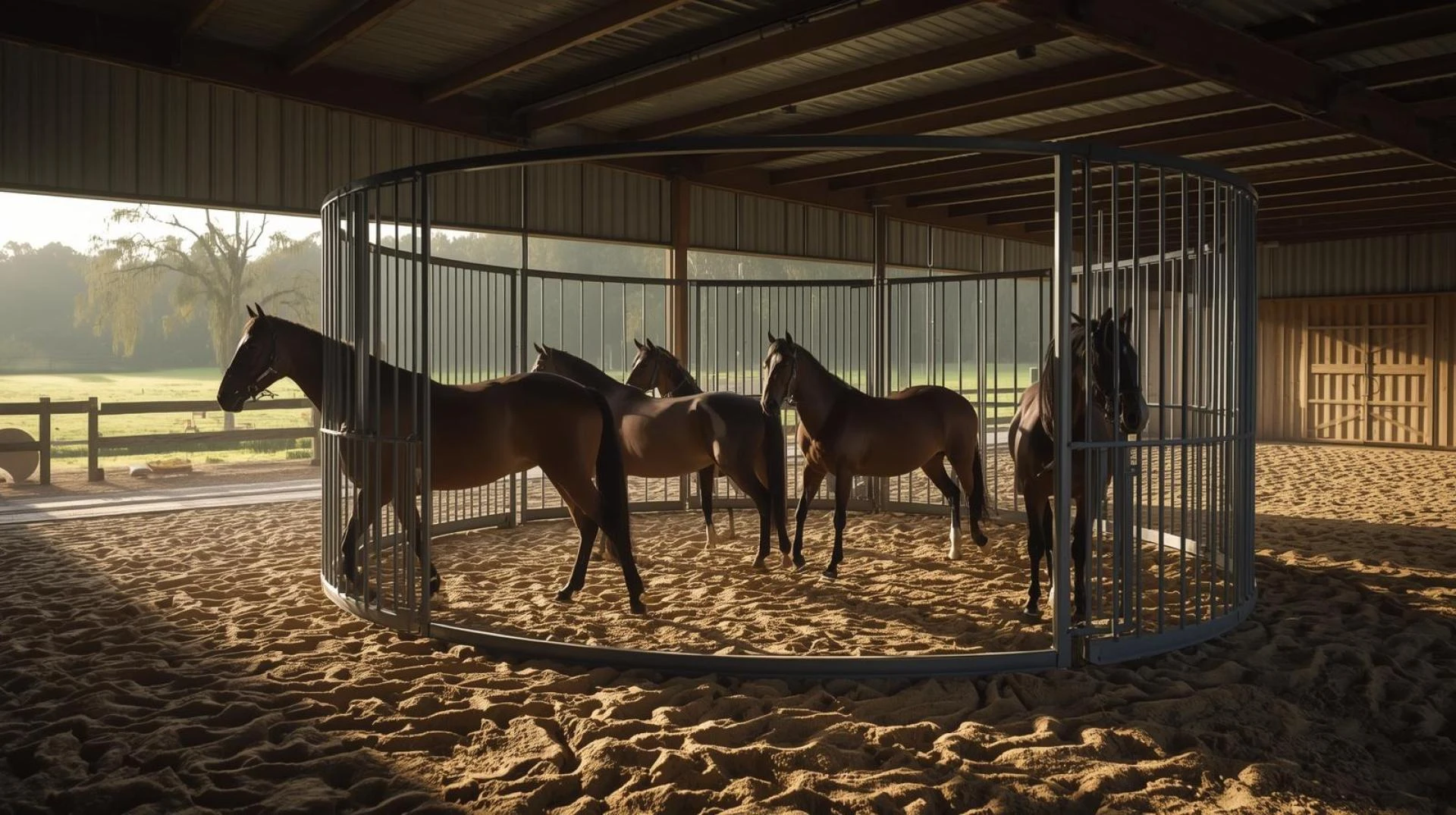
Covered Walkers allow multiple horses to move at once, helping staff manage their time more effectively.
This can lead to:
- More predictable daily schedules
- Reduced workload for staff
- Better preparation before riding sessions
- A calmer atmosphere in the stable
When horses receive regular movement, their behavior often becomes more balanced and focused.
Comfort and Safety for Horses
Another benefit of Covered Walkers is the controlled environment they provide. Horses walk in a structured space with safe partitions and a consistent surface beneath their feet.
This type of controlled movement reduces the risk of slipping on wet ground or becoming uncomfortable in extreme temperatures.
Over time, this gentle and steady exercise helps support long-term horse wellbeing.
A Practical Upgrade for Modern Yards
Many stable improvements focus on aesthetics or new facilities, but infrastructure that supports daily horse care often provides the greatest long-term value.
Covered Walkers are used frequently and become a regular part of the stable routine. Because they support everyday exercise, they quickly prove their usefulness.
For many equestrian facilities, they represent a simple but effective step toward more efficient stable management.
Conclusion
Consistency plays a major role in horse health and training. When horses move regularly and routines remain stable, both performance and wellbeing improve.
Covered Walkers offer a practical way to protect exercise routines from weather disruptions while supporting a calmer, more organized stable environment. For many facilities, they have become an essential part of modern horse care.


























Sign in to leave a comment.