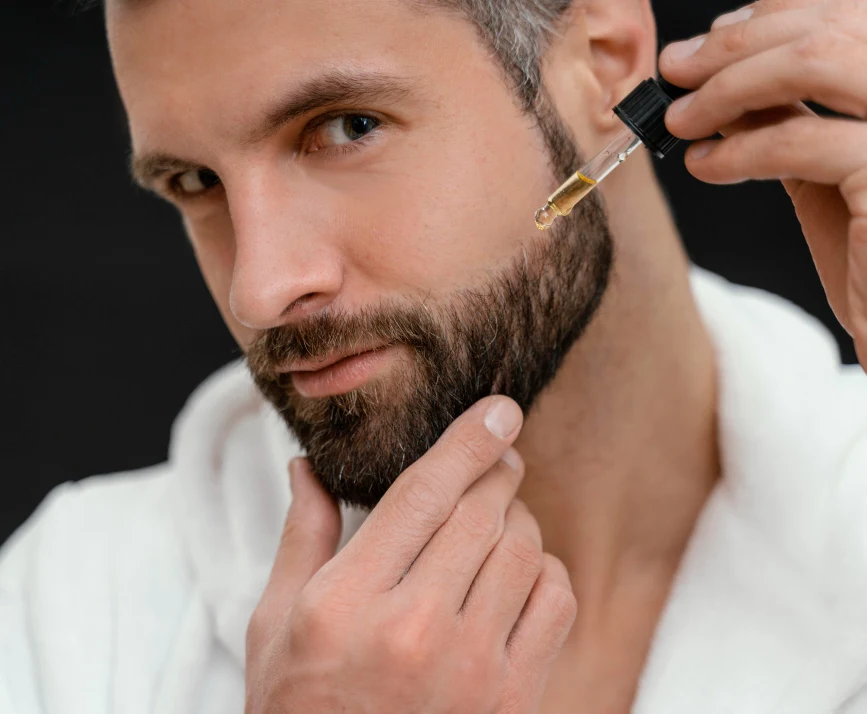

The men’s grooming category is expanding across India and global markets, yet many brands struggle to build a successful Beard Growth Oil line. The issue is rarely demand. Instead, it is formulation inconsistency, unstable oil blends, oxidation problems, weak compliance documentation, and unreliable batch quality.
Startup founders, D2C brand owners, salon chains, dermatology clinics, and procurement managers often underestimate how technically sensitive oil-based formulations are. A beard oil may look simple, but without scientific formulation control and regulatory alignment, the product can suffer from rancidity, poor absorption, or inconsistent performance — leading to negative reviews and low repeat orders.
In today’s competitive beauty landscape, performance credibility and manufacturing precision define long-term success.
Understanding the Science Behind Beard Growth Oil
A professionally developed Beard Growth Oil is not just a blend of random oils. It works through three structured mechanisms:
1. Creating a Healthy Follicular Environment
Beard hair growth depends heavily on skin condition. Lightweight carrier oils such as jojoba or sweet almond oil closely mimic natural sebum, helping prevent clogged pores and dryness. When combined with carefully selected botanical extracts, they support microcirculation and maintain an optimal environment for hair follicles.
2. Strengthening the Hair Shaft
Beard hair is typically coarser than scalp hair and more prone to breakage. Fatty acids and antioxidant-rich oils help reinforce the hair structure, reducing brittleness and split ends.
3. Skin Barrier Protection
Dry, irritated skin under the beard can slow healthy growth. Lipid-based oils restore moisture balance, reduce transepidermal water loss, and improve overall skin comfort.
From an industrial perspective, achieving this balance requires:
- Controlled temperature blending
- Homogenization for uniform ingredient dispersion
- Antioxidant systems to prevent oxidation
- Stability testing under varied climatic conditions
Without these technical processes, even high-quality raw materials can fail to deliver consistent results.
Industrial Applications & Cross-Sector Relevance
Although beard oil is categorized as a cosmetic product, its manufacturing process involves multiple industrial disciplines.
Manufacturing Facilities
Automated mixing tanks, GMP-compliant filling lines, and batch coding systems ensure consistent output and traceability.
Pharma & Wellness Companies
Many pharmaceutical and wellness businesses are entering the grooming segment. They require detailed documentation, ingredient safety data, and structured quality assurance systems.
Warehouse & Logistics Operations
Oil-based products are sensitive to heat and light exposure. Proper storage conditions and UV-protected packaging prevent degradation during domestic distribution and international export.
Dermatology & Cosmetology Clinics
Clinics launching private-label grooming products depend on dermatologically tested formulations and controlled production environments to maintain patient trust.
Compliance & Safety Standards (India and Global)
Manufacturing Beard Growth Oil in India requires adherence to:
- The Drugs and Cosmetics Act, 1940
- BIS cosmetic guidelines
- State FDA licensing requirements
For international distribution, compliance may extend to:
- EU Cosmetic Regulation (EC No 1223/2009)
- US FDA cosmetic labeling guidelines
- ASEAN cosmetic directives
- IFRA fragrance safety standards
Essential documentation typically includes:
- Certificate of Analysis (COA)
- Material Safety Data Sheet (MSDS)
- Stability testing reports
- Microbial analysis reports
Regulatory preparedness is not optional — it protects brands from recalls, shipment rejections, and legal risks.
Cost Efficiency & Long-Term ROI
For beauty entrepreneurs and product development managers, cost optimization is a critical factor.
Professional third-party manufacturing offers:
Lower Capital Investment
Brands avoid investing in blending equipment, laboratories, and filling machinery.
Economies of Scale
Bulk raw material procurement reduces per-unit production costs.
Faster Product Launch
Pre-tested formulation bases shorten development timelines.
Reduced Operational Risk
Structured quality control lowers the risk of defective batches.
Over time, this improves gross margins, enhances brand credibility, and increases repeat customer rates — resulting in stronger return on investment.
Industrial Production vs. Manual Small-Batch Methods
| Parameter | Manual Production | Industrial Manufacturing |
|---|---|---|
| Batch Consistency | Inconsistent | Standardized & validated |
| Shelf Life | Limited testing | Scientifically tested |
| Compliance Documentation | Often incomplete | Fully documented |
| Scalability | Restricted | High-volume capable |
| Export Readiness | Limited | Globally compliant |
Manual production may work for small experimental batches, but scaling demands structured industrial systems.
Manufacturing Expertise Matters
Established third-party cosmetic manufacturers such as Jack Cosmetic Pvt. Ltd. operate with compliance-driven production protocols, ingredient traceability systems, and structured quality assurance processes. For brand owners planning to build a reliable men’s grooming portfolio, technical manufacturing capability directly impacts market credibility.
Frequently Asked Questions (FAQs)
1. Does Beard Growth Oil actually promote beard growth?
It supports healthy growth conditions by nourishing the skin and strengthening hair. Individual results depend on genetics and consistent usage.
2. Is Beard Growth Oil regulated in India?
Yes, it falls under cosmetic regulations governed by the Drugs and Cosmetics Act and requires proper manufacturing licenses and labeling compliance.
3. What testing is necessary before launch?
Stability testing, microbial analysis, dermatological compatibility testing, and packaging compatibility assessments are recommended.
4. Can Beard Growth Oil be exported globally?
Yes, provided it meets the cosmetic regulations and documentation standards of the target country.
Conclusion
Launching a successful Beard Growth Oil line requires more than trend-based marketing. It demands formulation science, compliance awareness, quality-controlled manufacturing, and structured supply chain management.
For startup brands, salon chains, pharmaceutical companies, and global exporters, a disciplined third-party manufacturing framework ensures consistency, regulatory alignment, and sustainable scalability. In the evolving men’s grooming industry, technical precision and compliance-driven production are what ultimately transform a product into a trusted brand asset.
Contact Number: +91 7490991801
Email: [email protected]










Sign in to leave a comment.