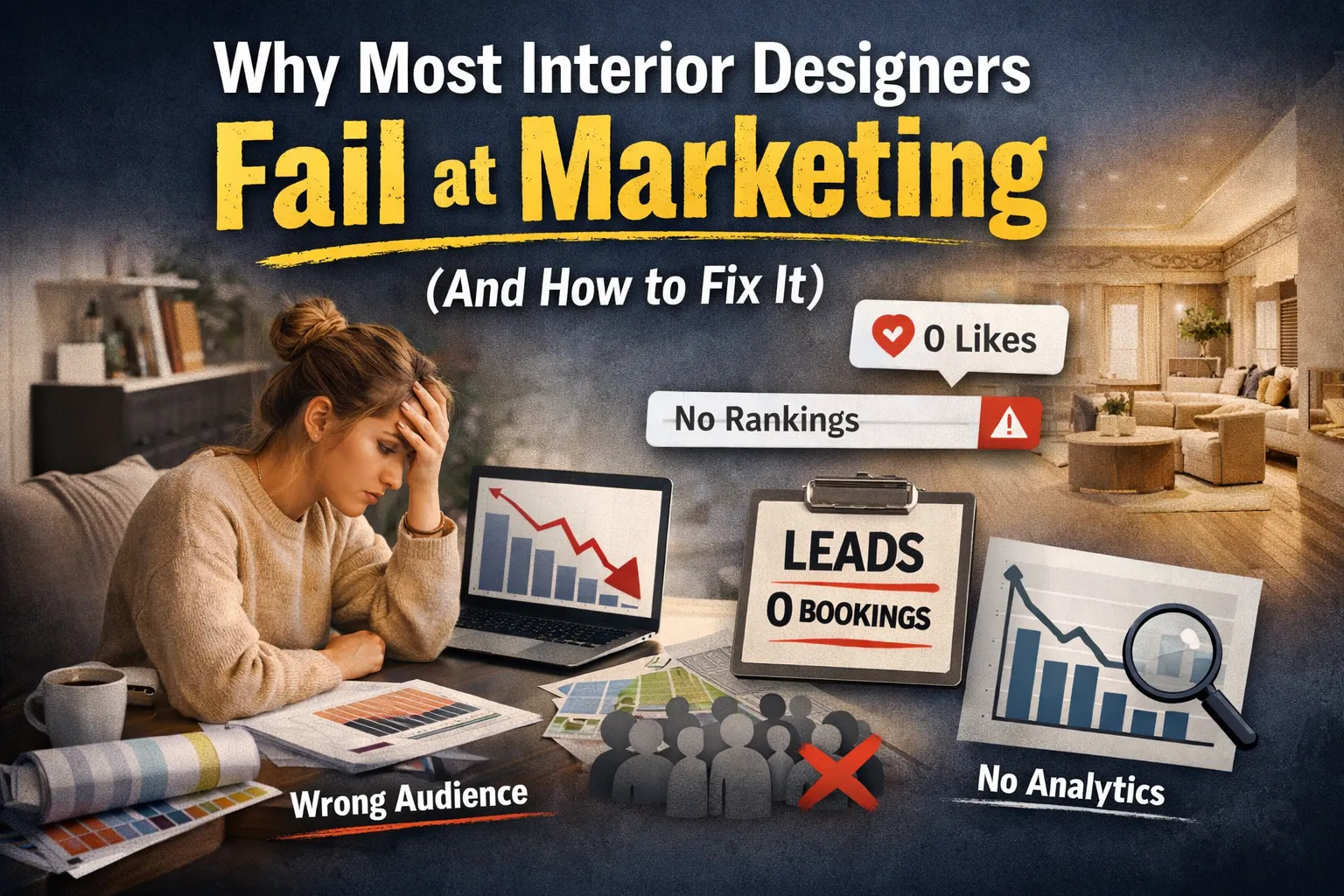

Many interior designers invest in a website but fail to generate consistent leads from it. The problem isn’t the lack of effort—it’s the wrong approach to SEO.
Where Most Interior Designers Go Wrong
The biggest mistake is treating SEO as a one-time task. Designers often create a website, add a few portfolio images, and expect traffic to come automatically. Without ongoing optimization, Google has no reason to rank the site.
Another common issue is ignoring keywords. Many designers write generic content like “Our Projects” or “Our Work” instead of targeting what potential clients actually search for, such as “modern kitchen design in Ahmedabad.”
Visual content is also underutilized. Interior design is highly visual, yet most websites don’t optimize images with proper file names, alt text, or descriptions. This means missing out on both Google Search and Image Search traffic.
Lastly, there’s a lack of local SEO. Since interior design is a location-based service, not optimizing for local searches results in lost opportunities.
How to Fix It
Start by targeting the right keywords. Focus on service-based and location-specific terms that your ideal clients are searching for.
Next, turn your portfolio into SEO assets. Instead of just uploading images, create detailed case studies explaining the project, design challenges, and solutions. This adds valuable content that search engines can rank.
Optimize your Google Business Profile and ensure your business appears in local searches. Collect reviews, add photos regularly, and keep your information updated.
Consistency is key. SEO requires regular content updates, blog posts, and link-building efforts to build authority over time.
A structured approach to SEO for interior designers can transform a simple website into a steady lead-generation machine. The difference between failure and success is not luck—it’s strategy and execution.



























Sign in to leave a comment.