
Anyone who has bought a "like new" used phone and unboxed something closer to "heavily used" knows the feeling. The screen has more micro-scratches than the listing let on, the battery drains faster than expected, or a speaker crackles slightly on calls. The grading didn't match the device. It's a small disappointment as a customer, but for the business on the other side of that transaction, it's a much bigger problem: a return, a refund, a damaged review, and a customer who probably won't come back.
The used device market has grown fast over the last decade. Trade-in programs, refurbishers, wholesalers, retailers, and buyback platforms now move millions of phones a year, driven by both cost-conscious buyers and a broader push toward extending device lifecycles instead of discarding them. Yet a surprising amount of the industry still relies on manual judgment to decide what a device is actually worth — and manual judgment doesn't scale the way inventory volume does.
The Problem With Manual Grading
Grading a phone by hand usually means a technician turning it on, tapping through a few menus, checking the screen for obvious cracks, and maybe running a call or two to confirm the mic and speaker work. It's fast, but it's inconsistent. Two technicians can grade the same phone differently depending on how thorough they're feeling that day, what they personally consider "minor" wear, or whether they happened to test the one sensor that's actually faulty. One tester might catch a failing proximity sensor; another might miss it entirely because it's not something you'd notice without deliberately checking.
This inconsistency compounds at scale. A wholesaler processing a few hundred phones a week can absorb the occasional grading mistake — it's a rounding error in the monthly numbers. A refurbisher processing thousands can't. The returns, the customer complaints, the wasted labor re-testing devices that should have been caught the first time — all of it eats into margins that are already thin in a competitive resale market.
There's a second layer to this too: fatigue and repetition. Manually testing the same fifteen or twenty checkpoints on device after device, hour after hour, is exactly the kind of task where human attention naturally drifts. It's not a reflection on the technician's skill — it's just how manual, repetitive inspection works. A missed step on device #4 of the day looks a lot like a missed step on device #400.
The Trust Problem Nobody Sees on the Screen
There's also a trust problem that goes beyond grading accuracy, and it's one that doesn't show up just by looking at a phone. A device's visible condition tells you nothing about whether it's still tied to a finance agreement, reported lost or stolen, or locked to a carrier or a previous owner's account. Skip that check, and a business can end up reselling a device that gets remotely locked or blacklisted the moment the previous owner reports it — leaving both the buyer and the seller with a real headache, and the business with a return or a chargeback it didn't see coming.
Data left behind on a device is its own liability. A phone that still has traces of a previous owner's accounts, photos, or personal information isn't just a customer-experience issue — it's a compliance and legal exposure, especially for businesses operating across regions with strict data protection rules. "We deleted everything" and "we can prove everything was securely erased to a recognized standard" are two very different claims, and only one of them holds up if a customer or regulator ever asks.
Where Automation Actually Helps
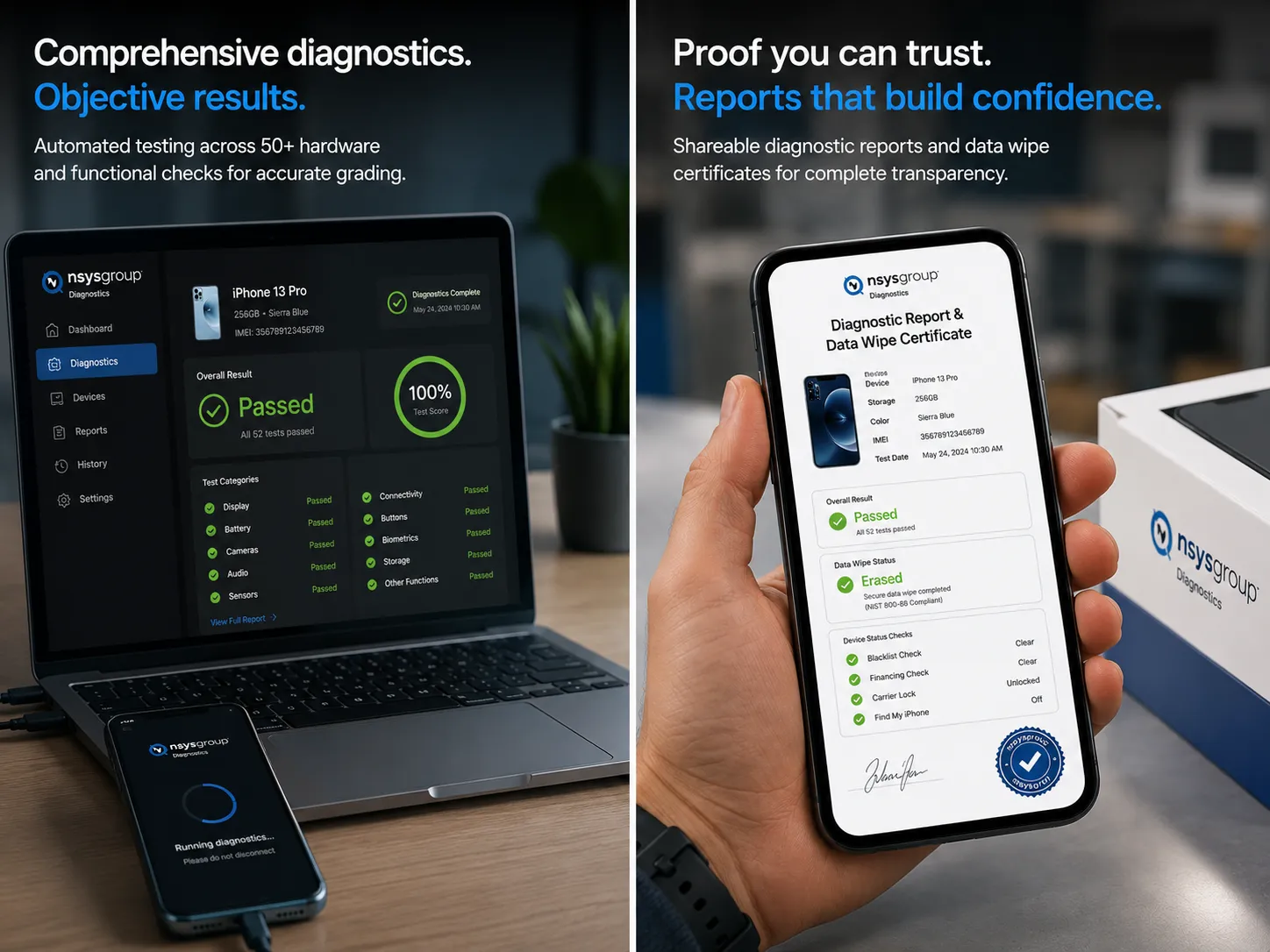
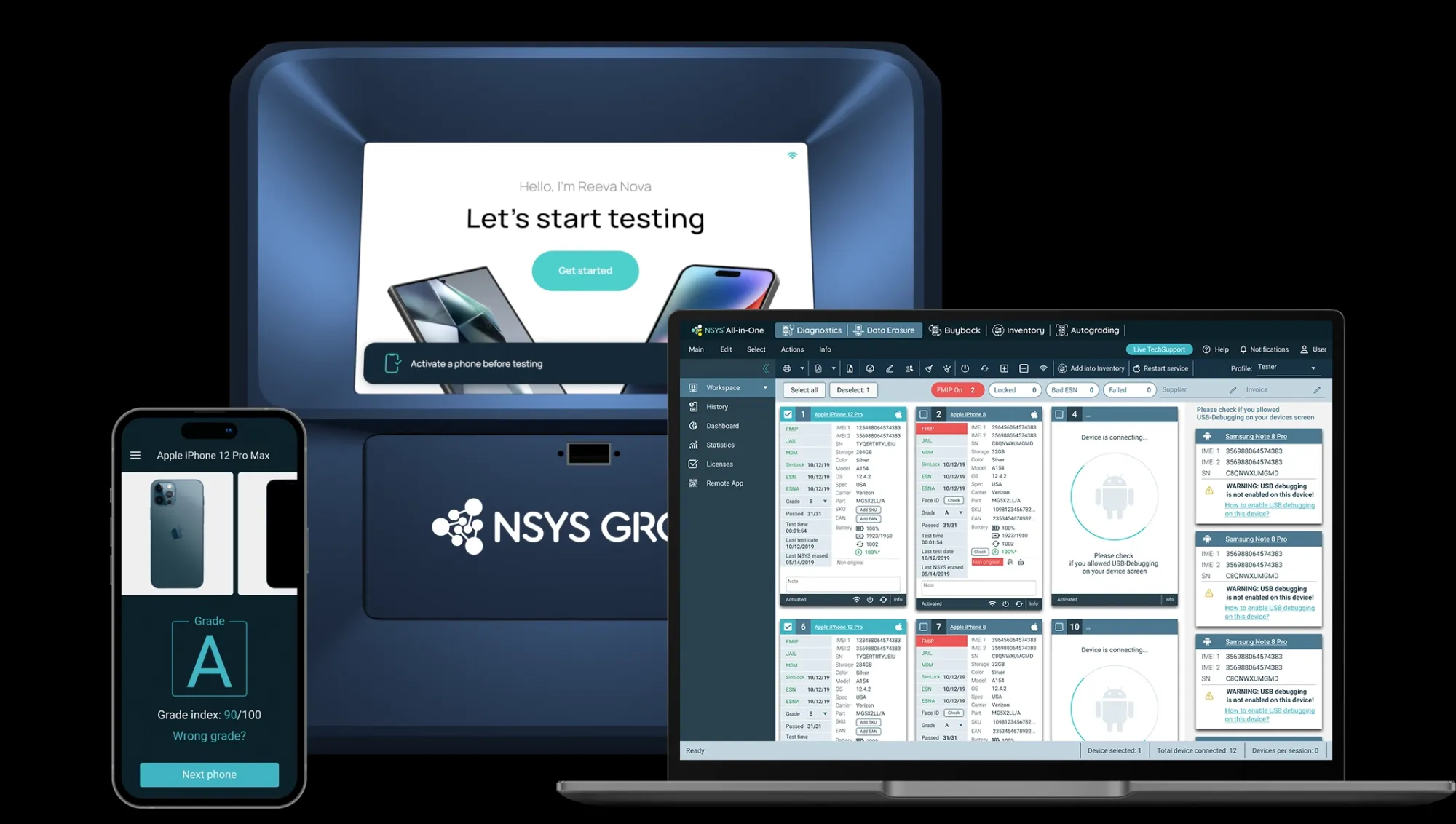
This is the part of the process that automated testing tools were built to solve. Rather than relying on a technician's spot check, software-driven mobile diagnostics can run dozens of tests in the time it takes to plug in a cable — checking the screen, battery health, cameras, microphones, speakers, sensors, and connectivity components in a consistent, repeatable way. The same test runs the same way every time, whether it's the first phone of the day or the five-hundredth. Consistency, not just speed, is the actual advantage here.
The status checks matter just as much as the hardware tests. Verifying a device's IMEI against blacklist records, carrier lock status, and outstanding finance agreements before it ever reaches a shelf removes one of the more expensive surprises in the resale chain. Combined with a proper data wipe that meets recognized data-destruction standards, it turns "we think this phone is fine" into "here's a report confirming this phone is fine" — which is a very different thing to hand a business customer, a marketplace partner, or an individual buyer.
Automated grading also does something manual processes structurally can't: it produces the same result regardless of who's running the test, what time of day it is, or how many devices came before it in the queue. That's not a small thing in an industry where margin depends on accurate condition assessment at high volume.
What This Changes for the Business Side
The businesses that have adopted automated testing report a few consistent benefits. Fewer returns, because the grading matches the device instead of a technician's best guess. Faster processing, because a full diagnostic runs in minutes instead of being spread across several manual checks performed one at a time. And less reliance on hiring and training specialized technicians for every additional unit of monthly volume — which matters a lot when device intake is seasonal or unpredictable.
None of that requires cutting corners. If anything, it's the opposite. It's removing the corners that manual testing was already cutting without anyone quite meaning to.
There's also a quieter benefit that's easy to overlook: documentation. A generated test certificate or condition report is something a business can actually hand to a marketplace, a retail partner, or an end customer as proof of condition, rather than a verbal assurance that the phone was "checked." For businesses selling through platforms with their own condition-grading requirements, having a standardized, automated report also makes it easier to meet those requirements consistently across an entire inventory, rather than device by device.
The Bigger Picture
The used and refurbished phone market runs on trust, and trust is hard to manufacture after the fact. It has to be built into the process — tested, verified, and documented before the device ever changes hands. As the volume of returned, traded-in, and refurbished devices keeps climbing year over year, the businesses that treat testing as a real, measurable step in the workflow — not an afterthought squeezed in between unboxing and shelving — are the ones that will keep customers coming back instead of sending phones back.
It's a small shift in how the industry thinks about condition grading, but it's the difference between selling a phone and selling confidence in a phone. And as more of the market moves toward buyers who expect transparency — clear condition grades, verified histories, proof of secure data handling — that confidence is quickly becoming less of a nice-to-have and more of a baseline expectation.
NSYS Group builds software for the used and refurbished device industry, including automated mobile diagnostics tools used by wholesalers, refurbishers, and retailers to test devices at scale.


























Sign in to leave a comment.