
(And What Actually Works)
KEY TAKEAWAYS
- Musty vent smells always indicate physical contamination inside ductwork—sprays only mask the problem.
- Common causes include trapped moisture, mold growth, pest droppings, clogged filters, and leaky duct connections.
- DIY vent cleaning only reaches the surface; professional negative-pressure cleaning removes debris from the entire system.
- Most homes need professional duct cleaning every 3–5 years at an average cost of $300–$700.
- Running a musty AC spreads mold spores and allergens—turn it off until the source is removed.
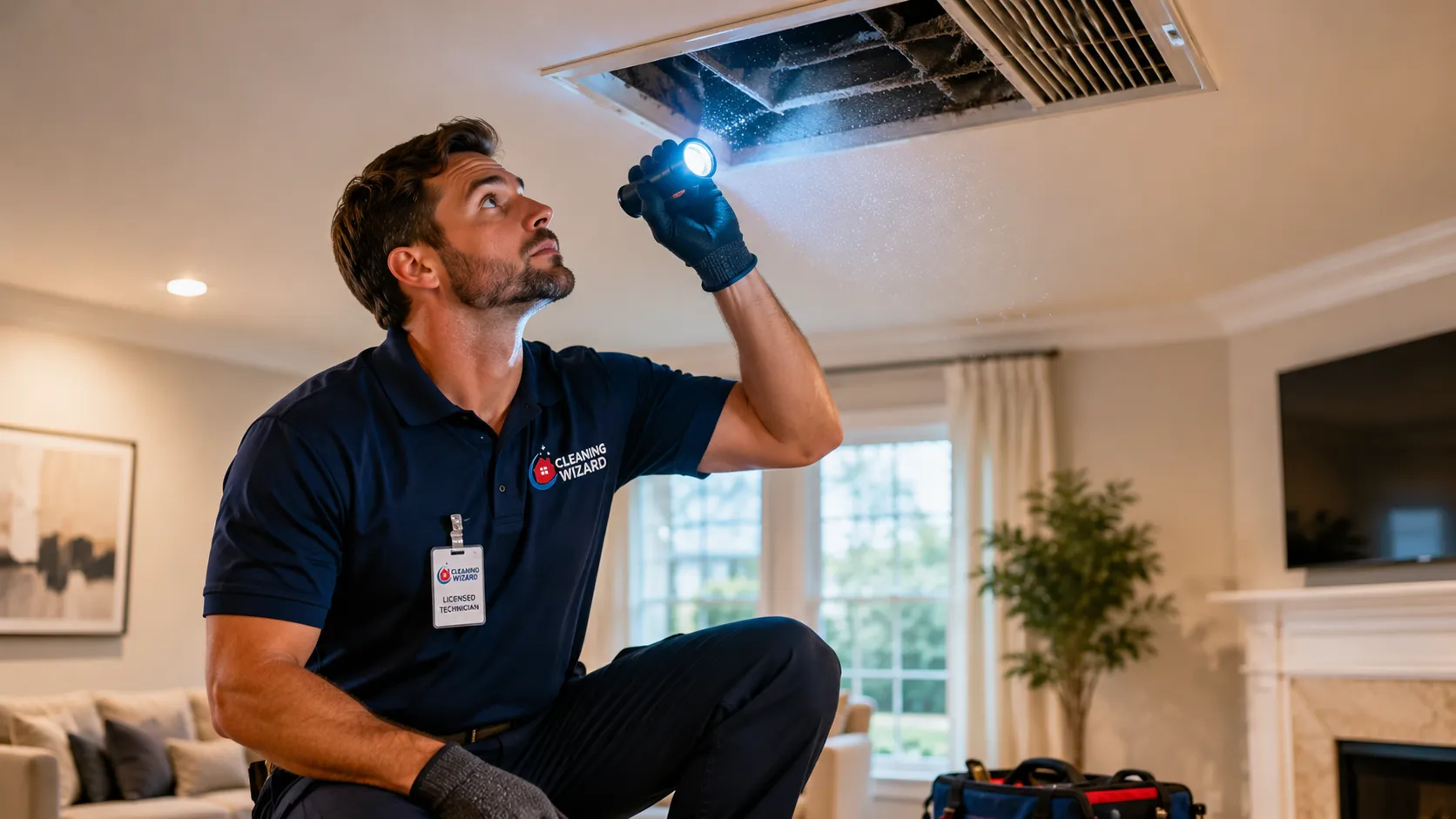
When your heater kicks on and the room fills with a stale, damp smell, your first instinct might be to light a candle or spray air freshener. That masks the symptom for about ten minutes. The real problem — mold, mildew, or built-up debris inside your ductwork — stays right where it is, cycling through every room in your home.
Musty odors from vents are your HVAC system telling you something is trapped inside that shouldn't be. Here's what is usually happening behind the walls, why a vacuum and vent cover wipe-down won't cut it, and how to fix it properly.
What Is Air Duct Cleaning?
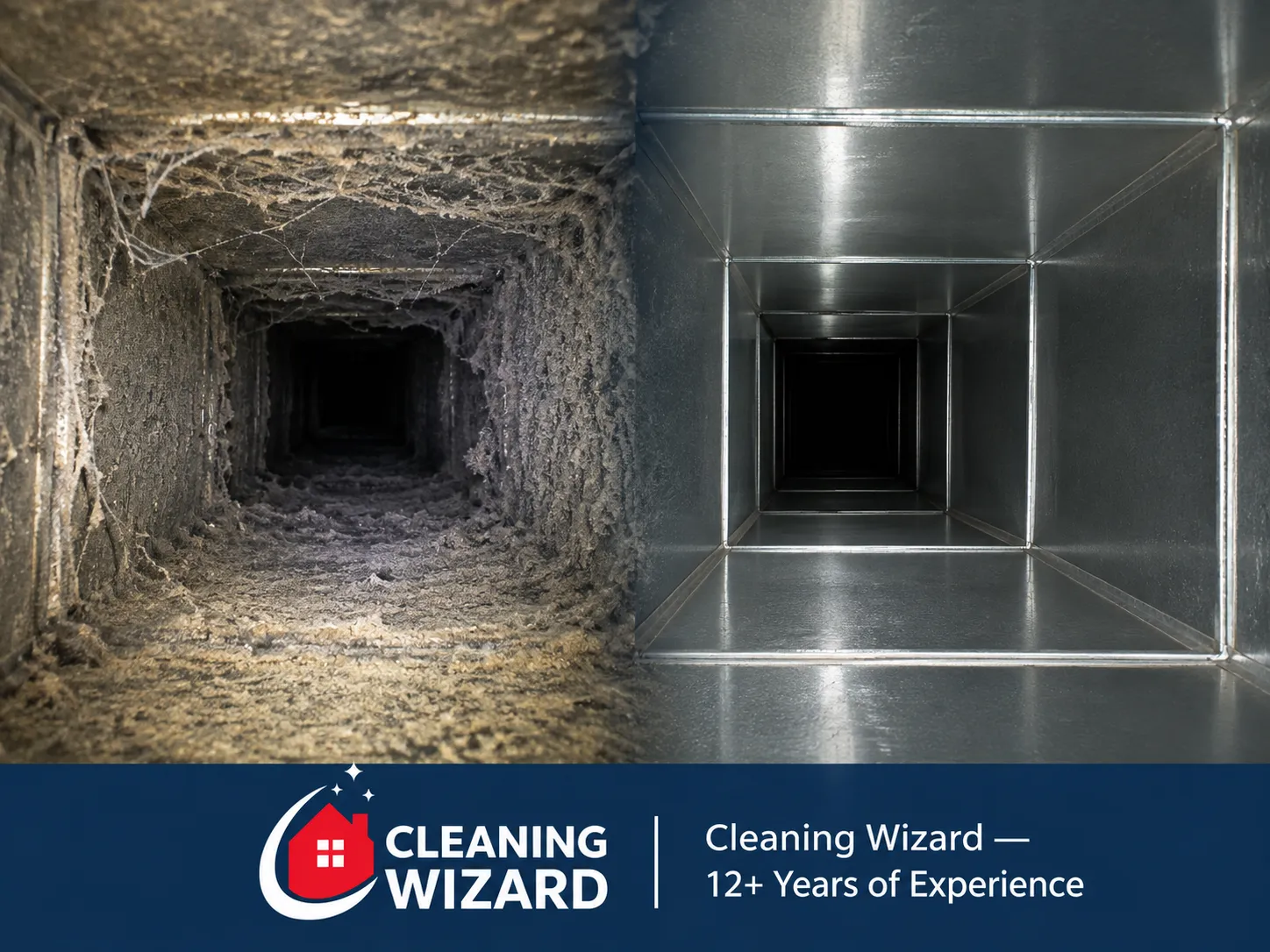
Air duct cleaning is the professional removal of dust, mold, allergens, and debris from the metal ventilation tubes (ductwork) that distribute heated or cooled air throughout your home via your HVAC (heating, ventilation, and air conditioning) system. The process uses negative pressure vacuums and agitation tools to extract contamination from the entire network—not just the visible vent covers.
Bottom line: If the contamination is inside the metal tubes, surface cleaning will not solve the odor problem.
Why Do My Vents Smell Musty?
When your HVAC blower engages, it forces air past mold, mildew, pest waste, or rotting organic material, carrying those odors into every room.
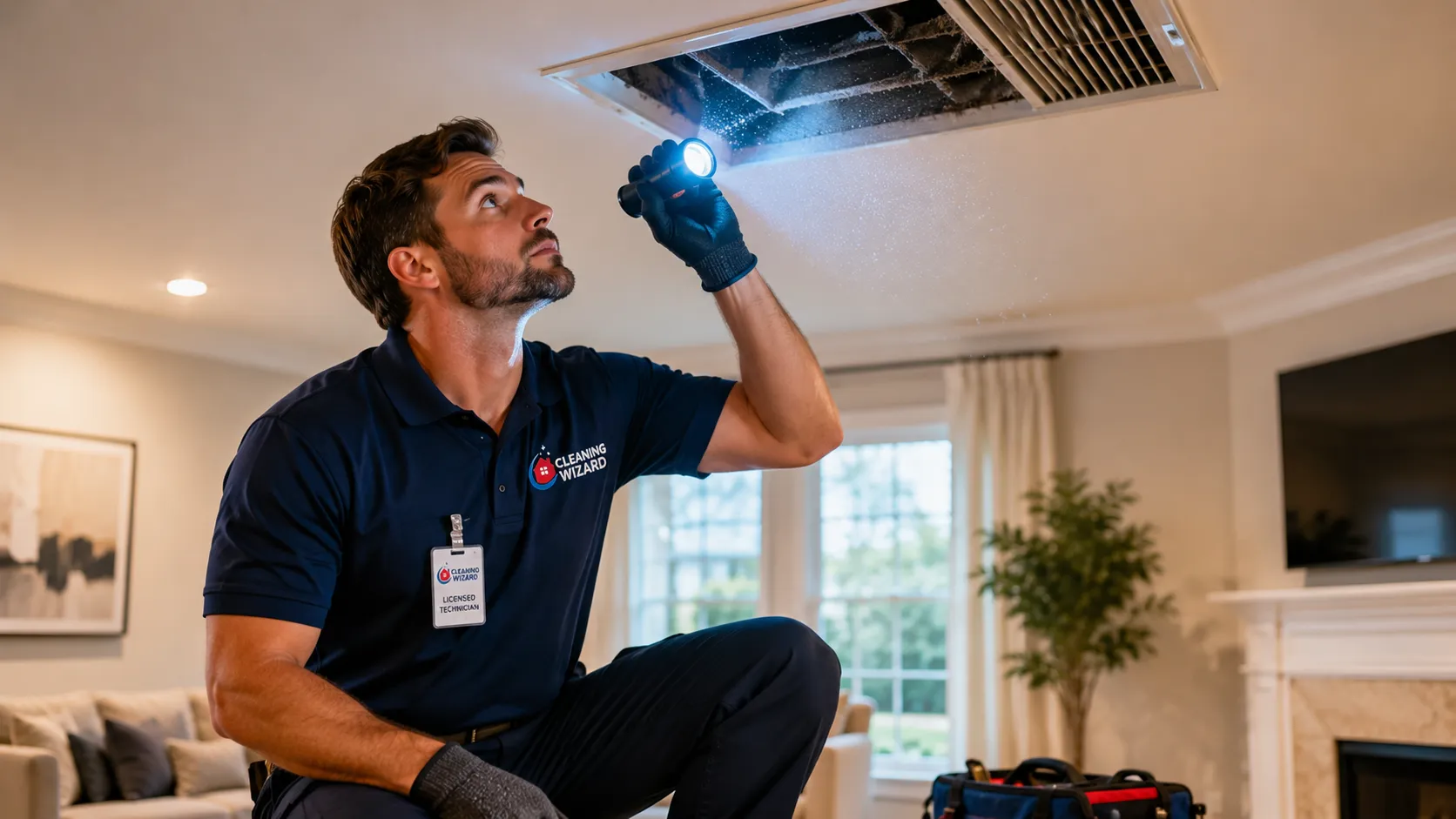
- Trapped moisture and mold: Warm air hitting cold metal duct surfaces creates condensation. In dark, enclosed spaces, this moisture feeds mold and mildew growth on duct walls.
- Pest activity: Rodents and insects enter duct systems—especially in winter—leaving droppings, nesting material, and sometimes remains that produce odors when the fan runs.
- Clogged HVAC filters: A filter saturated with dust forces the system to pull air through that grime layer, distributing stale, dusty air throughout the house.
- Pet dander accumulation: Hair and dander collect inside vents faster than most homeowners expect. Over time, this organic material breaks down and produces a sour smell.
- Leaky duct connections: Small gaps pull in damp, musty air from basements, crawlspaces, or wall cavities, mixing it with your conditioned air.
- Years of dust buildup: Dust absorbs odors from cooking, smoking, and daily activity. Heavy accumulation can make a newer home smell old and stagnant.
Bottom line: A musty smell is a symptom of biological or physical contamination that requires removal, not deodorization.
"The EPA notes that indoor air can be two to five times more polluted than outdoor air."
Can I Clean My Air Ducts Myself?
No—not effectively. Vacuuming a plastic vent cover cleans approximately three inches of your system.
The average home has dozens of feet of metal ductwork hidden behind drywall, under floors, and above ceilings that household tools cannot reach.
DIY vs. Professional Air Duct Cleaning
| Factor | DIY | Professional |
| Reach | Vent covers only (3–6 inches) | Entire duct network (tens of feet) |
| Equipment | Household vacuum | Negative pressure vacuum + agitation tools |
| Result | Removes surface dust | Removes hardened debris, mold, pest waste |
| Debris Handling | Masks or moves debris | Complete extraction from home |
| Cost | $0–$50 | $300–$700 (average) |
| Time | 30–60 minutes | 2–4 hours |
Bottom line: If the odor source is deep inside the ductwork, DIY methods push debris around or leave it untouched. Physical removal requires professional equipment.
What Happens During Professional Air Duct Cleaning?
Professional air duct cleaning follows a structured, four-step process that typically takes 2 to 4 hours for a standard residential system.
Step 1: System isolation (15–30 minutes)
- Technicians seal off supply and return registers to create controlled negative pressure throughout the duct network.
Step 2: Trunk line connection (10–15 minutes)
- A high-powered vacuum is attached to the main trunk line—the central highway of your duct system.
Step 3: Agitation (60–90 minutes)
- Long brushes, compressed air tools, or whips knock loose hardened dust, debris, and buildup from the interior walls.
Step 4: Extraction (30–45 minutes)
- The vacuum pulls all dislodged material out of the system and out of your home through a sealed hose.
At Cleaning Wizard, our technicians regularly find construction debris from decades past, heavy pet hair compacted into corners, and moisture damage that homeowners never knew existed.
A thorough cleaning should leave no mess in your living space. Technicians work through the registers systematically, so debris exits through the vacuum hose rather than your vents.
Bottom line: The process is mechanical extraction—debris is loosened and vacuumed out, not redistributed.
How Much Does Air Duct Cleaning Cost?
For a standard single-family home, professional air duct cleaning typically costs between $300 and $700.
Cost depends on system size and number of vents, level of contamination (mold or pest issues may require additional remediation), accessibility of ductwork, and geographic location.
Cleaning Wizard provides free estimates and same-day scheduling, so you know the exact cost before work begins. Commercial systems in office buildings or multi-unit properties are priced separately based on square footage and system complexity.
Bottom line: Cost varies by home size and contamination level. Free estimates eliminate guesswork.
How Often Should You Clean Your Air Ducts?
Most homes need a professional deep clean every 3 to 5 years.
Schedule sooner if you have multiple shedding pets, recently completed a dusty renovation, notice persistent musty odors, see visible mold or pest activity, or have family members with asthma or severe allergies.
- Change your HVAC filter every 30–60 days.
- Run a dehumidifier in damp basements.
- Keep all vent registers open to maintain proper airflow.
Bottom line: Three to five years is the standard interval, but pets, renovations, or odors should accelerate your timeline.
Is It Safe to Run My AC If It Smells Musty?
No. Running a musty AC unit circulates mold spores, bacteria, and allergens through every room.
This can trigger asthma attacks, allergy symptoms, and respiratory irritation—particularly in children, elderly residents, or those with compromised immune systems. Turn the system off, identify the source, and have it professionally inspected before resuming normal use.
Bottom line: A musty AC is a health hazard, not just an inconvenience. Turn it off until the source is removed.
Do Commercial Buildings Need Duct Cleaning Too?
Yes. Musty air is not just a residential issue. In offices and commercial buildings, stale ventilation creates negative first impressions on clients and can contribute to employee fatigue and increased sick days.
- Lower monthly heating and cooling costs
- Fewer employee health complaints
- Smoother health and safety inspections
- A fresher environment for clients and partners
Bottom line: Commercial systems require the same physical removal process on a larger scale.
When Should You Call a Professional?
If you are dealing with persistent musty odors, you need a team with the equipment, training, and experience to handle the job thoroughly the first time.
About Cleaning Wizard
Cleaning Wizard has provided air duct and dryer vent cleaning across the Chicago area for over 12 years. Their technicians are licensed and insured, use eco-friendly cleaning solutions, and offer 24/7 emergency service when odors or blockages cannot wait.
Whether you need routine maintenance in Crystal Lake, service at your Milwaukee-area property, or commercial duct cleaning in Chicago, they provide free estimates and same-day scheduling.
Contact Cleaning Wizard today to schedule a free inspection.
Frequently Asked Questions
What is the main cause of a musty smell in air vents?
- Trapped moisture mixing with dust creates mold and mildew on duct walls. When the blower fan engages, it pushes those odors—and spores—into your living spaces.
How often should you clean your home air ducts?
- Every three to five years for most homes. Schedule sooner if you have multiple pets, recently remodeled, or notice persistent odors.
Will cleaning my ducts remove the musty smell completely?
- Yes, if the odor is caused by debris, mold, or pest contamination inside the ductwork. Physical removal addresses the source; air fresheners do not.
Is it safe to run the AC if it smells musty?
- No. Running the system circulates mold spores and allergens. Turn it off and have the source inspected by a professional.
How do I find a reliable air duct cleaning service?
- Look for local companies with verified customer reviews, upfront pricing, certified technicians, and proper licensing and insurance. Ask whether they use negative pressure vacuum systems and whether they guarantee their work.

























Sign in to leave a comment.