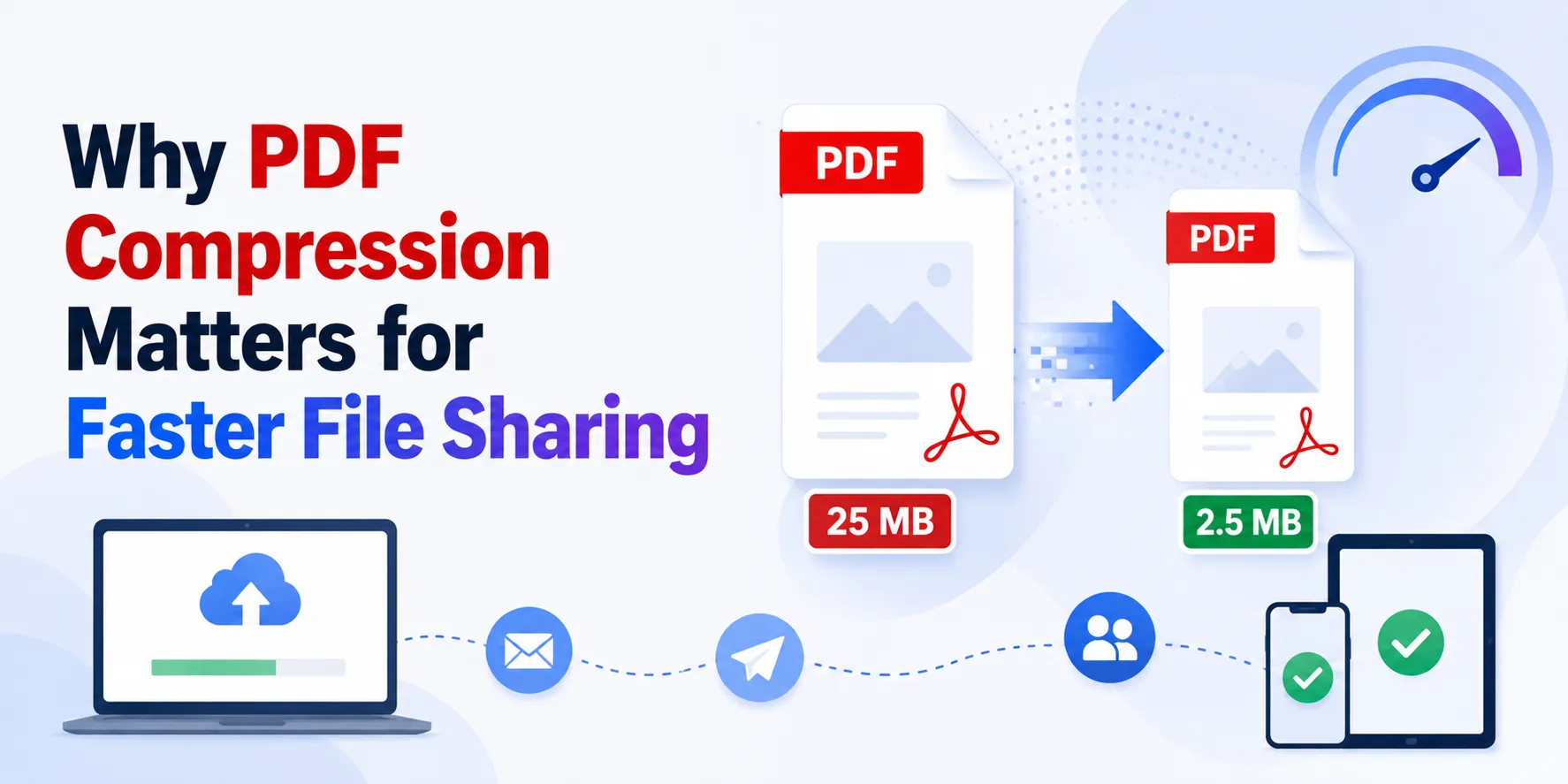

Have you ever tried sending a PDF file through email only to see an error saying the file is too large? Or maybe you've uploaded a document to a website and had to wait forever for it to finish uploading. These are common problems many people face every day, especially when working with large PDF files.
PDFs are one of the most widely used file formats for sharing documents because they preserve formatting and look the same on every device. Businesses, students, freelancers, and professionals all rely on PDFs for reports, contracts, invoices, presentations, and other important documents.
However, as PDF files become larger, they can create challenges when it comes to sharing, uploading, storing, and managing them. This is where PDF compression becomes extremely useful.
In simple terms, PDF compression reduces the file size of a PDF document while keeping the content readable and usable. It makes sharing documents much faster and more convenient without changing the information inside the file.
Why a PDF Tool Is Essential for Modern File Management
Today, almost everyone works with PDF files in some way. Whether you're sending a resume, sharing a business proposal, or uploading project documents, having access to a reliable PDF Tool can make file management much easier.
Modern online platforms like FileXTool allow users to compress, organize, convert, and manage PDF documents directly from their browser without installing any software.
Instead of struggling with oversized files, users can optimize PDFs in just a few clicks and share them instantly.
What Is PDF Compression?
PDF compression is the process of reducing the size of a PDF file.
A PDF can become large for several reasons:
- High-resolution images
- Scanned documents
- Embedded graphics
- Multiple pages
- Complex formatting
When these elements are combined, the file size can quickly grow to several megabytes or even hundreds of megabytes.
Compression helps remove unnecessary data and optimize the document so it takes up less storage space while maintaining acceptable quality.
The result is a smaller PDF that's easier to upload, download, and share.
Why Large PDF Files Can Be a Problem
Many people don't realize how much large files can affect productivity.
For example:
Slow Email Attachments
Most email services have attachment limits. Large PDFs often exceed these limits, making them difficult to send.
Longer Upload Times
Uploading large files to cloud storage or websites can take much longer, especially on slower internet connections.
Increased Storage Usage
Large documents consume more space on computers, smartphones, and cloud accounts.
Difficult Sharing
When files are too large, sharing them with clients, coworkers, or classmates becomes frustrating.
Compressing PDFs helps eliminate these problems.
Faster File Sharing Saves Time
One of the biggest advantages of PDF compression is speed.
Smaller files:
- Upload faster
- Download faster
- Share faster
- Open faster
Imagine sending a 25 MB PDF versus a 5 MB PDF.
The smaller file will reach the recipient much more quickly and consume less internet bandwidth.
For businesses that exchange documents daily, these small time savings can add up significantly over weeks and months.
Better Experience for Remote Teams
Remote work has become increasingly common, and teams often collaborate using digital documents.
Large PDF files can slow down workflows when employees need to:
- Upload reports
- Share presentations
- Send contracts
- Exchange project files
Compressed PDFs make collaboration smoother because files can move between team members much faster.
This improves productivity and reduces delays.
Easier Cloud Storage Management
Most people today store files in cloud services.
Whether you're using business storage platforms or personal cloud accounts, storage space isn't unlimited.
Large PDF files can quickly fill available storage.
Compressing documents helps:
- Save storage space
- Organize files more efficiently
- Reduce storage costs
- Improve file accessibility
For businesses handling thousands of documents, this can be a major advantage.
PDF Compression Helps Website Performance
Many websites allow users to download PDFs such as:
- Product catalogs
- Brochures
- Reports
- User manuals
If these files are too large, visitors may become frustrated by slow download speeds.
Compressed PDFs provide a better user experience because they download much faster.
This can improve customer satisfaction and website engagement.
Organizing PDFs for Better Workflow
Sometimes file size isn't the only issue.
Large documents can also become difficult to manage.
For example, a lengthy PDF report may contain multiple sections that users want to separate.
Learning How to Split PDF Pages can help break large documents into smaller, more manageable files.
This makes organization easier and allows users to share only the sections they actually need.
Combining Multiple Documents Efficiently
On the other hand, businesses often need to combine several PDFs into a single file.
For example:
- Client proposals
- Financial reports
- Project documentation
Understanding How to Merge PDF Files allows users to organize information more effectively while maintaining a professional presentation.
After merging files, compression can further reduce the final document size for easier sharing.
Why Online PDF Compression Tools Are Popular
Traditional desktop software often requires:
- Installation
- Updates
- Storage space
- Technical knowledge
Online tools remove these barriers.
Platforms like FileXTool provide browser-based solutions that allow users to compress PDFs quickly without downloading software.
Benefits include:
- Easy access
- Fast processing
- No installation required
- Cross-device compatibility
This convenience is one reason online PDF tools continue growing in popularity.
Common Situations Where PDF Compression Helps
PDF compression is useful in many real-world situations.
Students
Compress assignments before uploading them to educational portals.
Businesses
Share contracts and reports more efficiently.
Freelancers
Send portfolios and proposals quickly to clients.
Job Seekers
Reduce resume file sizes for online applications.
Remote Teams
Improve collaboration through faster document sharing.
Virtually anyone who works with digital documents can benefit from PDF compression.
The Future of PDF Management
As digital workflows continue evolving, PDF tools are becoming smarter and more efficient.
Future developments may include:
- AI-powered compression
- Automatic file optimization
- Faster cloud processing
- Improved document organization
These advancements will make managing PDFs even easier for everyday users.
Final Thoughts
PDF compression may seem like a small task, but it can have a big impact on productivity. Smaller files are easier to share, upload, store, and manage, making daily workflows much more efficient.
Whether you're a student submitting assignments, a freelancer sending proposals, or a business sharing important documents, compressed PDFs help save time and reduce frustration.
With modern platforms like FileXTool, optimizing PDF files has become simple and accessible for everyone. As digital communication continues growing, PDF compression will remain an essential part of smart file management.
























Sign in to leave a comment.