Introduction: Why Plant-Based Foods Are Reshaping the Global Food Industry
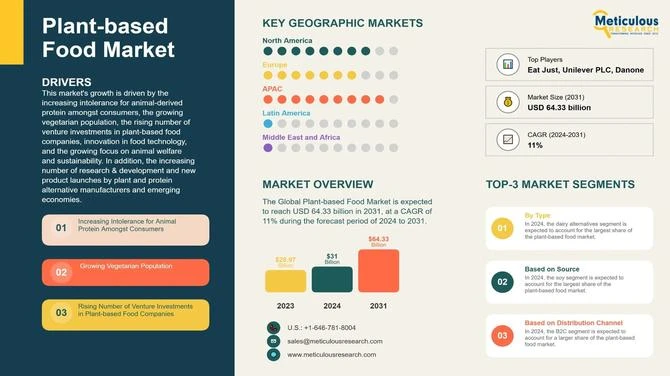
Walk into any grocery store today and you'll see something that would've seemed crazy ten years ago—entire aisles dedicated to plant-based foods. This isn't just a trendy fad anymore. The global plant-based food market hit USD 28.97 billion in 2023, and we're looking at around USD 31 billion this year. By 2031, experts think it'll more than double to USD 64.33 billion, growing at about 11% each year.
Why the explosion? People care more about their health, more of us can't digest dairy properly, we're thinking about where our food comes from, the planet's health actually matters to shoppers now, and big money is flowing into plant-based startups. If you're a brand, retailer, or investor, this is one of those rare markets where consumer buzz and actual profits are both trending up.
Global Plant-Based Food Market Size and Forecast
Let's talk numbers for a second. We went from USD 28.97 billion in 2023 to an estimated USD 31 billion this year, and we're headed toward USD 64.33 billion by 2031—that's 11% growth annually. Even though plant-based stuff is sometimes pricier and some people still won't give up their burgers, this market keeps growing strong. That tells you something real is happening here.
Key Factors Driving Growth in the Plant-Based Food Market
Several major forces are pushing this market forward. More people are discovering they can't handle lactose or just feel better eating less animal protein, which has pushed plant-based alternatives into everyday shopping carts. The rise of flexitarians—people who eat mostly plants but aren't strict about it—is huge, especially among millennials and Gen Z who want cleaner, more ethical food. Food scientists have also made massive breakthroughs, so plant-based meat actually tastes like meat now, dairy alternatives don't make you miss the real thing, and you can grab convenient ready-to-eat meals that are genuinely good. On top of that, people are more aware than ever about factory farming, carbon emissions, and environmental damage, so plant-based options feel like eating without the guilt. All these factors together are creating demand that looks like it's here to stay, not just a passing trend.
Market Restraints Limiting Growth Potential
Look, it's not all sunshine and plant-based bacon. These products usually cost more than the regular stuff, which is a real barrier for a lot of families. Many people genuinely love traditional meat and dairy and don't want alternatives, no matter how good they get. And some common plant-based ingredients—especially soy and gluten—cause problems for people with allergies or sensitivities. These issues definitely slow things down, particularly in countries where every dollar counts and in places where traditional eating habits run deep.
Competitive Landscape and Market Insights
The plant-based food space is basically a food fight right now—everyone's competing hard. What separates winners from losers? Making products people actually want to eat again, building brands people trust, and getting those products into as many stores and restaurants as possible. You've got huge food corporations jumping in alongside hungry startups, all racing to grab market share.
The big names include Beyond Meat, Impossible Foods, Danone, Nestlé, Unilever, Amy's Kitchen, The Hain Celestial Group, Daiya Foods, Lightlife Foods, and Eat Just. They're all fighting over taste, nutrition, ingredient quality, and shelf space. They're constantly tweaking recipes, launching new products, and sometimes buying out their competition.
Product Innovation and New Launches Fuel Market Expansion
Companies know they can't just sit still. Lately we've seen plant-based BBQ kits and street food options popping up, all sorts of flavored creamers hitting coffee shops, frozen plant-based meals including things like sushi that you can grab for dinner, and even plant-based eggs and seafood that actually work in recipes. All this variety helps these products break out of specialty stores into regular supermarkets and chain restaurants, and it keeps customers coming back to see what's new.
Venture Capital Investments Accelerating Market Growth
Here's how you know this is serious: investors are throwing billions at plant-based companies. We're talking massive funding rounds for meat alternatives, egg substitutes, dairy replacements—the whole nine yards. The money's going toward building bigger production facilities, scaling up operations, and expanding into new countries. What's really interesting is that traditional meat and dairy companies are investing in plant-based brands, which shows everyone sees where things are headed.
Key Market Findings and Segment Analysis
Plant-based dairy alternatives—milk, cheese, and yogurt—currently own the biggest piece of the market thanks to widespread lactose intolerance, ethical concerns about dairy farming, and the perception they're healthier. But egg substitutes are the fastest-growing category because they're cholesterol-free and companies are pouring innovation into them. When it comes to ingredients, soy still dominates because it's cheap and everywhere, but pea protein is the rising star since it doesn't trigger allergies and is more sustainable. Most sales happen directly to consumers through grocery stores and booming online channels, with people spending more on plant-based options than ever before. Asia-Pacific leads the global market and is growing fastest, driven by huge vegetarian populations, rapid urbanization, rising incomes, and strong partnerships between local and international brands.
Conclusion: A High-Growth Market Built for Traffic and Sales
The plant-based food market is locked in for serious growth through 2031. Health awareness isn't going away, people care about sustainability, and the products keep getting better. Sure, they're still working on making things cheaper and tastier, but the tech is improving fast and the investment money keeps flowing. For brands and investors, this market checks all the boxes—tons of consumer interest, sales climbing across stores and online platforms, and real long-term potential as plant-based eating becomes just... normal eating.
Download sample Report here : @ https://www.meticulousresearch.com/download-sample-report/cp_id=5108
Contact Us:
Meticulous Research®
Email- [email protected]
Contact Sales- +1-646-781-8004
Connect with us on LinkedIn- https://www.linkedin.com/company/meticulous-research


























Sign in to leave a comment.