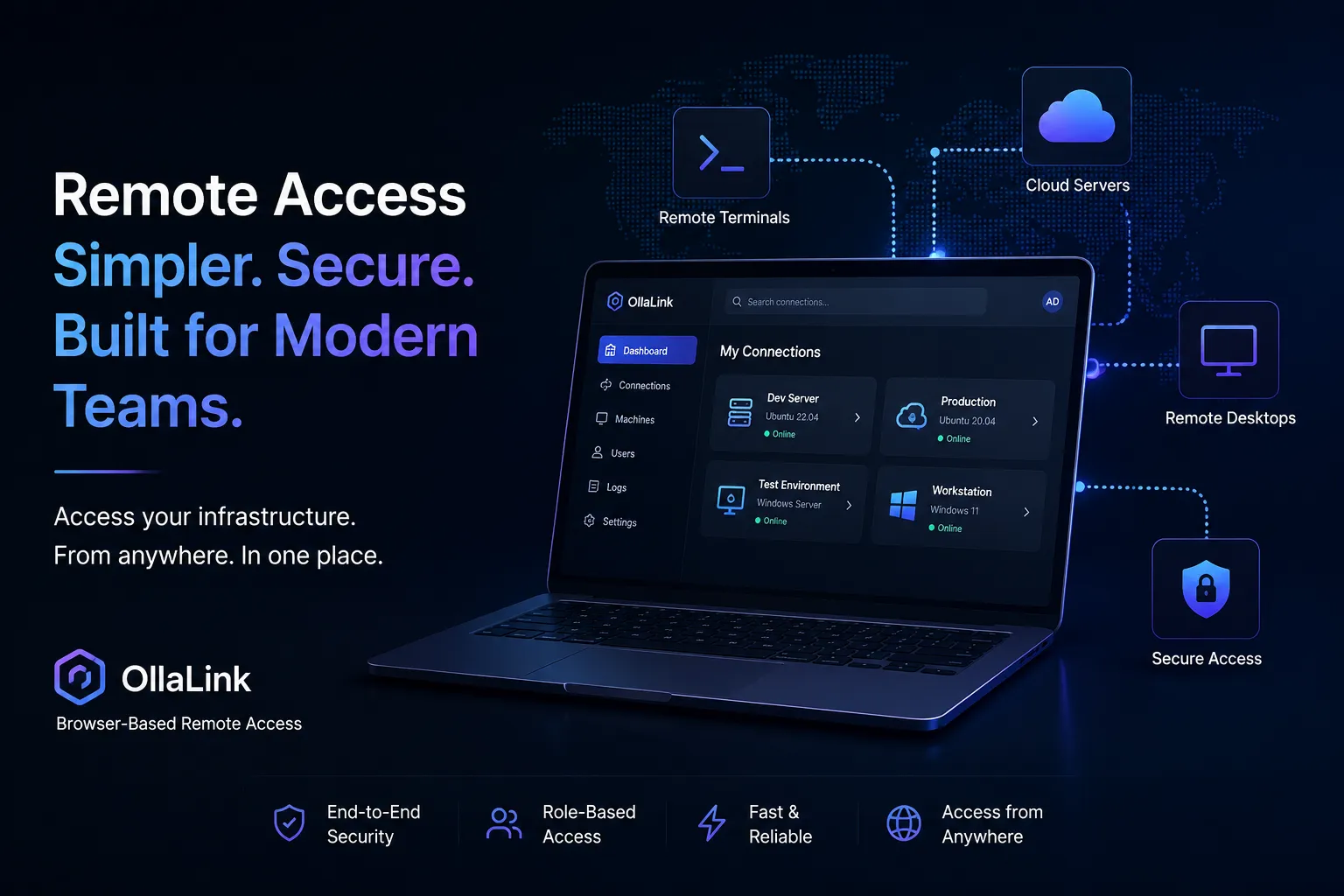

Modern IT teams are managing more distributed infrastructure than ever. Cloud servers, development machines, testing environments, and remote workstations can all be part of the same workflow.
The challenge isn't simply connecting to these systems. It's managing access without creating unnecessary work for the people who use them.
When every environment has a different connection method, users have to remember which application, credentials, network configuration, or workflow applies to each machine. These small tasks may seem insignificant individually, but they can become a constant source of context switching.
A more consistent access experience can reduce that friction.
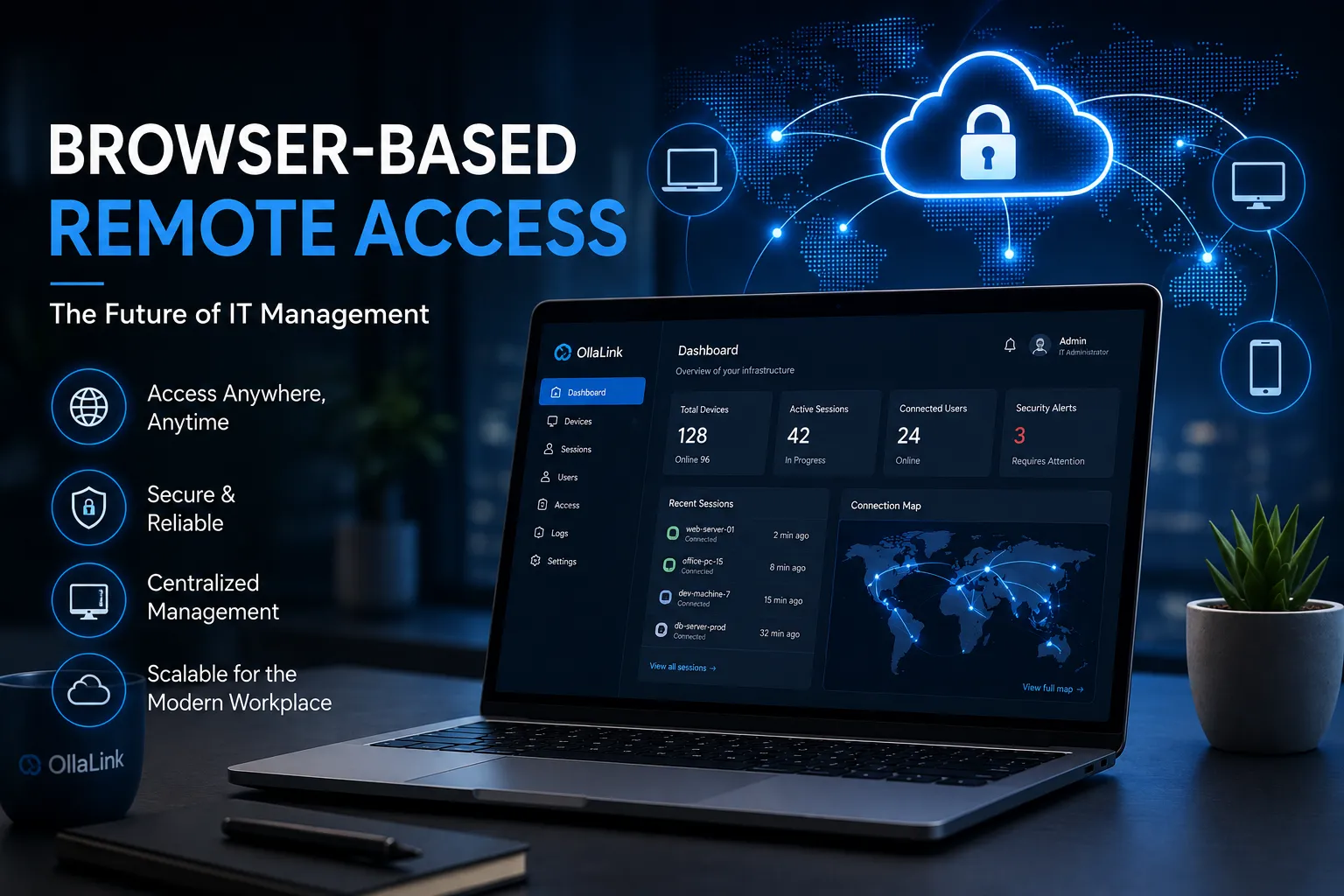
OllaLink takes a browser-based approach to remote access, giving developers and IT teams a familiar interface for working with distributed infrastructure.
This doesn't mean removing the complexity underneath. Authentication, authorization, networking, and security still need careful engineering.
The goal is simply to keep unnecessary complexity away from everyday workflows.
As infrastructure continues to become more distributed, organizations should consider not only whether their systems are secure and reliable, but also how easy they are for people to use.
Good infrastructure should work for the team, not constantly make the team work around the infrastructure.























Sign in to leave a comment.