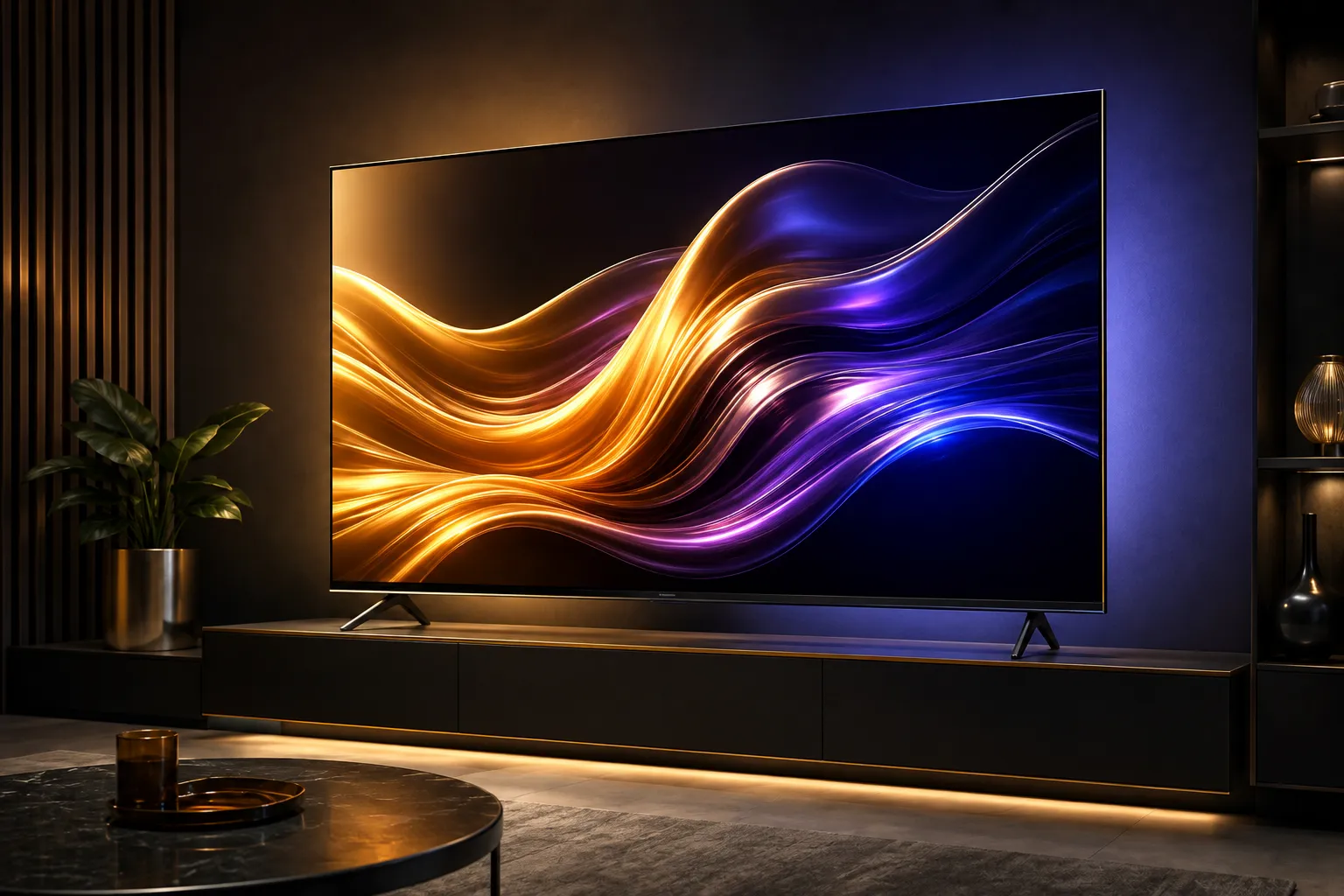

I've lost count of how many showrooms I've walked into where the salesperson leads with the same line. "Sir, this one is seventy five inches." Like that number alone should end the conversation.
And look, I get it. Size is the easy sell. You can see it from across the room, you can point at it, you don't need to explain anything technical. It just looks impressive standing there.
But if you're the person actually signing the cheque for screens in your office, your showroom, your boardroom or your reception area, here's something worth hearing before you fall for the size trap. Inches don't decide how good a screen looks once you switch it on. TV display technology does. The stuff working quietly behind the glass that nobody bothers explaining to you on the sales floor.
Honestly, that's the part that decides whether you made a smart purchase or an expensive mistake.
So Why Does Screen Technology Actually Matter More Than Size?
Think about two guitars sitting next to each other. Same shape, same colour, same price tag even. One sounds warm and full when you play it. The other sounds thin and a little hollow. You wouldn't know the difference just by looking at them. You'd only know once someone actually played a chord.
TVs behave the same way, and honestly this comparison bothers me a little because it's so obvious once you say it out loud, yet almost nobody thinks about a TV this way before buying one.
Two televisions can be the exact same size, hang on the same wall, cost nearly the same amount and still look worlds apart once they're switched on. What separates them is the TV display technology sitting inside. The panel, the backlighting, the processor, how well it handles contrast. That's the real story, not the number printed on the box.
You don't need an engineering degree to figure this out. You just need to know which questions to ask before you hand over the purchase order.
What Does "Screen Technology" Actually Include?
People throw this phrase around loosely, so let's actually break it down into pieces that mean something:
- The panel type, which decides how colours and contrast come across
- The backlighting system, which controls brightness and whether dark scenes actually look dark
- The processor, which sharpens and cleans up whatever is playing
- The resolution, which decides how much fine detail you can actually see
- The software running underneath, which affects how smooth and reliable the TV feels every day you use it
Each piece pulls its own weight. A high resolution screen with weak backlighting still looks flat and lifeless. A brilliant processor can't rescue a mediocre panel no matter how hard it tries. It's the whole combination working together that decides whether a TV is worth what you paid for it, or whether it just photographed well in the showroom.
Why Bigger Isn't Automatically Better
Let's be honest about something most salespeople conveniently skip.
A seventy inch screen with average TV display technology can genuinely look worse than a fifty inch screen with strong technology behind it. That's not me being dramatic, it's just how contrast and clarity actually work. A bigger panel stretches every flaw wider. Weak backlighting doesn't hide on a large screen, it becomes impossible to ignore.
For a business, this matters more than people realise. Here's what that actually looks like in real situations:
- A large, low quality screen in a boardroom can make your presentation look washed out the second office lights are on
- A big screen with poor contrast in your reception area can make brand videos look dull instead of premium and polished
- An oversized display crammed into a small meeting room can strain people's eyes rather than impress anyone sitting there
Size without the right technology behind it isn't an upgrade. It's just a bigger version of the same problem you started with.
Where Mini LED Fits Into This Whole Picture
This is usually where Mini LED TV technology enters the conversation, and honestly, it deserves the attention.
A Mini LED TV uses much smaller LED units for its backlight compared to older LED screens. Sounds like a minor engineering footnote, right? It isn't. It completely changes how the screen manages bright and dark areas at the same time. Instead of one big light doing all the heavy lifting, you get dozens of smaller lights working together, giving the screen far more control over contrast than older tech ever offered.
For a business, that shows up in ways people actually notice. Product videos look richer. Presentations hold up better under mixed lighting instead of looking flat. Dark scenes in corporate videos stay dark instead of turning into that grey, washed out mess we've all seen on cheaper screens.
When resolution and backlighting come together properly, you land on something like a 4K Mini LED TV, which pairs fine detail with genuinely better contrast control. That combination tends to hold its own whether you're presenting a quarterly report, running a product demo, or hosting a client meeting.
Real Business Scenarios Worth Actually Thinking About
Let's step away from spec sheets for a minute and talk about where TV display technology genuinely earns its keep.
- A showroom fighting strong natural light needs a screen that stays clear even when brightness is working against it all day
- A boardroom used for investor calls needs colours and contrast that hold up on camera, not just when you're standing in front of it
- A retail lounge playing brand videos on loop needs a panel that won't fade or wear thin under constant daily use
- An executive office chasing a premium feel gets there through picture quality, not through squeezing in another ten inches of screen
None of these problems get solved by size alone. They get solved by the technology quietly doing its job behind the glass.
What About the VU Mini LED TV Options?
If you're exploring this space, a VU Mini LED TV is genuinely worth a look, especially if you want solid backlight control without turning the buying process into a research project. The VU Glo Mini LED TV, for example, brings that Mini LED backlighting together with smart TV features, which works well for businesses wanting one screen that handles presentations and everyday content without a separate box plugged into the back.
Even here though, the same rule applies. Don't buy based on the model name alone. Think about where it's going, what lighting it'll be fighting against, and how many hours a day it'll actually be switched on.
A Few Honest Questions Before You Buy
Before you sign off on any screen for your business, sit with these for a minute.
- Where exactly is this screen going, and what does the lighting actually look like there
- What will play on it most often, presentations, brand videos or a mix of both
- How many hours a day will it realistically be running
- Does the TV display technology actually suit the room, or does it just look good sitting in a showroom
- What happens on the warranty and support side if something goes wrong six months in
These five questions alone will save you more money and more frustration than any amount of screen size comparison ever will.
The Real Takeaway
Size gets attention. Technology earns trust.
A bigger screen might turn heads for the first ten seconds someone stands in front of it. But it's the TV display technology underneath that decides whether people keep noticing it for the right reasons, months and years down the line.
So if you're weighing a Mini LED TV against something ordinary, or comparing a 4K Mini LED TV to a bigger but older screen, don't let the number on the spec sheet make the call for you. Think about where it's actually going, what it needs to handle every single day, and whether the technology behind it can genuinely keep up with your business.
Because honestly, nobody remembers how many inches a screen was. People remember how sharp it looked, how reliable it stayed, and whether it made your business feel a little more put together in front of the people who mattered.























Sign in to leave a comment.