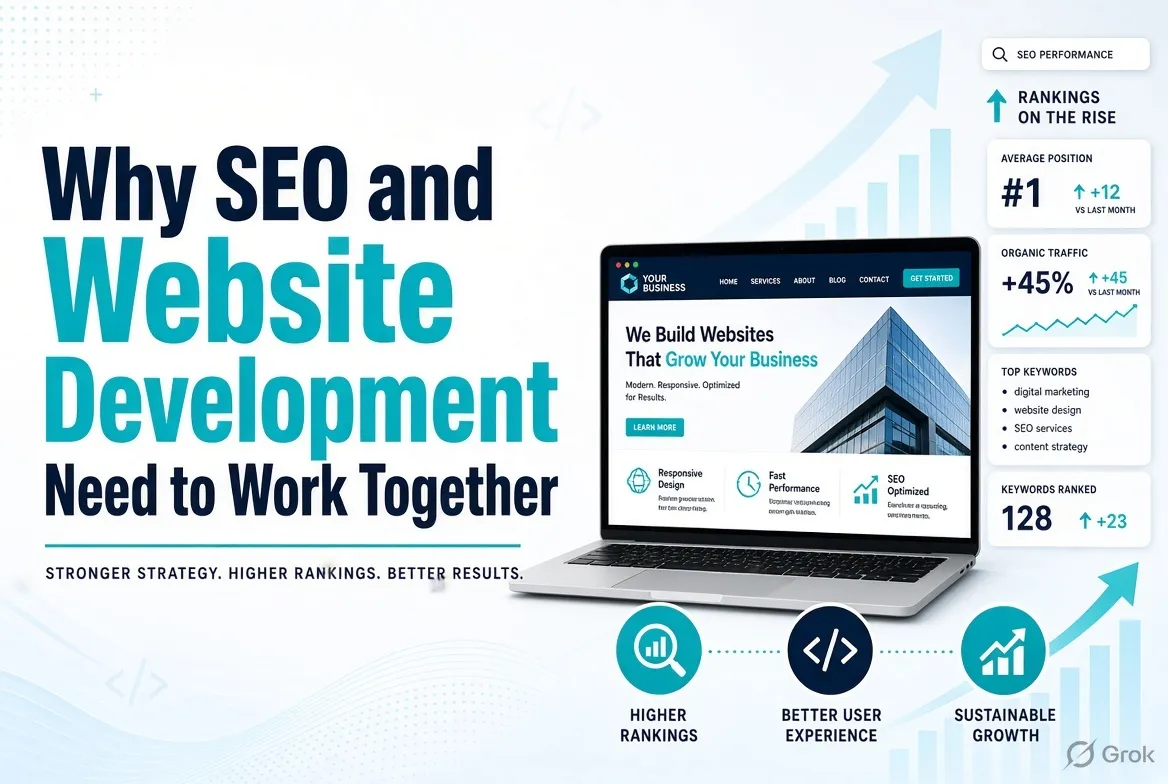

A website is more than an online presence. It is often the first place potential customers learn about a business, explore its services, and decide whether to get in touch. But even a well-designed website can struggle to attract visitors if search engines cannot easily understand and rank it.
This is why SEO and website development should work together from the beginning. When design, technical performance, content, and search visibility are planned as one strategy, businesses can create websites that look professional while also supporting long-term organic growth.
Why SEO Matters for a Business Website
Search engines consider many factors when deciding which pages should appear in search results. Website structure, page speed, mobile usability, content quality, internal linking, and technical elements can all influence how a website performs.
Good SEO helps search engines understand what each page is about and connects the website with people actively searching for related products or services.
However, SEO should not be treated as something added after a website is completed. Important decisions made during development can directly affect search visibility.
Build a Strong Technical Foundation
A search-friendly website starts with a solid technical foundation.
Clean page structures, logical navigation, responsive layouts, fast-loading pages, descriptive URLs, proper headings, and well-organized content make it easier for both users and search engines to navigate a site.
Businesses should also consider mobile users. A website that works well on desktop but is difficult to use on smartphones can create a poor user experience and potentially affect performance in search.
Technical SEO also involves elements such as indexing, redirects, canonicalization, image optimization, structured data, and crawlability. Addressing these areas early can prevent costly fixes later.
SEO Should Influence Website Structure
Website architecture plays an important role in SEO. Visitors should be able to move from the homepage to important service pages, supporting pages, and useful content without confusion.
For example, a business offering multiple services can create dedicated pages for each major service instead of placing everything on one general page. This gives each page a clearer purpose and creates more opportunities to target relevant search queries.
At this stage, businesses can benefit from professional seo consulting services to identify opportunities, improve site structure, and develop a search strategy around their business goals.
Design Should Support Search and User Experience
SEO is not only about keywords and rankings. A website must also be easy and enjoyable to use.
Clear layouts, readable text, intuitive navigation, strong calls to action, and well-placed contact options can help visitors find what they need quickly.
Good design should guide users rather than distract them. Large images, unnecessary animations, complicated menus, or excessive design elements can sometimes slow down a website and make important information harder to find.
The best approach is to balance visual quality with usability and performance.
Content and Website Development Go Hand in Hand
A website needs useful content to attract search traffic. Service pages should clearly explain what a business offers, who it helps, and why visitors should consider the company.
Blog content can also support SEO by answering common questions and covering topics related to the services a business provides.
However, content should be created for people first. Repeating keywords unnecessarily can make pages difficult to read. Instead, businesses should focus on useful information, natural language, clear headings, and relevant internal links.
Website Performance Can Affect Results
Website speed is another important consideration. Visitors are less likely to stay on a website that takes too long to load.
Developers can improve performance by optimizing images, reducing unnecessary scripts, using efficient code, and choosing suitable hosting and technical configurations.
This is where website design and development services can help businesses create websites that combine professional design with functionality, usability, and performance.
Think Beyond the Website Launch
Launching a website is not the end of the process. Search performance should be monitored regularly to identify pages that are gaining visibility, pages that need improvement, and new opportunities for relevant content.
SEO data can reveal what customers are searching for and how they interact with a website. These insights can then guide future content, design, and technical improvements.
Final Thoughts
SEO and website development work best when they are treated as connected parts of the same digital strategy. A visually attractive website needs visibility, while a search-optimized website needs a strong user experience.
By combining technical SEO, useful content, thoughtful design, fast performance, and continuous improvement, businesses can build a website that is better positioned to attract visitors and turn them into potential customers.
For businesses looking to strengthen their online presence, the goal should not simply be to build a website or rank for keywords. The goal is to create a digital experience that can be found, understood, trusted, and used easily.






















Sign in to leave a comment.