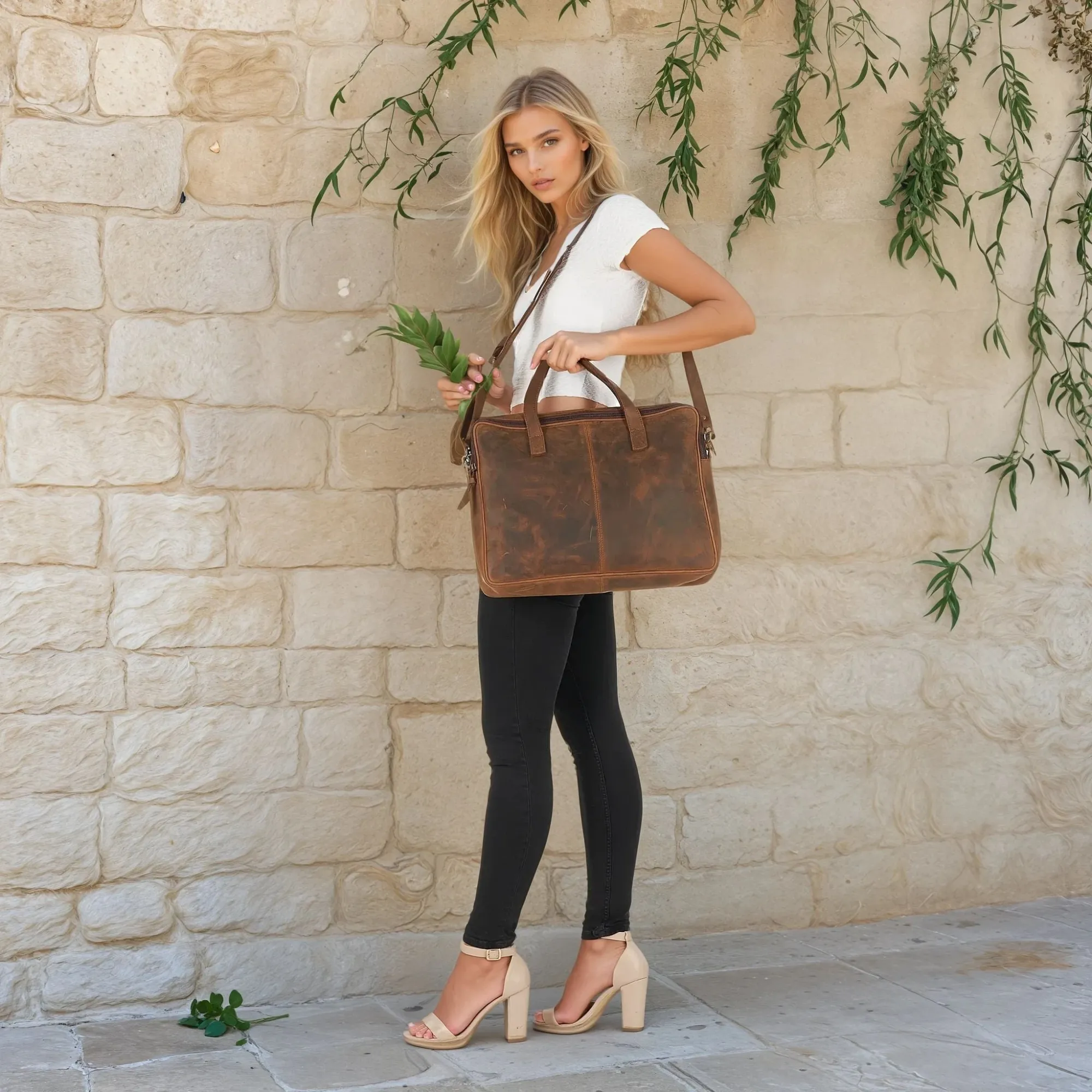

Most women have been there. You spot a bag, it looks right, you buy it, and by the following winter the stitching is unravelling at the handles and the edges are lifting. Meanwhile someone else is still using the same leather shoulder bag she picked up nearly a decade ago, and honestly it looks better now than when she bought it. That difference isn't down to luck or how carefully someone treats their things. It starts long before the bag reaches anyone's hands in the choices a manufacturer makes about hide grade, thread, hardware, and finishing. Understand those choices and you stop wasting money on bags that give out too soon.
The Quality of the Leather
The foundation of any durable leather shoulder bag starts with the hide itself. Not all leather is built to withstand years of real-life wear.
Full-grain leather keeps the outermost layer of the hide completely intact. That's where the fibre structure is tightest and most dense the part of the hide that resists tearing, breathes properly, and builds a patina over years of use rather than cracking under daily pressure. Sand that layer away, apply a synthetic coating to make cheaper hides look clean and uniform, and you've taken away the only thing that made the material worth having. The coating holds together for a season or two. Then it starts separating at the corners. Then it peels.
- Choose full-grain leather for its natural grain, and durability
- Avoid heavily processed hides that trap moisture, and weaken faster
- Feel the texture genuine leather has subtle variations, that signal quality
This attention to material quality is, what separates a premium leather shoulder bag that lasts from one, that disappoints after a few months of use.
Construction and Craftsmanship
Construction determines how well your women's leather shoulder bag holds up under daily stress. Even the best leather fails if the assembly is poor.
Run your fingers along the seams of a cheap bag and you can feel a looseness that signals trouble ahead. Good construction uses thick waxed thread, stitched tight and even, with extra passes wherever the bag faces real stress handle bases, zipper openings, bottom corners. Those are the points that fail first on a poorly built bag. Edge finishing is another thing worth checking. Properly treated edges lie flat and stay sealed through years of use. Raw or thinly painted edges absorb moisture, swell, and gradually crumble away from the inside out.
- Look for tight, even stitching with thick waxed thread
- Check for reinforced seams and properly skived turned edges
- Ensure interior pockets have solid backing to prevent sagging
These details turn an ordinary bag into a reliable companion that maintains its structure season after season.
Hardware That Holds Up
Hardware often decides the fate of a leather shoulder bag more than people realize. Weak components lead to early breakdowns.
A zipper pull that feels slightly hollow. A clasp that sticks before the bag is six months old. A D-ring that shows rust after the first wet week. None of that is bad luck it's what happens when a manufacturer cuts cost at the hardware stage because most buyers don't look closely enough to notice. Solid brass and stainless steel don't corrode, don't wear through their finish, and handle the daily friction of opening and closing without failing. The strap attachment points are the most vulnerable spot on any bag proper double-reinforced rivets at those connections outlast basic single-loop fittings by several years without question.
- Opt for heavy-duty zippers and rivets that feel substantial
- Verify double-reinforced strap connections
- Choose corrosion-resistant metals that age gracefully
Investing in quality hardware ensures your bag continues performing reliably through countless commutes and trips.
Daily Use and Smart Habits
How you treat your leather shoulder bag, plays a huge role in its longevity. Thoughtful habits protect even the finest materials.
Bags wear out gradually rather than all at once. A bit too much weight carried every single day. Keys thrown loose in the main compartment that slowly scratch the lining from the inside. Using one bag every day of the week without giving it a rest. None of these things destroy a bag overnight, but together they compound into real damage over a year or two. Handle attachment points take the brunt of excess weight that's consistently where bags fail first when they're regularly overloaded.
- Never exceed the bag's recommended capacity
- Keep sharp items in protective pouches
- Alternate between different bags to prevent overuse
These practices help your bag stay in excellent condition year after year.
Regular Conditioning and Maintenance
Leather needs ongoing care because it is a natural material that can dry out. Regular maintenance keeps it supple and crack-free.
Leather dries out slowly and most people don't realise it's happening until fine surface cracks start appearing across areas that used to be smooth. Those cracks don't reverse. Conditioning every few months mink oil, neatsfoot oil, or a proper leather balm replaces the natural oils that evaporate over time and keeps the material flexible. Amount matters here. Too much product sits on the surface, picks up dust, and can permanently darken lighter leathers. A thin, even application worked in and then wiped back does the job without any of those problems.
- Use dedicated leather balms like mink oil or neatsfoot oil sparingly
- Wipe excess conditioner and allow full absorption
- Be cautious with dark conditioners on light-colored bags
Consistent care transforms a good bag into one that improves with time.
Proper Storage Techniques
Smart storage prevents unnecessary damage to your bag. Poor habits like cramming it into tight spaces create lasting creases.
A bag pushed into the bottom of a wardrobe under other things comes out creased, misshapen, and sometimes with mould beginning at the seams. Leather needs air sealed plastic traps moisture against the surface and creates exactly the conditions that lead to deterioration. A loose cotton dust bag and some acid-free tissue stuffed inside to hold the shape cost almost nothing and make a real difference. Sunlight is the other enemy. UV exposure fades colour and dries out leather considerably faster than normal indoor light.
- Store in a cool, dark place with proper support
- Avoid plastic covers that promote mold
- Loosely fill the bag to preserve its form
Good storage habits ensure your bag remains ready for daily adventures.
Brand Reputation and Real-World Testing
Brand heritage often correlates with better durability, in leather bag designs. Established makers test their products, under real conditions.
Brands with genuine experience have already worked through the failures that newer manufacturers haven't encountered yet. The hide that looked good in a sample but didn't hold dye consistently in production. The thread that weakened after repeated washing. The zipper that seized in humid climates. Their customers don't discover these problems because they already solved them. A real construction warranty is the clearest signal that a maker trusts what they've built enough to stand behind it.
Choosing the Right Bag for Your Lifestyle
Matching the bag to your routine preConsider daily load, travel frequency and preferred carry style.
A well-chosen bag, balances beauty with practicality your for long term satisfaction.
Weather Resistance and Aging Gracefully
Weather exposure tests every bag. Proper drying and conditioning after rain, help maintain flexibility.
Over time, quality pieces develop a rich patina, that tells your personal story, while inferior ones simply look tired.
Size, Weight and Structural Balance
Balance in design prevents strain on straps and seams. Oversized or undersized bags, often fail faster, due to improper weight distribution. vents misuse and early wear. Consider daily load, travel frequency, and preferred carry style.
A well-chosen bag balances beauty with practicality for long-term satisfaction.
Weather Resistance and Aging Gracefully
Weather exposure tests every bag. Proper drying and conditioning after rain help maintain flexibility.
Over time, quality pieces develop a rich patina that tells your personal story, while inferior ones simply look tired.
Size, Weight, and Structural Balance
Balance in design prevents strain on straps and seams. Oversized or undersized bags often fail faster due to improper weight distribution.
The best options distribute load evenly for comfortable, long-lasting use.
Bags that go the distance are built with intention at every stage from hide selection through to the final hardware fitting. No single element carries the whole thing. Get most of it right and something still fails too soon. Before buying, handle the bag properly. Press the leather, check how the seams feel under your fingers, test the hardware, look at the base stitching. That kind of attention takes five minutes and tells you more than any product description ever will. A women's leather shoulder bag from a brand like Boho Eclectica one that takes every one of these details seriously is the kind of thing you keep rather than replace.





















Sign in to leave a comment.